Rhodesian Ridgeback
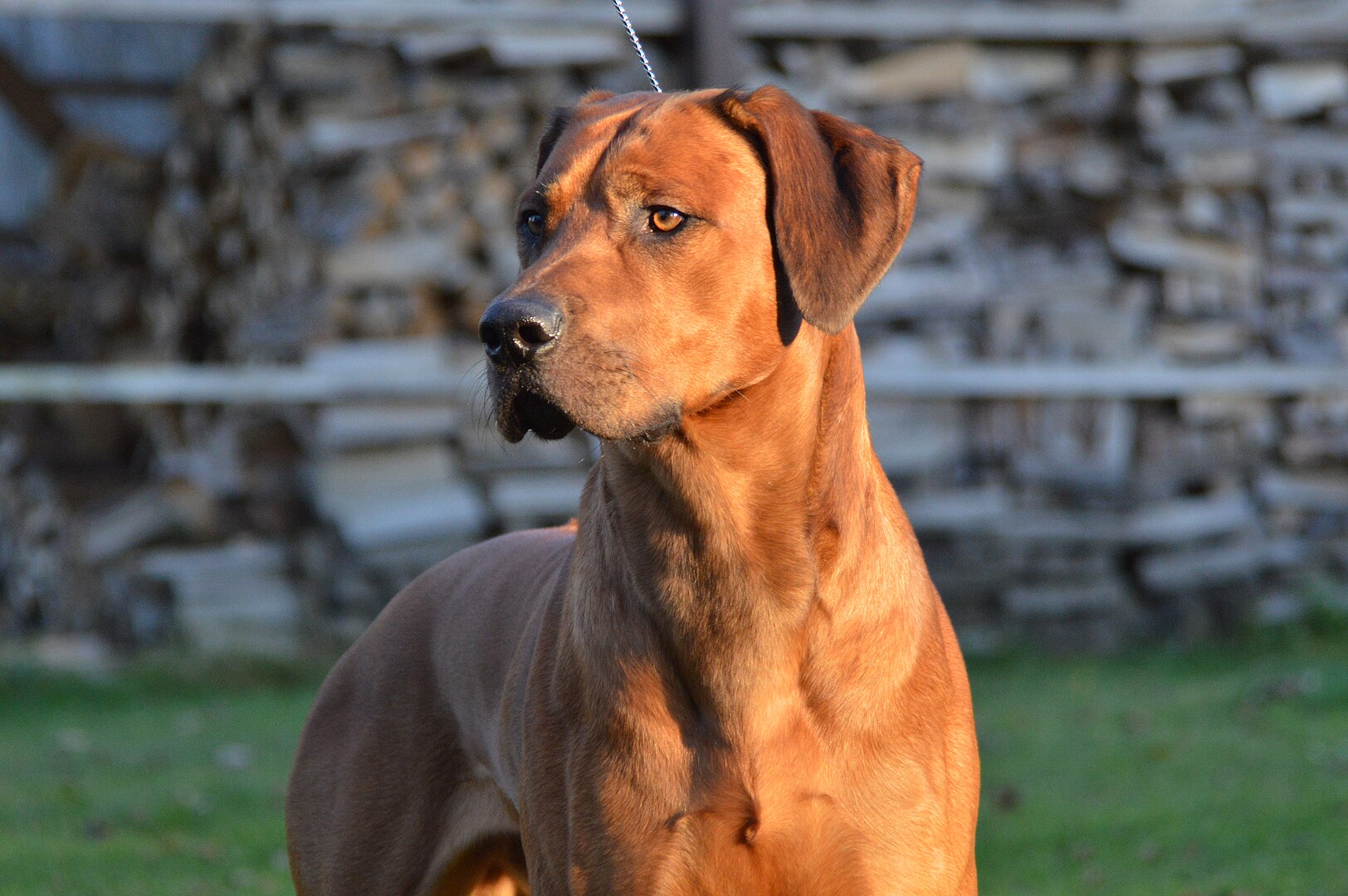
Powerful southern African hound known for its speed, courage, and distinctive ridge.
| Size | Weight | Height | Lifespan |
|---|---|---|---|
| Giant | 70 - 85 lbs | 24 - 27 inches | 10 - 12 years |
| (These are estimates and may vary.) | |||
Origin: Zimbabwe
Own a Rhodesian Ridgeback? Share what activities they enjoy to help other dog owners.
Select up to 5 Activities
Know a Rhodesian Ridgeback? Share their personality traits to help other dog owners.
Select up to 5 traits
May be a good fit if you:
- Are looking for a breed that generally does well with children.
- Are a first-time dog owner looking for a relatively approachable breed.
Things to consider:
- This breed may not do well when left alone for long periods.
- This breed tends to need plenty of regular physical activity.
The Rhodesian Ridgeback developed in southern Africa from crosses between European dogs brought by settlers and local African dogs that carried a distinctive ridge of hair growing in the opposite direction along the back. European hunters and farmers needed dogs capable of handling heat, travelling long distances, guarding property, and hunting in difficult terrain. Various imported breeds contributed to the developing type, while the ridged local dogs added traits well suited to regional conditions. In the late 19th century, hunter Cornelius van Rooyen became particularly associated with packs of ridged dogs used in what was then Rhodesia, now Zimbabwe. The dogs became famous for work involving lions, but descriptions of them as "lion killers" are misleading. Their job was generally to track, harass, and hold a lion at bay through agility and teamwork until the hunter arrived, not to physically overpower it. A formal breed standard was drafted in Rhodesia in 1922, helping turn these varied hunting dogs into a standardized breed. The characteristic ridge became its defining physical feature. Modern Ridgebacks retain the speed, endurance, independence, and strong prey drive expected of dogs developed to work across vast areas with relatively little direction from their handlers.