Saluki
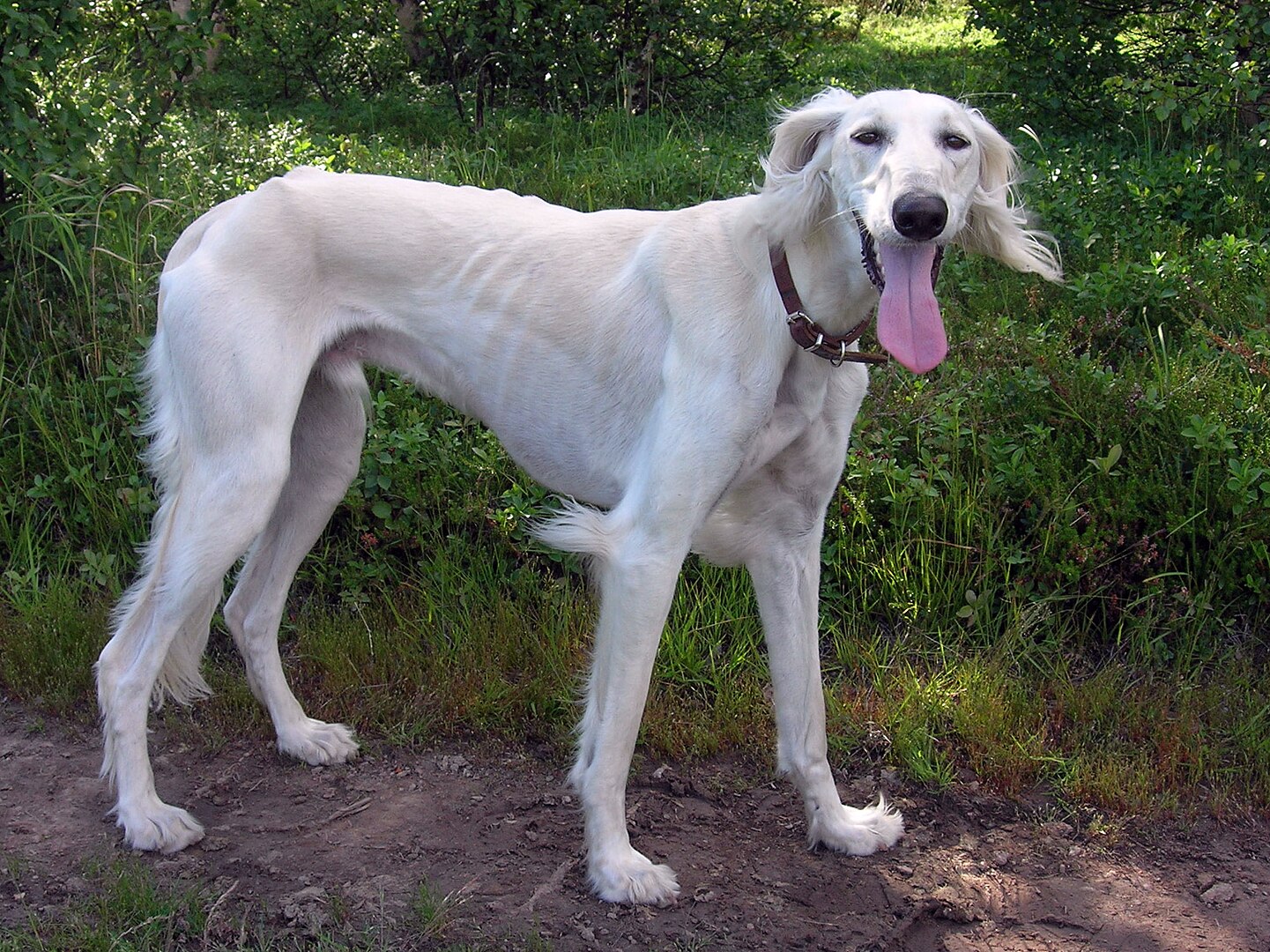
Graceful Middle Eastern sighthound bred for speed and hunting across open country.
| Size | Weight | Height | Lifespan |
|---|---|---|---|
| Large | 40 - 65 lbs | 21 - 28 inches | 10 - 17 years |
| (These are estimates and may vary.) | |||
Origin: Iraq
Own a Saluki? Share what activities they enjoy to help other dog owners.
Select up to 5 Activities
Know a Saluki? Share their personality traits to help other dog owners.
Select up to 5 traits
May be a good fit if you:
- Want a dog that is generally responsive to consistent, positive training.
- Are looking for a breed that generally does well with children.
- Are a first-time dog owner looking for a relatively approachable breed.
The Saluki comes from an ancient tradition of sighthounds used across the Middle East to pursue fast-moving game over open terrain. Dogs with a similar slim, long-legged form appear in very old regional artwork, although it is impossible to draw an uninterrupted pedigree from ancient images to modern Salukis. For generations, nomadic and settled communities valued these hounds for their ability to hunt animals such as gazelle and hare by sight and speed. Their hunting work demanded tremendous endurance as well as acceleration, since they often worked across large areas of desert and rocky ground. Salukis were highly valued hunting partners and occupied an unusual cultural position in parts of the Islamic world, where hunting hounds could be treated differently from ordinary dogs. Different regions produced somewhat different types depending on local terrain and quarry. European travellers began bringing Salukis west in the 19th and early 20th centuries, and British breeders established organized breeding programs after the First World War. The breed was recognized by Britain's Kennel Club in the 1920s and by the American Kennel Club in 1927. Its independent temperament, light frame, deep chest, and extraordinary running ability remain closely tied to centuries of hunting across demanding landscapes.