Swedish Vallhund
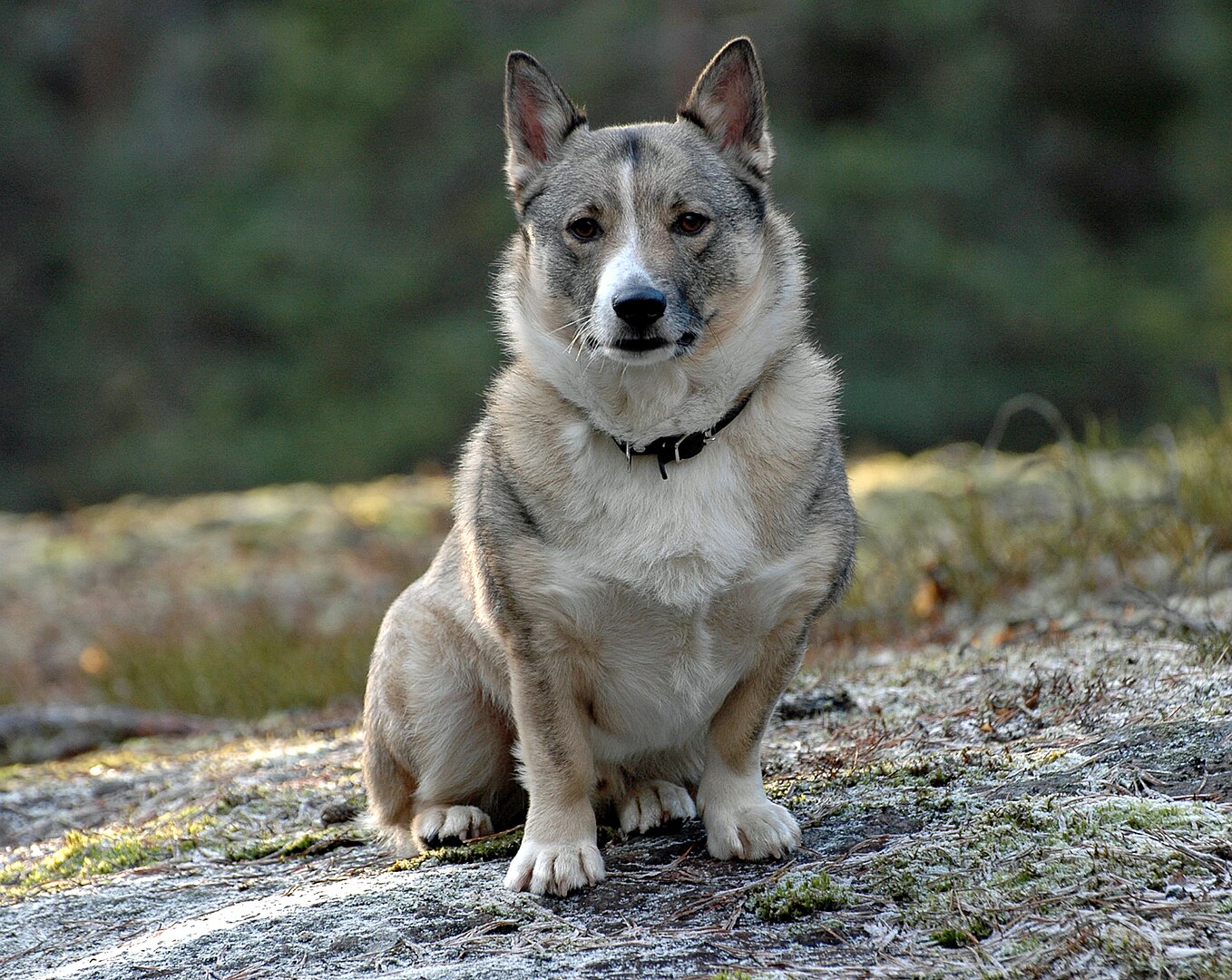
Low-built Swedish cattle dog known for its agility, confidence, and spitz-like features.
| Size | Weight | Height | Lifespan |
|---|---|---|---|
| Small | 20 - 35 lbs | 11 - 14 inches | 12 - 15 years |
| (These are estimates and may vary.) | |||
Origin: Sweden
Own a Swedish Vallhund? Share what activities they enjoy to help other dog owners.
Select up to 5 Activities
Know a Swedish Vallhund? Share their personality traits to help other dog owners.
Select up to 5 traits
May be a good fit if you:
- Are looking for a breed that generally does well with children.
- Are a first-time dog owner looking for a relatively approachable breed.
Things to consider:
- This breed may not do well when left alone for long periods.
- Regular shedding means you may need to be comfortable with loose hair around the home.
The Swedish Vallhund is a small cattle-herding spitz from Sweden, where low-built farm dogs were used to move livestock and perform general farm duties. In Sweden the breed is known as the Västgötaspets, referring to the region of Västergötland. Its low stature allowed it to work close to cattle, nipping at their heels while remaining agile enough to avoid kicks. The breed is often promoted as dating directly to the Viking Age, and short-legged spitz-type dogs may indeed have existed in Scandinavia for many centuries, but a continuous documented pedigree from Viking dogs to the modern Vallhund cannot be demonstrated. What is well recorded is the breed's near disappearance in the early 20th century. During the 1940s, Count Björn von Rosen and schoolteacher K. G. Zettersten searched Swedish farms for surviving examples and began a breeding program to preserve the type. Their work successfully revived the population, and the Swedish Kennel Club recognized the breed in 1943. Vallhunds naturally occur with different tail lengths, including very short or absent tails. Although now mostly companions and sport dogs, their alertness, quick movement, vocal nature, and tendency to control movement reveal the practical cattle dog underneath the compact spitz appearance.