Afghan Hound
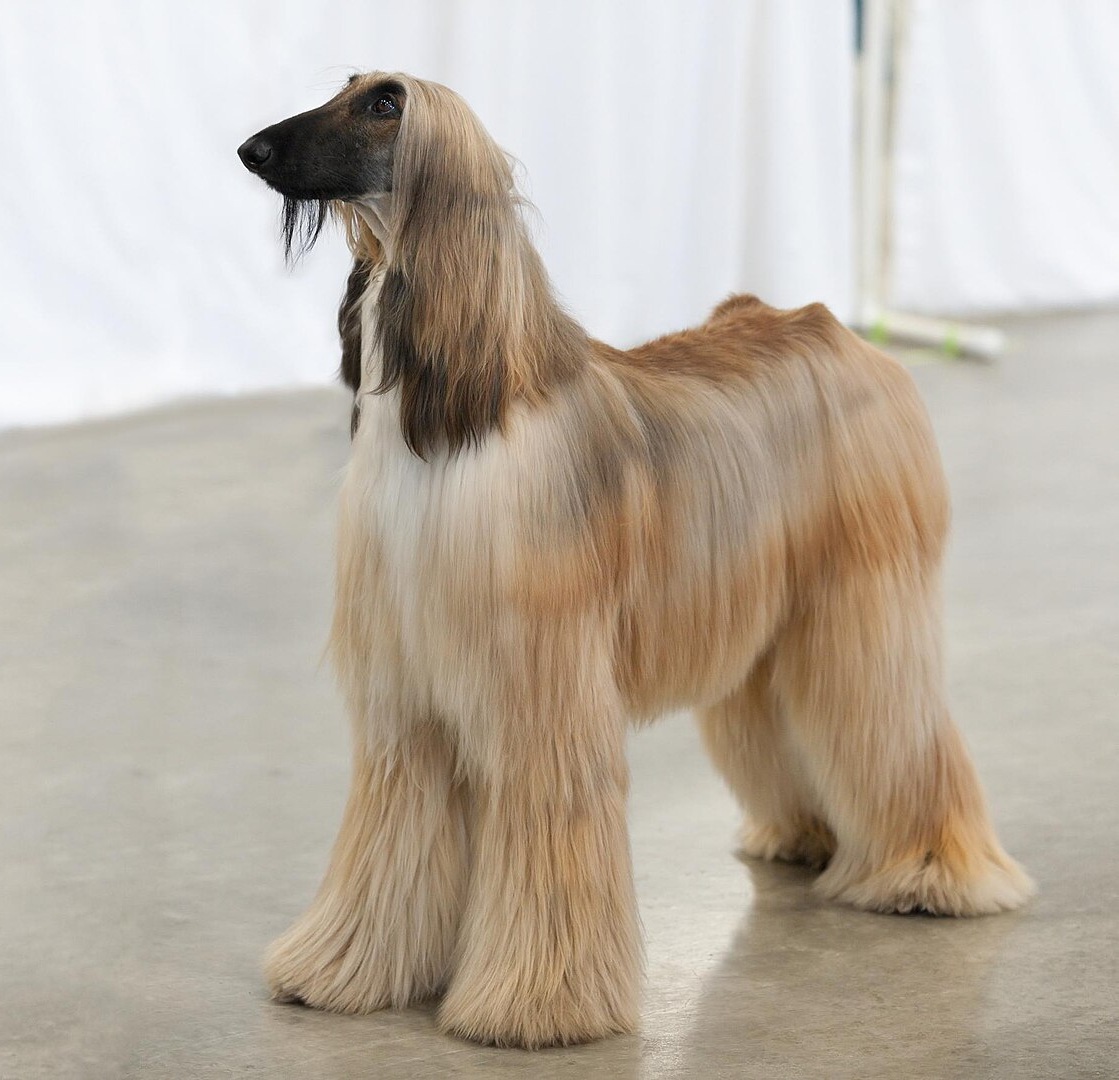
Ancient Afghan sighthound known for its speed, independence, and flowing coat.
| Size | Weight | Height | Lifespan |
|---|---|---|---|
| Large | 50 - 60 lbs | 25 - 27 inches | 12 - 18 years |
| (These are estimates and may vary.) | |||
Origin: Afghanistan
Own a Afghan Hound? Share what activities they enjoy to help other dog owners.
Select up to 5 Activities
Know a Afghan Hound? Share their personality traits to help other dog owners.
Select up to 5 traits
May be a good fit if you:
- Are looking for a breed that generally does well with children.
- Are a first-time dog owner looking for a relatively approachable breed.
- Want a breed that tends to adapt well to apartment living.
Things to consider:
- Coat maintenance may require significant regular grooming.
- This breed tends to need plenty of regular physical activity.
The Afghan Hound comes from the mountainous regions of Afghanistan and surrounding areas, where sighthounds were used to pursue game across difficult terrain. Regional dogs varied in coat and build depending on local conditions, with heavier coats offering protection in colder mountain environments. Their hunting work relied on sharp eyesight, speed, agility, and the ability to make decisions at a distance from people. For much of their history these hounds were known mainly within their homeland rather than as a standardized international breed. British military officers and travellers encountered Afghan hounds during the 19th and early 20th centuries and eventually brought examples back to Britain. Two imported strains became particularly influential in early Western breeding: dogs associated with Major and Mrs. Bell-Murray and a later group from the Ghazni kennels of Mary Amps in Kabul. Their differing appearances initially created debate among breeders before the populations were blended into the modern Afghan Hound. The breed became fashionable in Europe and North America partly because of its dramatic coat and aristocratic appearance. Beneath that glamour remains a genuine hunting dog whose independence, athleticism, and powerful chase instinct were shaped by working across rugged country without constant direction from a handler.