American Bulldog
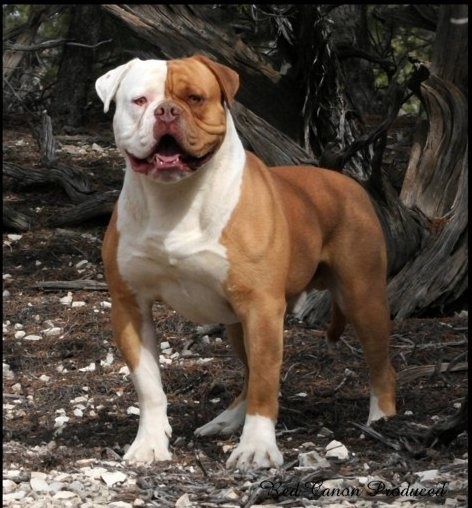
Powerful American farm dog developed for guarding, catching livestock, and hunting.
| Size | Weight | Height | Lifespan |
|---|---|---|---|
| Giant | 60 - 100 lbs | 20 - 25 inches | 10 - 12 years |
| (These are estimates and may vary.) | |||
Origin: United States
Own a American Bulldog? Share what activities they enjoy to help other dog owners.
Select up to 5 Activities
Know a American Bulldog? Share their personality traits to help other dog owners.
Select up to 5 traits
May be a good fit if you:
- Are looking for a breed that generally does well with children.
- Are a first-time dog owner looking for a relatively approachable breed.
Things to consider:
- This breed may not do well when left alone for long periods.
The American Bulldog developed from bulldog-type dogs brought to North America by European settlers, particularly those living in the rural South. While the bulldog in Britain gradually changed after blood sports were outlawed, working bulldogs survived on American farms because they remained useful. Farmers needed powerful, athletic dogs capable of guarding property, controlling difficult cattle and hogs, and catching free-ranging livestock. In parts of the South, they were also used to hunt feral pigs. These dogs were known by various regional names rather than belonging to a formally standardized breed. By the mid-20th century, changing farming practices had caused their numbers to decline substantially. John D. Johnson and Alan Scott became particularly influential in preserving and developing surviving southern bulldogs after the Second World War. Their breeding programs eventually produced somewhat different styles, often described as Johnson or "bully" type and Scott or "standard" type, although modern dogs may combine the lines. The name American Bulldog became widely established as organized breeding expanded. Unlike the shorter, heavier English Bulldog, the American Bulldog retained the athletic structure needed for practical farm work. Its modern identity remains closely connected to the working bulldogs that survived because rural owners continued to value what they could do.