Australian Shepherd
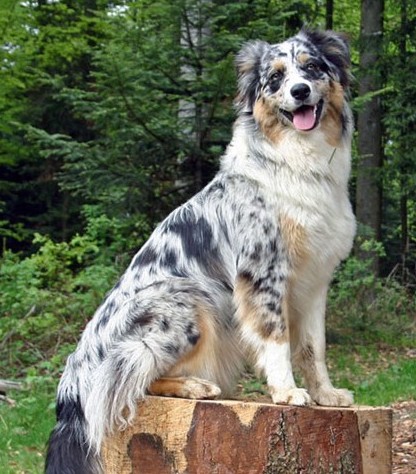
Intelligent, energetic American herding dog with a strong drive to work.
| Size | Weight | Height | Lifespan |
|---|---|---|---|
| Medium | 40 - 65 lbs | 18 - 23 inches | 12 - 15 years |
| (These are estimates and may vary.) | |||
Origin: United States
Own a Australian Shepherd? Share what activities they enjoy to help other dog owners.
Select up to 5 Activities
Know a Australian Shepherd? Share their personality traits to help other dog owners.
Select up to 5 traits
May be a good fit if you:
- Want a dog that is generally responsive to consistent, positive training.
- Are looking for a breed that generally does well with children.
- Are a first-time dog owner looking for a relatively approachable breed.
Things to consider:
- This breed may not do well when left alone for long periods.
- This breed tends to need plenty of regular physical activity.
Despite its name, the Australian Shepherd as we know it today was developed in the United States, particularly in the American West. Its deeper ancestry is less tidy. Various European herding dogs arrived in North America alongside sheep and shepherds, and imported sheep from Australia also arrived with working dogs. Dogs associated with Basque shepherds became part of the breed's traditional origin story, although historians continue to debate exactly how much those dogs contributed. Genetic research supports strong connections between Australian Shepherds and British herding breeds such as Collies, Border Collies, and Shetland Sheepdogs. What is much clearer is what happened in the American West: ranchers selected useful sheep and cattle dogs for intelligence, stamina, responsiveness, and the ability to handle livestock in demanding conditions. During the years following the Second World War, Aussies gained a wider audience through rodeos, horse shows, trick performances, movies, and television. Their association with horses and western ranch life became a lasting part of the breed's identity. The Australian Shepherd Club of America was established in 1957, while the American Kennel Club began registering Australian Shepherds in 1991.