Bichon Frise
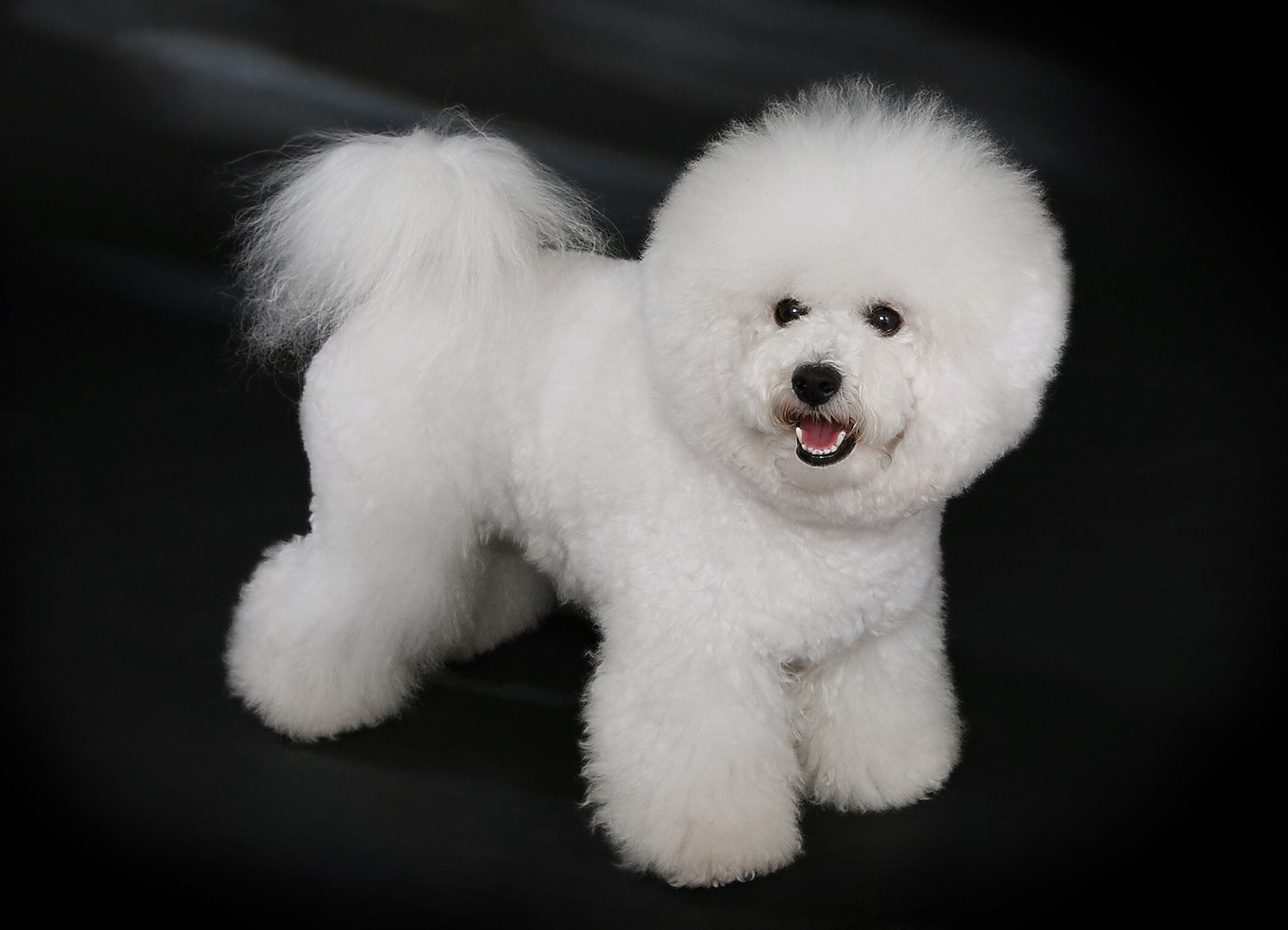
Cheerful companion with a soft white coat and a long history as a lapdog.
| Size | Weight | Height | Lifespan |
|---|---|---|---|
| Small | 12 - 18 lbs | 9 - 11 inches | 14 - 15 years |
| (These are estimates and may vary.) | |||
Origin: France
Own a Bichon Frise? Share what activities they enjoy to help other dog owners.
Select up to 5 Activities
Know a Bichon Frise? Share their personality traits to help other dog owners.
Select up to 5 traits
May be a good fit if you:
- Are looking for a breed that generally does well with children.
- Want a dog that generally gets along well with other dogs.
- Are a first-time dog owner looking for a relatively approachable breed.
Things to consider:
- This breed may not do well when left alone for long periods.
- Coat maintenance may require significant regular grooming.
The Bichon Frise belongs to an old family of small Mediterranean companion dogs that also includes breeds such as the Maltese, Havanese, and Bolognese. Small bichon-type dogs travelled widely with sailors and merchants, and their cheerful personalities made them popular companions in European ports and households. By the Renaissance, dogs resembling the Bichon were favourites in European royal courts, particularly in France, Spain, and Italy, and they frequently appeared in paintings. Fashion changed, however, and the breed eventually lost much of its aristocratic status. During the 19th century, small white dogs of this type could be found accompanying street performers and organ grinders, where their intelligence and ability to learn tricks proved useful. The two World Wars further reduced their numbers. French and Belgian breeders worked to preserve and standardize the surviving dogs, and a formal standard was established during the 1930s. The name Bichon à Poil Frisé, referring to the breed's curly coat, was adopted during this period. The breed later spread to North America and received American Kennel Club recognition in 1972. Its history has taken it from royal courts to street performance and back to life as a popular companion.