Briard
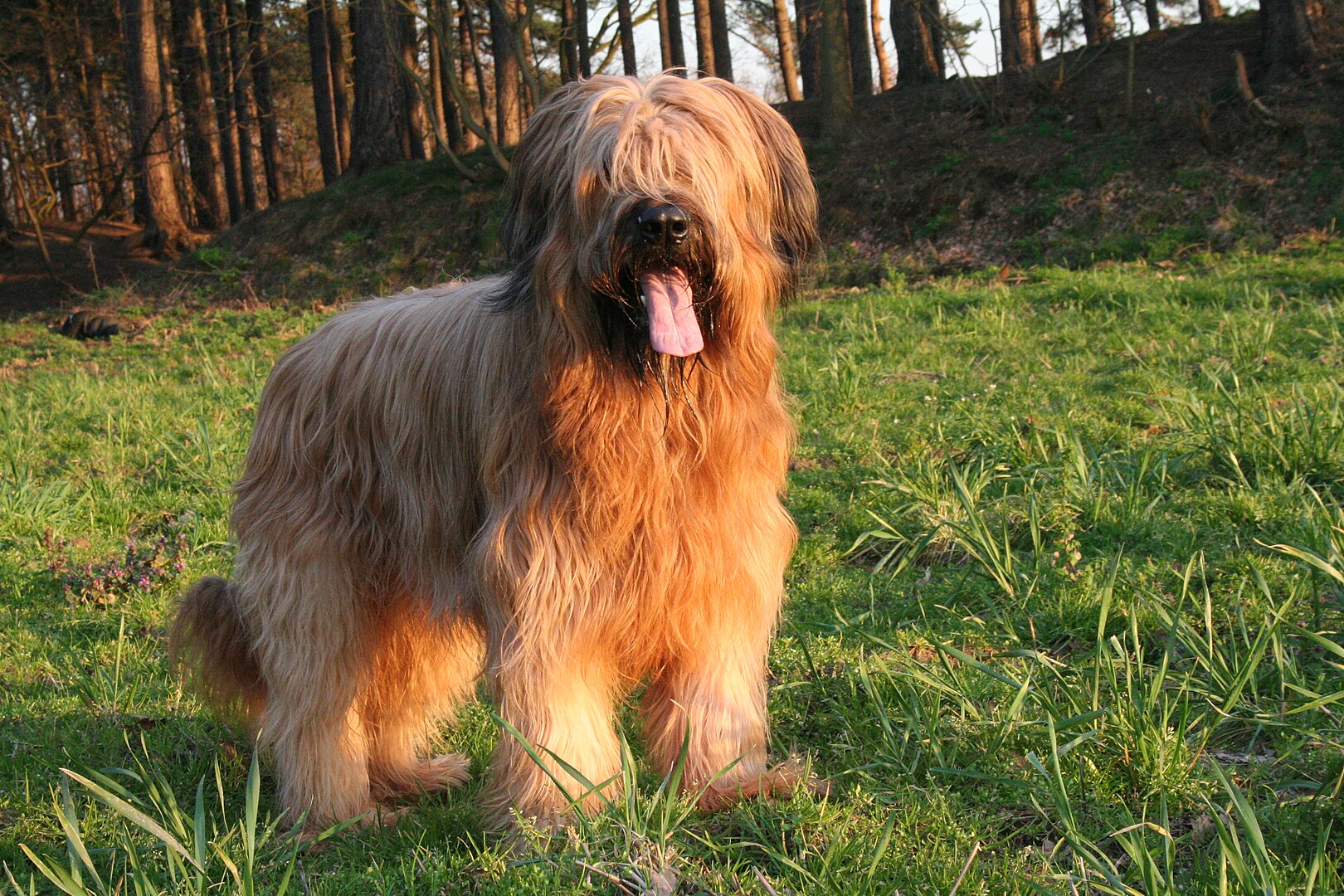
Large French herder known for its shaggy coat, intelligence, and protective nature.
| Size | Weight | Height | Lifespan |
|---|---|---|---|
| Giant | 60 - 100 lbs | 22 - 27 inches | 11 - 12 years |
| (These are estimates and may vary.) | |||
Origin: France
Own a Briard? Share what activities they enjoy to help other dog owners.
Select up to 5 Activities
Know a Briard? Share their personality traits to help other dog owners.
Select up to 5 traits
May be a good fit if you:
- Want a dog that is generally responsive to consistent, positive training.
- Are looking for a breed that generally does well with children.
- Are a first-time dog owner looking for a relatively approachable breed.
Things to consider:
- This breed may not do well when left alone for long periods.
- Coat maintenance may require significant regular grooming.
The Briard is an old French herding breed traditionally associated with the agricultural regions surrounding Paris and other parts of France. Large shaggy sheepdogs of similar type worked for centuries as both flock herders and guardians, moving sheep while also protecting them from predators and thieves. The breed was historically known as the Chien Berger de Brie, or Shepherd Dog of Brie, although its development was not limited strictly to that region. Briards appear in French accounts well before modern dog breeding created a standardized type. During the 19th century, French enthusiasts began defining the breed more formally, and Briards appeared at some of the country's earliest dog shows. Their intelligence and versatility later led to military service. During the First World War, Briards were used by the French military for duties including carrying messages, locating wounded soldiers, and transporting supplies. The breed also has a notable American connection: Thomas Jefferson acquired French herding dogs while serving in France and later kept dogs of Briard type at Monticello. Modern Briards retain the double dewclaws on their rear legs required by the breed standard, along with the shaggy protective coat and alert temperament inherited from generations of demanding farm work.