Dogo Argentino
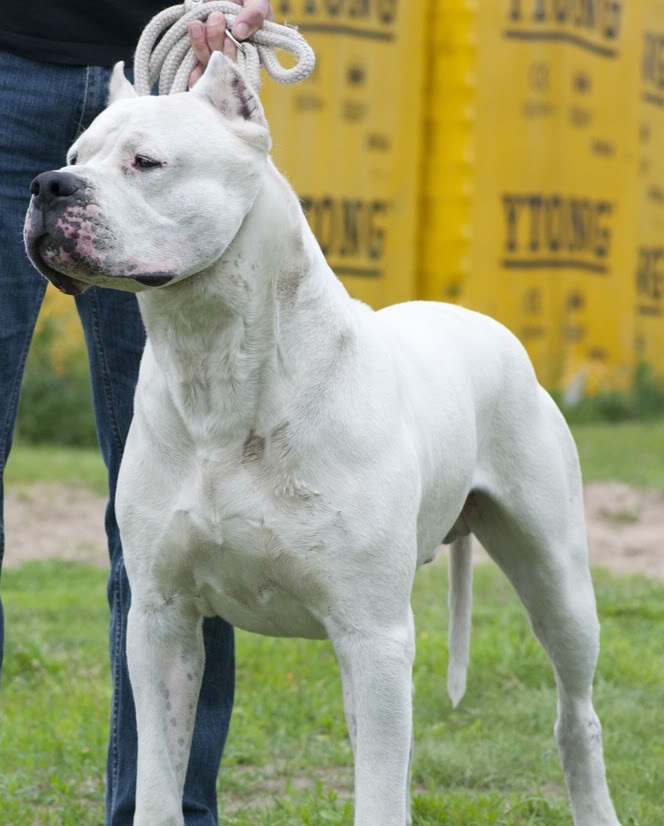
Powerful Argentine hunting dog developed for pursuing formidable big game.
| Size | Weight | Height | Lifespan |
|---|---|---|---|
| Giant | 80 - 100 lbs | 24 - 27 inches | 9 - 15 years |
| (These are estimates and may vary.) | |||
Origin: Argentina
Own a Dogo Argentino? Share what activities they enjoy to help other dog owners.
Select up to 5 Activities
Know a Dogo Argentino? Share their personality traits to help other dog owners.
Select up to 5 traits
May be a good fit if you:
- Are a first-time dog owner looking for a relatively approachable breed.
Things to consider:
- This breed may be less suited to smaller living spaces.
- This breed tends to need plenty of regular physical activity.
The Dogo Argentino was deliberately developed in Argentina during the 20th century by Dr. Antonio Nores Martínez, with assistance from his brother Agustín. Beginning in the 1920s, Martínez wanted to create a powerful pack-hunting dog capable of pursuing formidable game such as wild boar and puma while also remaining manageable around people and other dogs. The foundation was the now-extinct Fighting Dog of Córdoba, which contributed strength and courage but was too aggressive toward other dogs for effective pack hunting. Martínez introduced several other breeds during development, traditionally including the Pointer, Boxer, Great Dane, Bull Terrier, Bulldog, Irish Wolfhound, Dogue de Bordeaux, Spanish Mastiff, and Great Pyrenees. Selection gradually produced a large white hunting dog emphasizing endurance, scenting ability, athleticism, and cooperation. Antonio Nores Martínez was killed in 1956 before seeing the breed gain international recognition, and Agustín continued promoting it. Argentina recognized the Dogo in 1964, and the Fédération Cynologique Internationale followed in 1973. The American Kennel Club granted full recognition in 2020. Although also used for guarding and other work, the breed's defining historical purpose was cooperative big-game hunting rather than the dog-fighting role of its foundation breed.