Finnish Lapphund
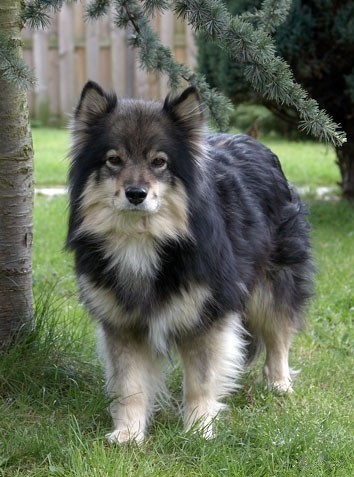
Friendly Finnish spitz traditionally used to help herd reindeer in the far north.
| Size | Weight | Height | Lifespan |
|---|---|---|---|
| Medium | 33 - 53 lbs | 16 - 21 inches | 12 - 15 years |
| (These are estimates and may vary.) | |||
Origin: Finland
Own a Finnish Lapphund? Share what activities they enjoy to help other dog owners.
Select up to 5 Activities
Know a Finnish Lapphund? Share their personality traits to help other dog owners.
Select up to 5 traits
May be a good fit if you:
- Want a dog that is generally responsive to consistent, positive training.
- Are looking for a breed that generally does well with children.
- Want a dog that generally gets along well with other dogs.
Things to consider:
- Regular shedding means you may need to be comfortable with loose hair around the home.
- Coat maintenance may require significant regular grooming.
The Finnish Lapphund developed from dogs used by the Sámi people across northern Fennoscandia. For generations, northern spitz-type dogs assisted with hunting and later became especially important in managing semi-domesticated reindeer. As large-scale reindeer herding developed, dogs helped gather, move, and control animals across enormous stretches of difficult Arctic and sub-Arctic terrain. They needed stamina, quick reactions, a weather-resistant coat, and enough judgment to avoid the hooves and antlers of reindeer. Modern technology, including snowmobiles, reduced dependence on herding dogs, but the working tradition survived. Finland began formally preserving its native northern dogs during the 20th century, although early standards included dogs that would eventually be separated into different breeds. The Finnish Lapphund and Lapponian Herder ultimately emerged as distinct types, with the Lapphund retaining the heavier spitz coat. The Finnish Kennel Club adopted the Finnish Lapphund name in the 1990s. Although now popular as a companion in Finland, the breed retains traits connected directly to reindeer work. It is agile, highly responsive to movement, and often notably vocal, since barking was useful for controlling animals and communicating while working across wide northern landscapes.