Australian Cattle Dog
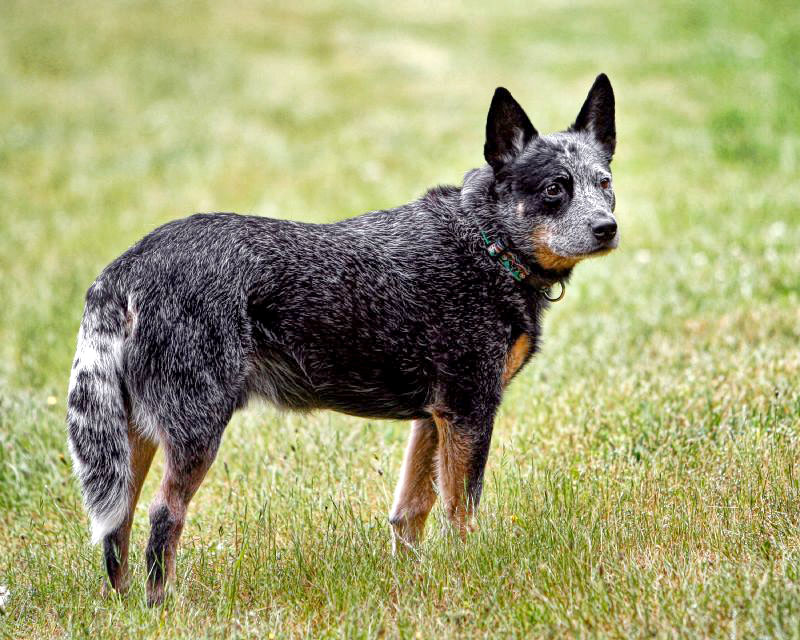
Tough Australian herder developed to move cattle across vast, rugged country.
| Size | Weight | Height | Lifespan |
|---|---|---|---|
| Medium | 35 - 50 lbs | 17 - 20 inches | 12 - 16 years |
| (These are estimates and may vary.) | |||
Origin: Australia
Own a Australian Cattle Dog? Share what activities they enjoy to help other dog owners.
Select up to 5 Activities
Know a Australian Cattle Dog? Share their personality traits to help other dog owners.
Select up to 5 traits
May be a good fit if you:
- Want a dog that is generally responsive to consistent, positive training.
- Are looking for a breed that generally does well with children.
- Are a first-time dog owner looking for a relatively approachable breed.
Things to consider:
- This breed may be less suited to smaller living spaces.
- This breed tends to need plenty of regular physical activity.
The Australian Cattle Dog was developed to solve a distinctly Australian problem: moving cattle over enormous distances through hot, rugged country. Early British herding dogs brought by settlers were not always well suited to the climate or the semi-wild cattle found on expanding ranches. During the 19th century, Australian stockmen experimented with crosses designed to create tougher, quieter, more enduring workers. Dingoes played an important role in the breed's development, contributing hardiness and suitability to local conditions. Other herding dogs were incorporated as breeders refined dogs capable of controlling cattle by nipping at their heels and quickly avoiding kicks. Blue-speckled and red-speckled dogs became established, and the resulting workers were often known as Blue Heelers or Queensland Heelers. Breeder Thomas Hall's cattle dogs, developed in New South Wales, were particularly influential in the breed's foundation. By the late 19th and early 20th centuries, enthusiasts began standardizing the type that became the Australian Cattle Dog. Its compact strength, intense work ethic, stamina, and tendency to control movement are not accidental personality quirks; they are the result of generations spent handling difficult livestock across some of the world's most demanding cattle country.