Norfolk Terrier
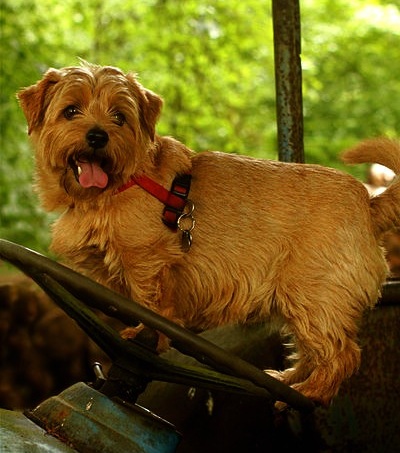
Small, hardy English terrier known for its folded ears and fearless personality.
| Size | Weight | Height | Lifespan |
|---|---|---|---|
| Toy | 11 - 12 lbs | 9 - 10 inches | 12 - 16 years |
| (These are estimates and may vary.) | |||
Origin: United Kingdom
Own a Norfolk Terrier? Share what activities they enjoy to help other dog owners.
Select up to 5 Activities
Know a Norfolk Terrier? Share their personality traits to help other dog owners.
Select up to 5 traits
May be a good fit if you:
- Are looking for a breed that generally does well with children.
- Want a dog that generally gets along well with other dogs.
- Are a first-time dog owner looking for a relatively approachable breed.
Things to consider:
- This breed tends to need plenty of regular physical activity.
The Norfolk Terrier shares most of its early history with the Norwich Terrier. During the late 19th and early 20th centuries, small working terriers were bred in East Anglia, England, to control rats and pursue foxes. These compact dogs became popular with hunters and also with Cambridge University students who kept them as energetic ratters and companions. Horseman and breeder Frank "Roughrider" Jones became particularly influential in establishing the type, and some early dogs were known as Jones Terriers. When Britain's Kennel Club recognized the Norwich Terrier in 1932, dogs with both upright and folded ears were included in the same breed. Breeding the two ear types together could produce inconsistent results, however, and enthusiasts increasingly maintained them separately. In 1964, the Kennel Club formally separated the drop-eared dogs under the name Norfolk Terrier, while prick-eared dogs retained the Norwich Terrier name. Other kennel organizations eventually followed. The Norfolk is therefore not simply a Norwich whose ears happen to fold; decades of separate breeding have established it as its own breed. Its small size hides genuine working origins, and its confidence, prey drive, sturdy construction, and sociable temperament were all useful in a terrier expected to hunt alongside people and other dogs.