Dandie Dinmont Terrier
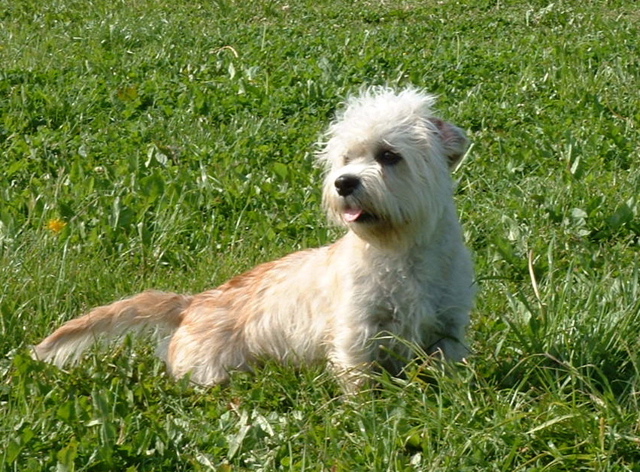
Low-built Scottish terrier known for its long body, topknot, and independent nature.
| Size | Weight | Height | Lifespan |
|---|---|---|---|
| Small | 18 - 24 lbs | 8 - 11 inches | 12 - 15 years |
| (These are estimates and may vary.) | |||
Origin: United Kingdom
Own a Dandie Dinmont Terrier? Share what activities they enjoy to help other dog owners.
Select up to 5 Activities
Know a Dandie Dinmont Terrier? Share their personality traits to help other dog owners.
Select up to 5 traits
May be a good fit if you:
- Are looking for a breed that generally does well with children.
- Want a dog that generally gets along well with other dogs.
- Are a first-time dog owner looking for a relatively approachable breed.
The Dandie Dinmont Terrier originated in the border country between Scotland and England, where low, tough terriers were used to hunt animals including otters and badgers. Dogs resembling the modern breed existed before they had their current name. That name came from literature rather than a place: Sir Walter Scott's 1815 novel "Guy Mannering" featured a farmer named Dandie Dinmont who owned a group of distinctive terriers. The fictional character was inspired partly by real people and dogs Scott encountered in the Borders, and the popularity of the novel caused dogs of this type to become known as Dandie Dinmont's terriers. This makes the Dandie one of the few breeds named after a fictional character. The breed developed a distinctive long, low body, large head, curved topline, and soft topknot while retaining the courage required of a working terrier. Organized breeders established a breed club in 1875, making the Dandie Dinmont Terrier Club one of the world's oldest breed clubs. Despite that long formal history, the Dandie has never become extremely numerous and is now considered a relatively rare British breed. Its dignified appearance and unusual proportions can obscure the fact that it originated as a serious hunting terrier expected to confront formidable quarry.