Bedlington Terrier
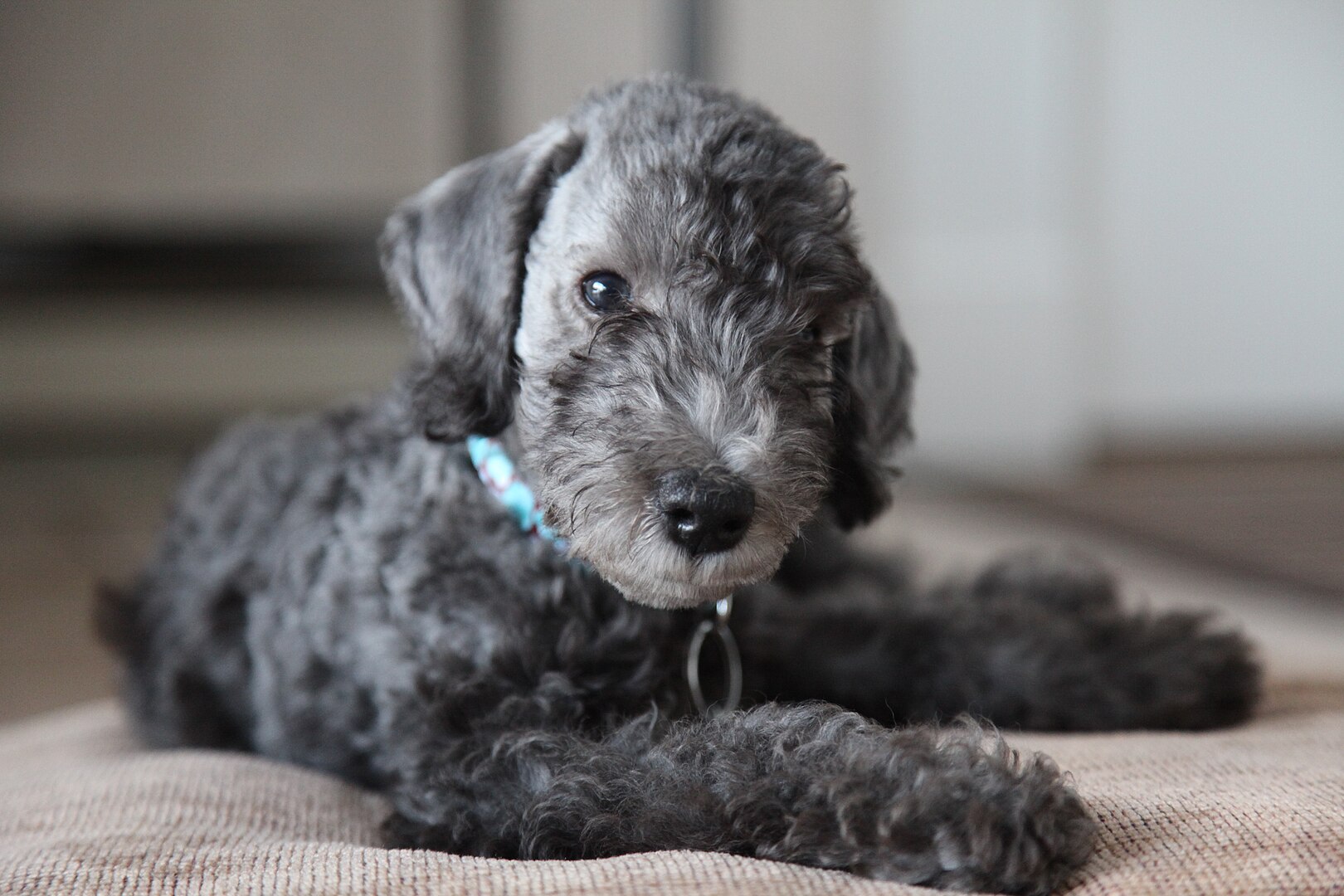
Athletic English terrier known for its lamb-like appearance and working-dog roots.
| Size | Weight | Height | Lifespan |
|---|---|---|---|
| Small | 17 - 23 lbs | 15 - 18 inches | 11 - 16 years |
| (These are estimates and may vary.) | |||
Origin: United Kingdom
Own a Bedlington Terrier? Share what activities they enjoy to help other dog owners.
Select up to 5 Activities
Know a Bedlington Terrier? Share their personality traits to help other dog owners.
Select up to 5 traits
May be a good fit if you:
- Want a dog that is generally responsive to consistent, positive training.
- Are looking for a breed that generally does well with children.
- Want a dog that generally gets along well with other dogs.
Things to consider:
- This breed may not do well when left alone for long periods.
- Coat maintenance may require significant regular grooming.
The Bedlington Terrier originated in northeastern England and takes its name from the mining town of Bedlington in Northumberland. During the 18th and 19th centuries, local working terriers were used to control rats and hunt animals including rabbits, foxes, and badgers. Early dogs were sometimes known as Rothbury Terriers because of their association with the nearby Rothbury area. Miners and other working people valued them for speed and determination as well as their ability to deal with vermin. Their ancestry is not completely documented, but the developing breed combined the courage of a terrier with a noticeably light, fast build. The name Bedlington Terrier became established during the 19th century, and organized breeding gradually transformed the rough working dog into the distinctive breed seen today. Selective grooming produces its famous lamb-like appearance, with an arched back, narrow head, and crisp coat. That elegant appearance can be misleading: Bedlingtons were genuine working terriers and were also historically used in competitive ratting and other activities common to the era. The breed entered dog shows during the Victorian period and became increasingly standardized. Modern Bedlingtons are usually companions, but their speed, prey drive, and athleticism reveal considerably more working-dog heritage than their soft, sheep-like outline suggests.