Plott Hound
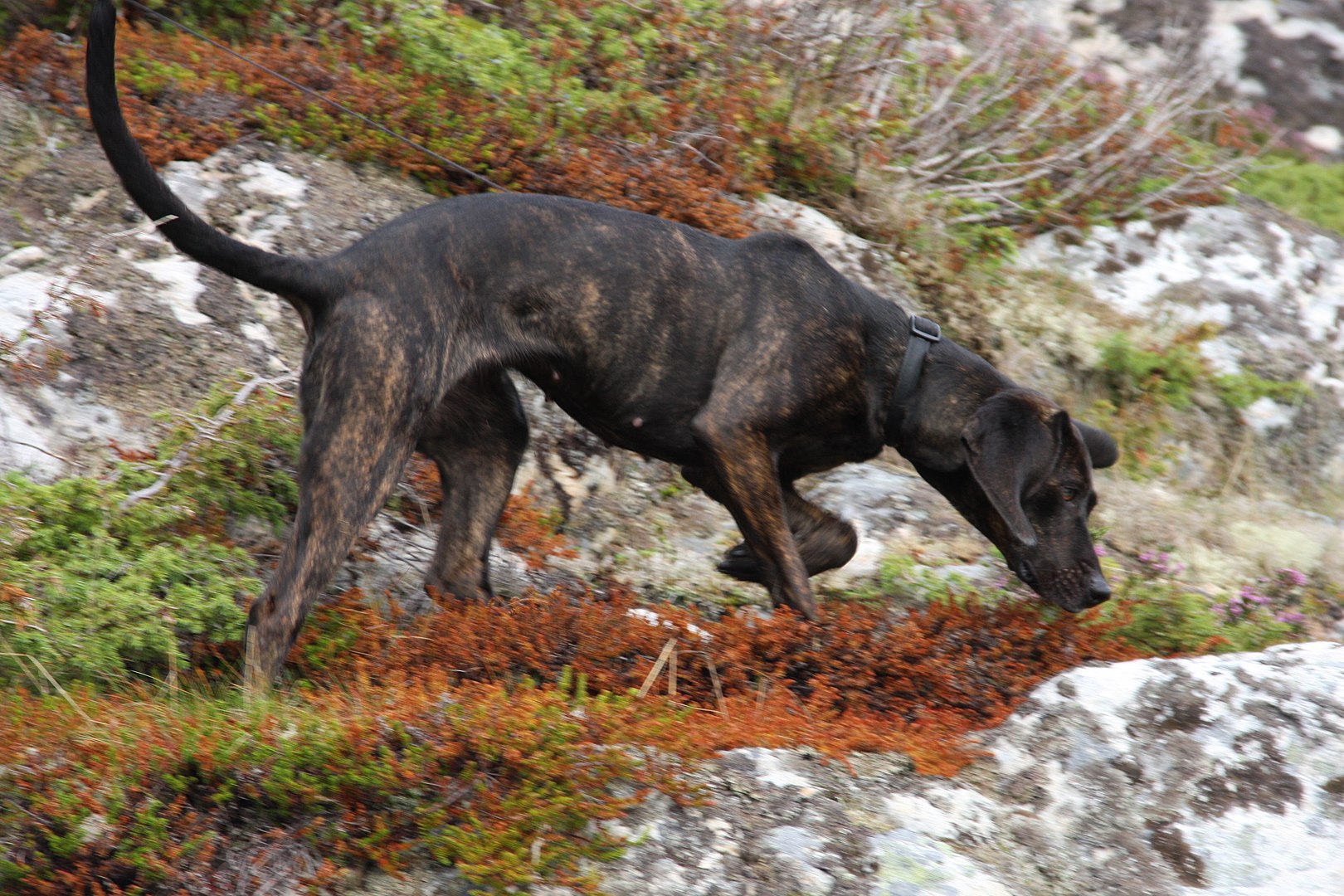
Powerful American scent hound developed to track challenging game over rough terrain.
| Size | Weight | Height | Lifespan |
|---|---|---|---|
| Large | 40 - 60 lbs | 2 - 25 inches | 12 - 14 years |
| (These are estimates and may vary.) | |||
Origin: United States
Own a Plott Hound? Share what activities they enjoy to help other dog owners.
Select up to 5 Activities
Know a Plott Hound? Share their personality traits to help other dog owners.
Select up to 5 traits
May be a good fit if you:
- Want a dog that is generally responsive to consistent, positive training.
- Are looking for a breed that generally does well with children.
- Are a first-time dog owner looking for a relatively approachable breed.
Things to consider:
- This breed may be less suited to smaller living spaces.
- This breed tends to need plenty of regular physical activity.
The Plott Hound has an unusual history among American coonhounds because its ancestry is primarily German rather than English. Around 1750, Johannes George Plott emigrated from Germany to North Carolina, bringing several hunting dogs traditionally described as Hanoverian-type hounds. The Plott family continued breeding these dogs in the mountains of western North Carolina for generations, selecting for stamina, courage, scenting ability, and the determination needed to pursue formidable game. Unlike many coonhound breeds developed mainly around raccoon hunting, Plotts became especially associated with hunting wild boar and bears, although they were also used on raccoons and other game. Their work in steep Appalachian terrain demanded dogs capable of following difficult scent trails for long periods and confronting animals considerably larger than themselves. The breed remained strongly associated with the Plott family and surrounding region before spreading more widely among American hunters. The United Kennel Club recognized the Plott in 1946, and the American Kennel Club followed in 2006. North Carolina designated the Plott Hound its official state dog in 1989. Its brindle coat, powerful voice, endurance, and unusually tenacious hunting style remain closely connected to more than two centuries of selective breeding in the Appalachian Mountains.