Rottweiler
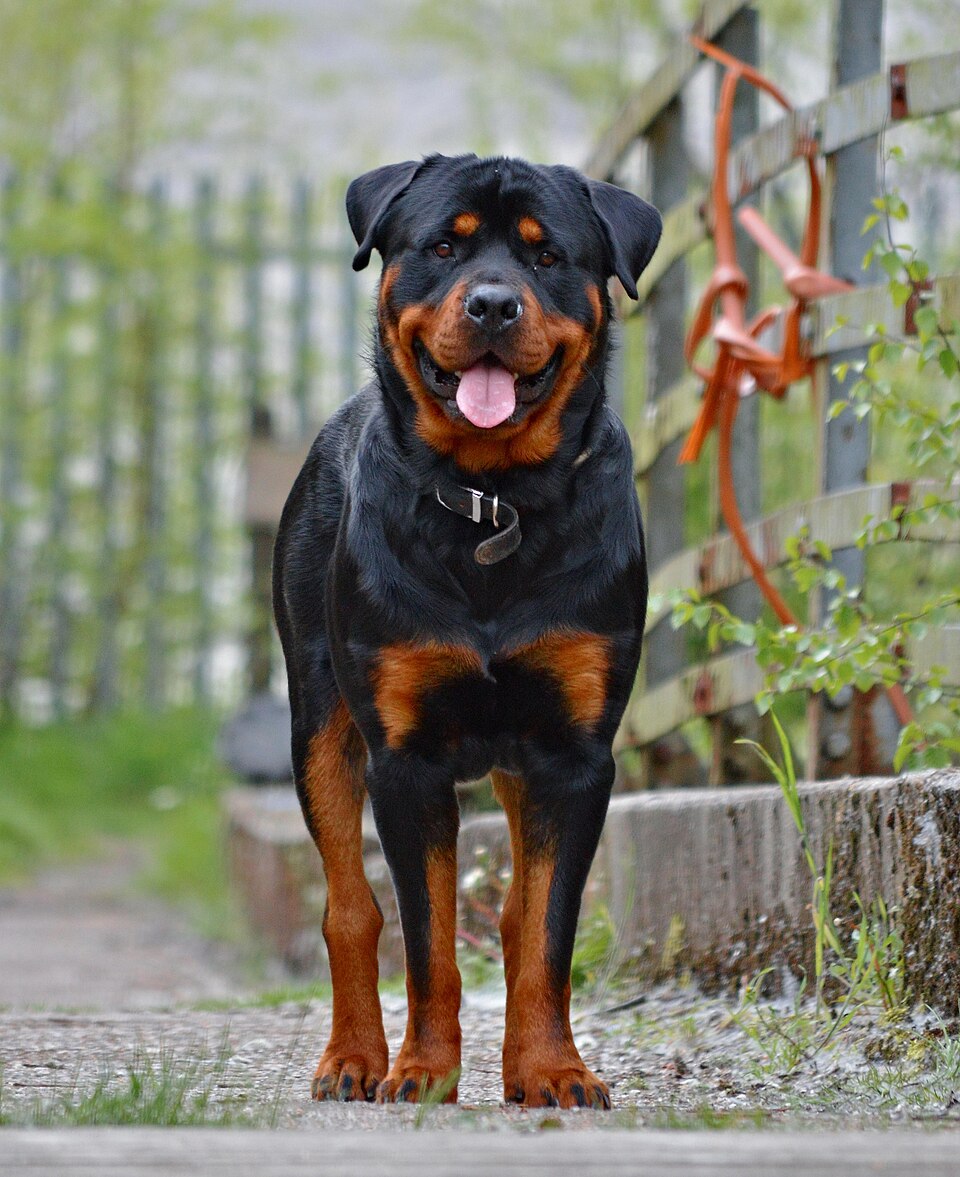
Powerful, confident working dog with a loyal and naturally watchful nature.
| Size | Weight | Height | Lifespan |
|---|---|---|---|
| Giant | 80 - 135 lbs | 22 - 27 inches | 9 - 10 years |
| (These are estimates and may vary.) | |||
Origin: Germany
Own a Rottweiler? Share what activities they enjoy to help other dog owners.
Select up to 5 Activities
Know a Rottweiler? Share their personality traits to help other dog owners.
Select up to 5 traits
May be a good fit if you:
- Want a dog that is generally responsive to consistent, positive training.
- Are a first-time dog owner looking for a relatively approachable breed.
Things to consider:
- This breed may not do well when left alone for long periods.
The Rottweiler's distant roots are generally linked to the drover dogs that accompanied Roman armies and their livestock across Europe roughly two thousand years ago. As Roman forces moved north, sturdy dogs helped drive and guard the cattle that travelled with them. In the area around what became Rottweil in southern Germany, descendants of these dogs developed into valuable local workers. Rottweil became an important livestock centre, and the dogs were used to drive cattle, protect property, and pull carts carrying goods. They became known as Rottweiler Metzgerhunds, or "butchers' dogs of Rottweil." One often repeated tradition says butchers placed money from livestock sales in pouches around their dogs' necks for safekeeping. When railways began replacing traditional cattle drives during the 19th century, demand for these working dogs declined sharply. The breed survived, however, and its strength, trainability, and guarding ability found new uses. During the 20th century, Rottweilers became established in police, military, protection, and service work while also becoming widely kept as companions. Their heavy build and watchful temperament still reflect their history as powerful all-purpose working dogs.