Alaskan Malamute
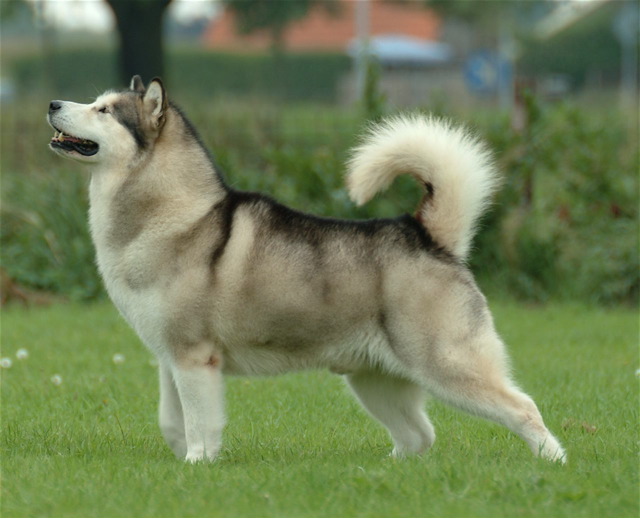
Powerful Arctic sled dog built for strength, endurance, and hauling heavy loads.
| Size | Weight | Height | Lifespan |
|---|---|---|---|
| Giant | 75 - 85 lbs | 23 - 25 inches | 10 - 14 years |
| (These are estimates and may vary.) | |||
Origin: United States
Own a Alaskan Malamute? Share what activities they enjoy to help other dog owners.
Select up to 5 Activities
Know a Alaskan Malamute? Share their personality traits to help other dog owners.
Select up to 5 traits
May be a good fit if you:
- Want a dog that is generally responsive to consistent, positive training.
- Are looking for a breed that generally does well with children.
- Want a dog that generally gets along well with other dogs.
Things to consider:
- This breed may not do well when left alone for long periods.
- Regular shedding means you may need to be comfortable with loose hair around the home.
The Alaskan Malamute developed alongside the Mahlemut, an Iñupiat people of northwestern Alaska who relied on dogs for transportation and survival in a demanding Arctic environment. Malamutes were bred primarily for strength and endurance rather than outright racing speed. Teams hauled heavy loads, helped move supplies between settlements, and supported hunting and travel over snow and ice. Dogs that could work efficiently, tolerate extreme cold, and cooperate with people were enormously valuable. The Alaskan gold rush brought large numbers of outsiders and imported dogs into the region, leading to widespread crossbreeding among sled dogs. Later, interest in Arctic exploration and sled-dog racing encouraged efforts to preserve recognizable Malamute strains. During the early 20th century, breeders worked with several important lines, including the Kotzebue and M'Loot strains, to establish the modern breed. Malamutes also served on expeditions and during the Second World War, but wartime losses again reduced their numbers. The breed was rebuilt afterward from surviving stock. Unlike the lighter Siberian Husky, which became famous for covering distance efficiently at speed, the Malamute's traditional specialty was pulling substantial weight over difficult terrain.