Basset Fauve de Bretagne
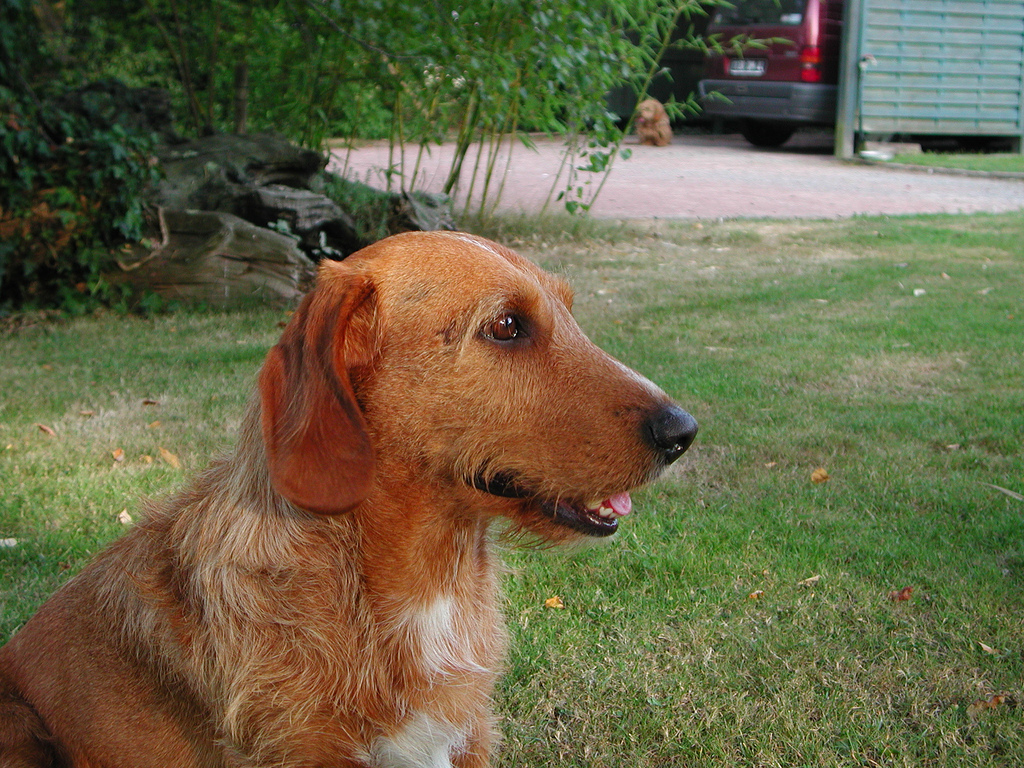
Small French scent hound developed for energetic hunting through rough countryside.
| Size | Weight | Height | Lifespan |
|---|---|---|---|
| Medium | 23 - 39 lbs | 12 - 16 inches | 13 - 16 years |
| (These are estimates and may vary.) | |||
Origin: France
Own a Basset Fauve de Bretagne? Share what activities they enjoy to help other dog owners.
Select up to 5 Activities
Know a Basset Fauve de Bretagne? Share their personality traits to help other dog owners.
Select up to 5 traits
May be a good fit if you:
- Are looking for a breed that generally does well with children.
- Are a first-time dog owner looking for a relatively approachable breed.
- Want a breed that tends to adapt well to apartment living.
Things to consider:
- This breed may not do well when left alone for long periods.
The Basset Fauve de Bretagne is a small rough-coated scent hound from Brittany in northwestern France. It descends from the same regional hunting tradition as the larger Griffon Fauve de Bretagne. French hunters developed short-legged bassets so they could pursue game at a pace that people could follow on foot while still possessing the nose and determination of larger pack hounds. The Basset Fauve was particularly useful for rabbits and hare but could work other game as well. Its harsh fawn-coloured coat provided protection when pushing through dense brush and rough vegetation. The breed's larger relative, the Grand Fauve de Bretagne, eventually disappeared, while the smaller Basset survived. Numbers became dangerously low during the 20th century, particularly around the World Wars. French breeders worked to preserve and rebuild the remaining population. Some accounts state that other basset breeds were introduced during reconstruction, but the extent of such crosses is debated among breed historians. The modern Basset Fauve retains a notably energetic character for a short-legged hound. Rather than being a slow, heavy basset, it was developed to hunt actively across difficult country. Its strong nose, persistence, rough coat, and willingness to follow a trail remain clear reminders of that practical French hunting heritage.