Whippet
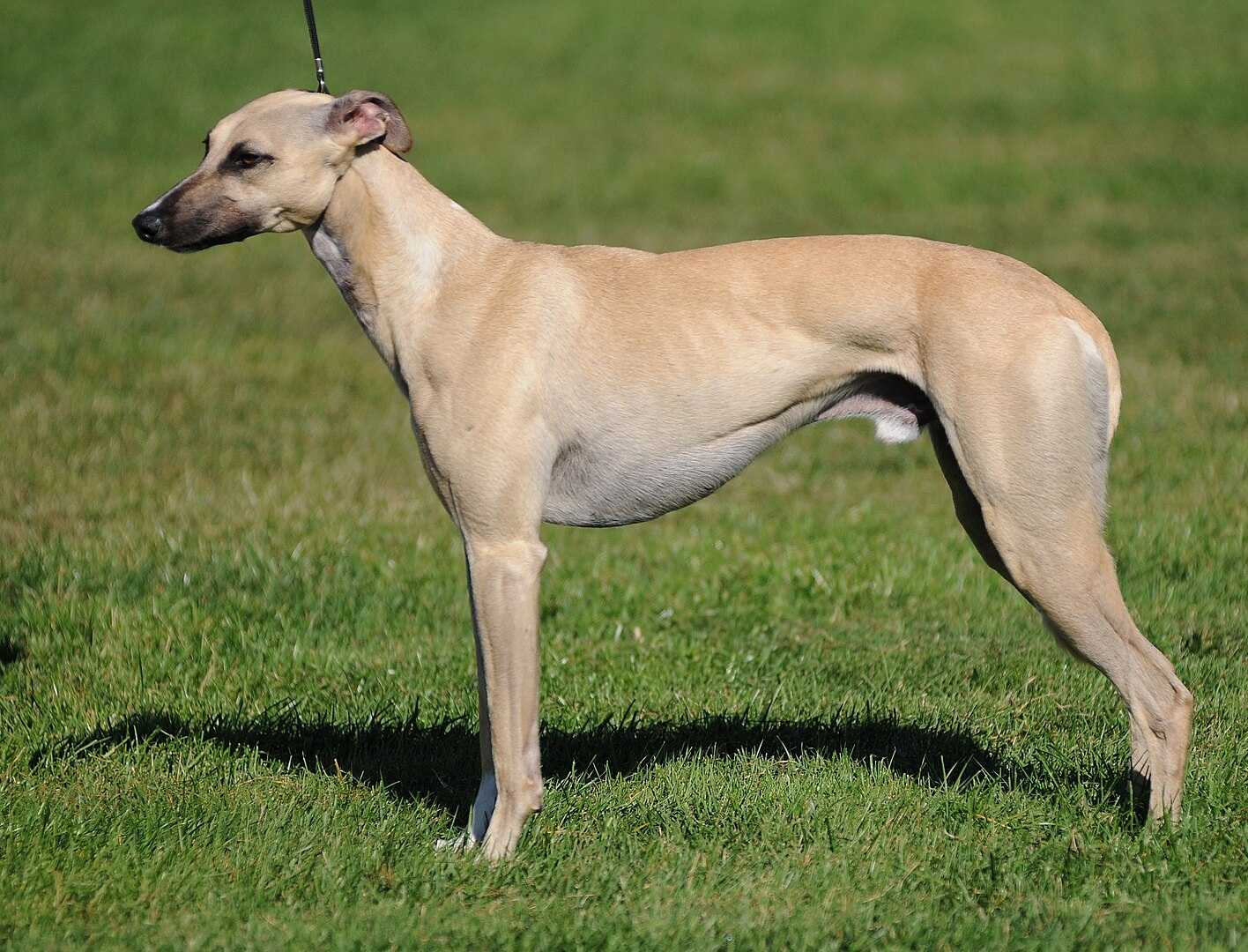
Lean British sighthound combining remarkable sprinting speed with a calm nature.
| Size | Weight | Height | Lifespan |
|---|---|---|---|
| Medium | 25 - 40 lbs | 18 - 22 inches | 12 - 15 years |
| (These are estimates and may vary.) | |||
Origin: United Kingdom
Own a Whippet? Share what activities they enjoy to help other dog owners.
Select up to 5 Activities
Know a Whippet? Share their personality traits to help other dog owners.
Select up to 5 traits
May be a good fit if you:
- Want a dog that is generally responsive to consistent, positive training.
- Are looking for a breed that generally does well with children.
- Are a first-time dog owner looking for a relatively approachable breed.
The Whippet developed in Britain during the 18th and 19th centuries as a fast, relatively inexpensive racing and hunting dog. Working-class families, particularly in the industrial north of England, bred small Greyhound-like dogs that could pursue rabbits and compete in informal races. Unlike a full-sized Greyhound, a Whippet was easier and cheaper to feed and house, earning associations with working-class communities and sometimes the nickname "poor man's racehorse." Early contests included rabbit coursing and later straight-line racing, where dogs sprinted toward their owners or a lure. Miners and mill workers became especially enthusiastic about the sport. Breeders selected intensely for acceleration and speed, producing the streamlined body, deep chest, long legs, and flexible back seen today. Terrier blood is often mentioned in accounts of early Whippet development, although the precise ancestry of the breed is not completely documented. Organized showing and racing during the late 19th century helped establish a consistent type, and the Whippet was recognized by Britain's Kennel Club in 1891. Despite its racing background, the breed became equally valued as a quiet household companion, creating its distinctive combination of explosive outdoor speed and relaxed indoor behaviour.