Bulldog
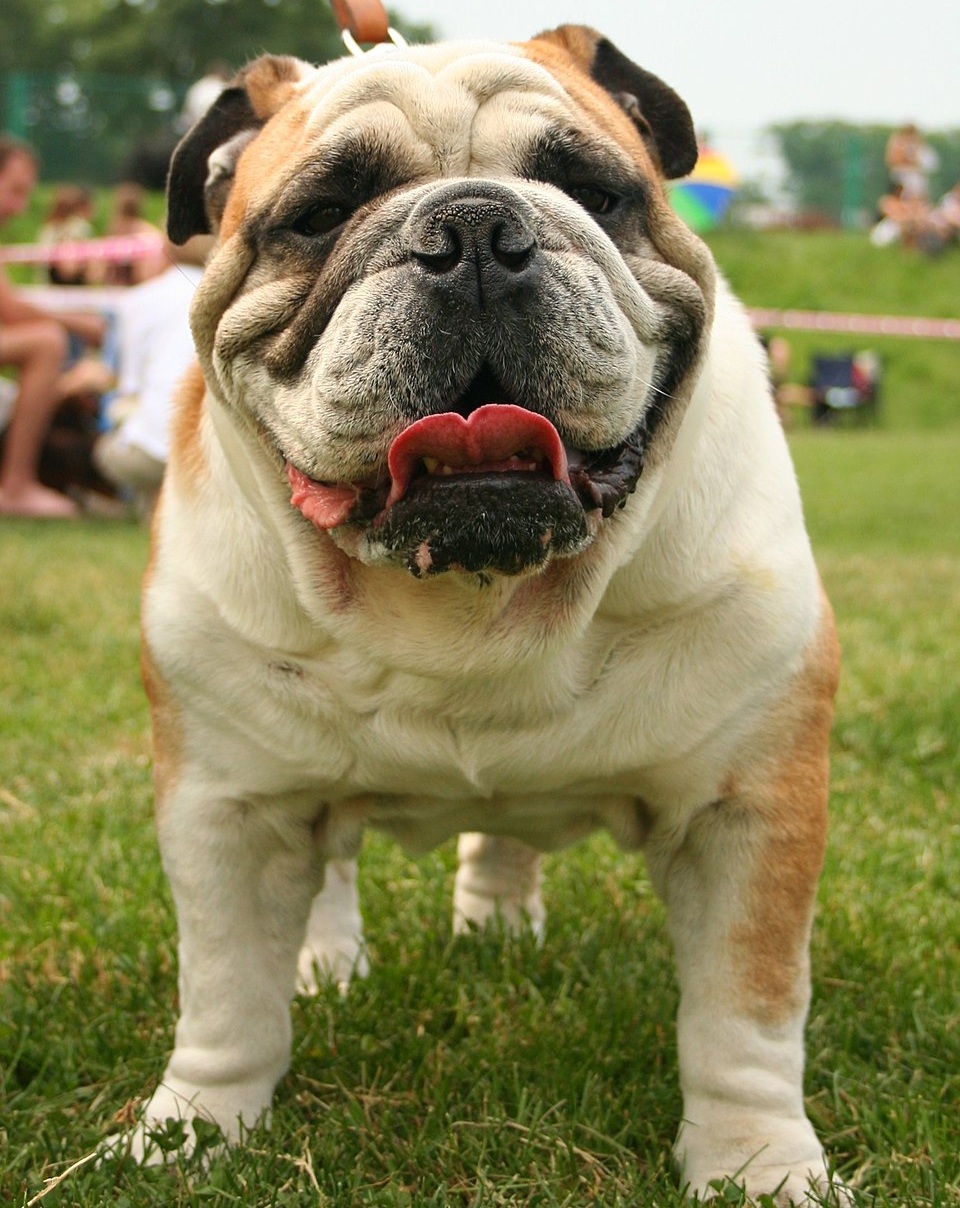
Stocky, easygoing companion known for its wrinkled face and determined nature.
| Size | Weight | Height | Lifespan |
|---|---|---|---|
| Medium | 40 - 50 lbs | 14 - 15 inches | 8 - 10 years |
| (These are estimates and may vary.) | |||
Origin: United Kingdom
Own a Bulldog? Share what activities they enjoy to help other dog owners.
Select up to 5 Activities
Know a Bulldog? Share their personality traits to help other dog owners.
Select up to 5 traits
May be a good fit if you:
- Are looking for a breed that generally does well with children.
- Want a dog that generally gets along well with other dogs.
- Want a breed that tends to adapt well to apartment living.
Things to consider:
- This breed may not do well when left alone for long periods.
The Bulldog's history is closely tied to England and the old blood sport of bull-baiting. Earlier bulldog-type dogs were bred for strength, courage, and the ability to seize and hold a much larger animal. Bull-baiting became illegal in England in 1835, leaving the dogs without the purpose for which they had been developed. Rather than disappearing, Bulldogs were preserved by enthusiasts who began breeding them for the emerging dog-show world and for life as companions. Breeders increasingly selected for a more manageable temperament while retaining the breed's broad, low-set appearance. The first written Bulldog standard appeared during the 1860s, and organized breed clubs followed later in the 19th century. Over generations, the Bulldog changed considerably from the more athletic dogs associated with baiting. Its transformation from a working fighting dog into a generally easygoing household companion is one of the more dramatic changes in the history of a modern dog breed.