Keeshond
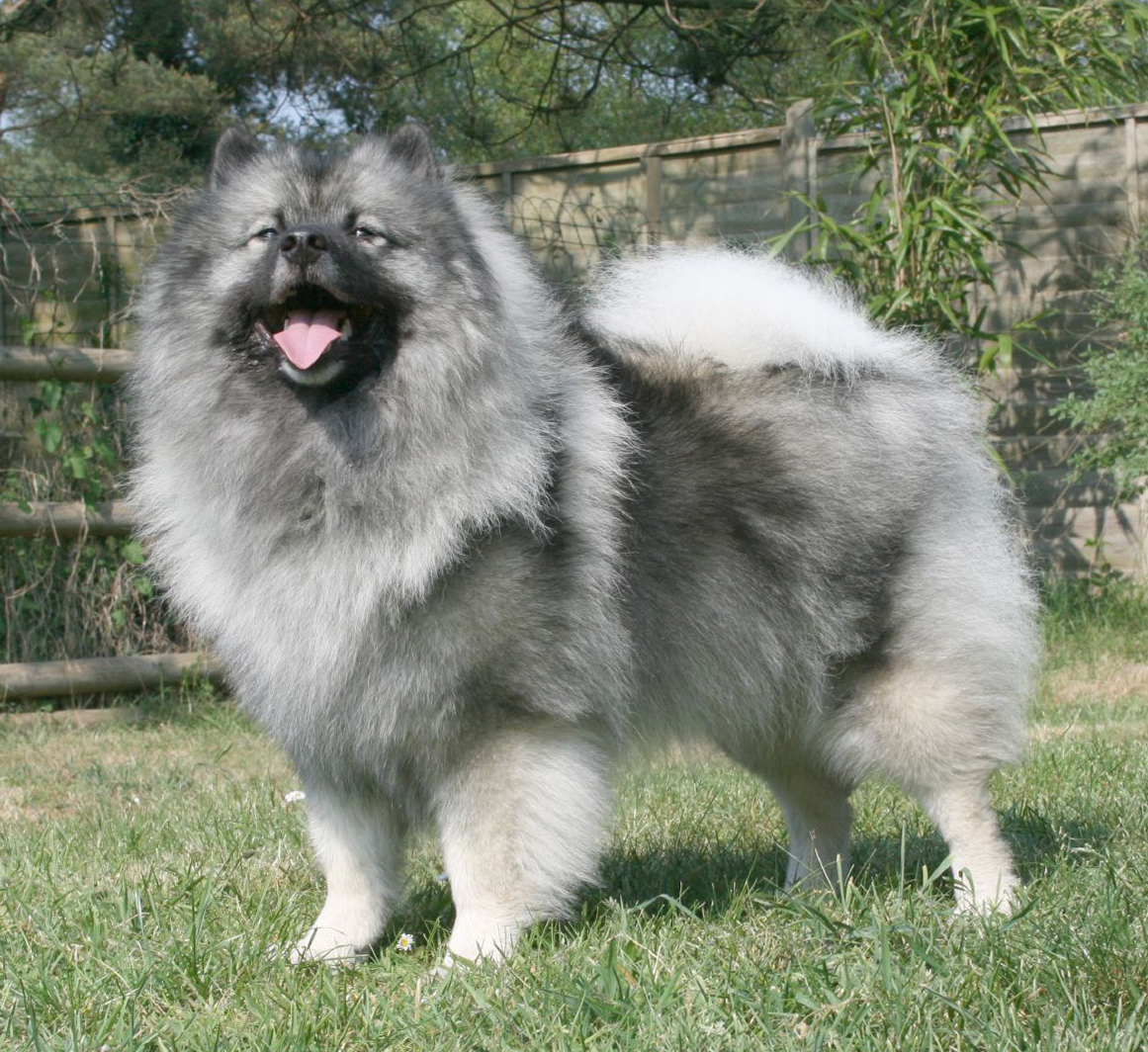
Friendly Dutch spitz known for its plush coat and distinctive spectacle markings.
| Size | Weight | Height | Lifespan |
|---|---|---|---|
| Medium | 35 - 45 lbs | 17 - 18 inches | 12 - 15 years |
| (These are estimates and may vary.) | |||
Origin: Netherlands
Own a Keeshond? Share what activities they enjoy to help other dog owners.
Select up to 5 Activities
Know a Keeshond? Share their personality traits to help other dog owners.
Select up to 5 traits
May be a good fit if you:
- Are looking for a breed that generally does well with children.
- Want a dog that generally gets along well with other dogs.
- Are a first-time dog owner looking for a relatively approachable breed.
Things to consider:
- This breed may not do well when left alone for long periods.
- Regular shedding means you may need to be comfortable with loose hair around the home.
The Keeshond developed from the family of sturdy spitz dogs long kept in the Netherlands and surrounding parts of Europe. These medium-sized dogs became particularly associated with Dutch barges, farms, and homes, where they served as alert watchdogs and companions. The breed gained a remarkable political association during the late 18th century. Cornelis "Kees" de Gyselaer, a leader of the Dutch Patriot movement opposing the House of Orange, kept a spitz-type dog that became a symbol of the Patriot cause. The name Keeshond eventually became attached to the breed, while the dogs associated with the opposing political faction included Pugs. After the Patriot movement was defeated, ownership of the symbolic dogs declined and the breed became less fashionable. Interest revived during the early 20th century, particularly through the efforts of Dutch enthusiasts who sought out surviving dogs and established organized breeding. In continental Europe, the Keeshond is generally considered part of the German Spitz family, while several English-speaking kennel clubs recognize it separately. Its characteristic facial markings, often called spectacles, combine with its thick coat and curled tail to give the breed its unmistakable expression.