Chinese Shar-Pei
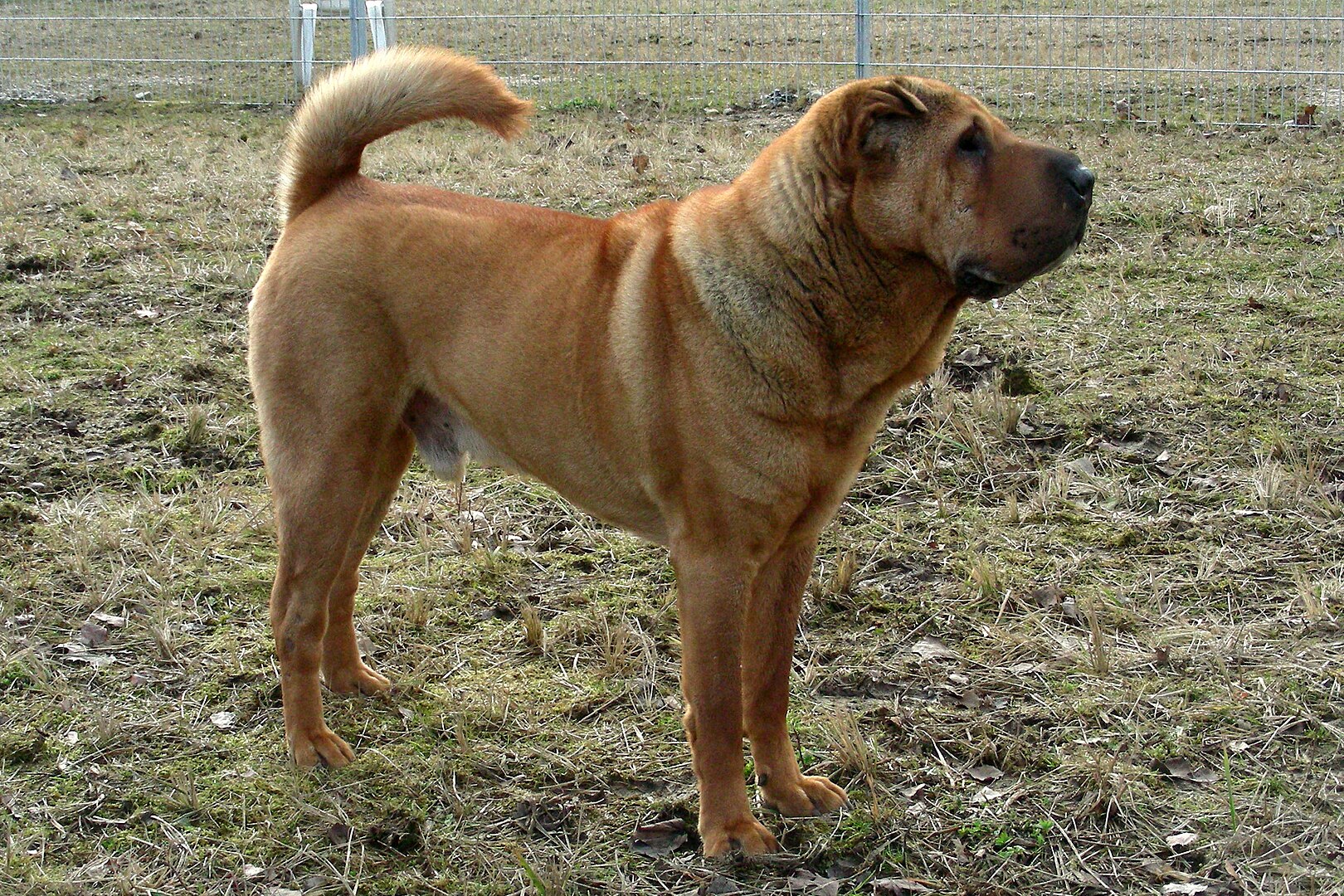
Ancient Chinese breed known for its loose skin, small ears, and independent nature.
| Size | Weight | Height | Lifespan |
|---|---|---|---|
| Large | 45 - 60 lbs | 18 - 20 inches | 8 - 12 years |
| (These are estimates and may vary.) | |||
Origin: China
Own a Chinese Shar-Pei? Share what activities they enjoy to help other dog owners.
Select up to 5 Activities
Know a Chinese Shar-Pei? Share their personality traits to help other dog owners.
Select up to 5 traits
May be a good fit if you:
- Are a first-time dog owner looking for a relatively approachable breed.
- Want a breed that tends to adapt well to apartment living.
The Chinese Shar-Pei has roots in southern China, where wrinkled, short-coated dogs were kept for practical work that included guarding property, hunting, and farm duties. Dogs with some Shar-Pei-like features appear in old Chinese art, although claims of a completely unchanged breed stretching back thousands of years are difficult to prove. The traditional Chinese Shar-Pei was generally leaner and less dramatically wrinkled than many modern examples. The breed came close to disappearing during the 20th century as political and social changes in China greatly reduced dog ownership and breeding. A small population survived, particularly around Hong Kong. During the 1970s, Hong Kong breeder Matgo Law made an international appeal for help preserving the breed. American enthusiasts responded, and the Shar-Pei quickly went from extreme rarity to intense popularity in the United States. Breeders selected heavily for the loose skin and wrinkles that made the dogs visually distinctive, sometimes producing a more exaggerated appearance than the traditional type. The breed was recognized by the American Kennel Club in 1992. Its blue-black tongue, also seen in the Chow Chow, remains one of its most unusual characteristics.