Dalmatian
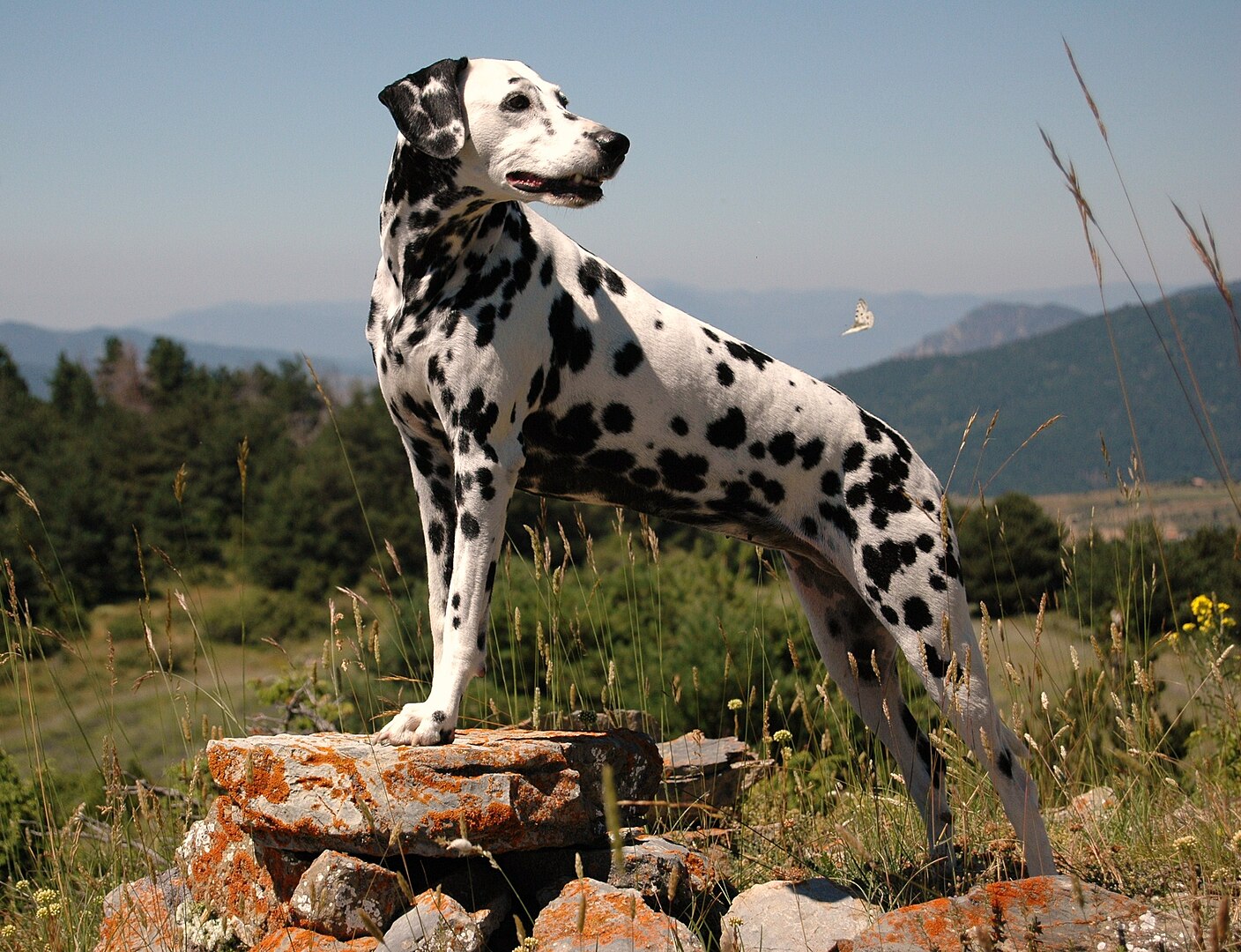
Athletic spotted breed famous for running beside carriages and working with horses.
| Size | Weight | Height | Lifespan |
|---|---|---|---|
| Large | 45 - 70 lbs | 19 - 24 inches | 11 - 13 years |
| (These are estimates and may vary.) | |||
Origin: Croatia
Own a Dalmatian? Share what activities they enjoy to help other dog owners.
Select up to 5 Activities
Know a Dalmatian? Share their personality traits to help other dog owners.
Select up to 5 traits
May be a good fit if you:
- Are looking for a breed that generally does well with children.
- Want a dog that generally gets along well with other dogs.
- Are a first-time dog owner looking for a relatively approachable breed.
Things to consider:
- This breed may not do well when left alone for long periods.
- Regular shedding means you may need to be comfortable with loose hair around the home.
The Dalmatian's distant origins are uncertain, and spotted dogs resembling it appear in artwork from several parts of Europe. The breed eventually became associated with Dalmatia, a historical region along the Adriatic coast, which provided its modern name. Its most distinctive historical role, however, developed largely in Britain, where Dalmatians became famous as carriage dogs. They ran beside or beneath horse-drawn coaches, helping guard the horses, passengers, and property during journeys. This work required exceptional stamina and a natural comfort around horses. The same qualities later created the breed's famous connection with fire departments. In the era of horse-drawn fire engines, Dalmatians could run with the horses, help clear a path, and remain with the team at the firehouse. Even after motorized fire engines replaced horses, the spotted dogs remained powerful fire-service mascots, particularly in North America. Dalmatians have also worked as hunting dogs, guards, performers, and companions. Puppies are born largely white, with their characteristic spots appearing afterward. The breed's athletic build and high endurance are reminders that the Dalmatian was developed not merely for its unusual appearance, but to travel considerable distances alongside moving horses.