English Foxhound
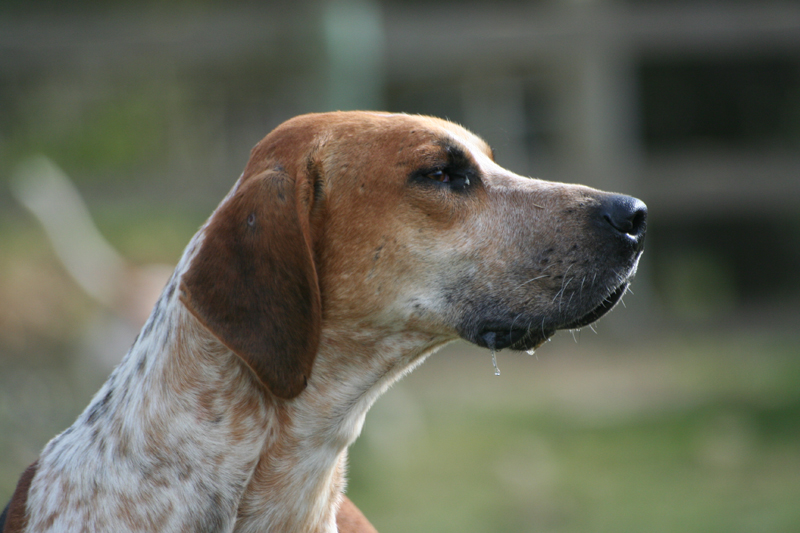
Athletic British pack hound developed for pursuing foxes over long distances.
| Size | Weight | Height | Lifespan |
|---|---|---|---|
| Large | 60 - 75 lbs | 23 - 24 inches | 10 - 13 years |
| (These are estimates and may vary.) | |||
Origin: United Kingdom
Own a English Foxhound? Share what activities they enjoy to help other dog owners.
Select up to 5 Activities
Know a English Foxhound? Share their personality traits to help other dog owners.
Select up to 5 traits
May be a good fit if you:
- Want a dog that is generally responsive to consistent, positive training.
- Are looking for a breed that generally does well with children.
- Want a dog that generally gets along well with other dogs.
Things to consider:
- This breed may not do well when left alone for long periods.
- This breed may be less suited to smaller living spaces.
The English Foxhound was developed in Britain for organized mounted fox hunting, particularly as the sport expanded among landowners during the 17th and 18th centuries. Packs needed hounds capable of following scent for hours while travelling efficiently across large areas of countryside. Breeders selected carefully for stamina, nose, voice, pack cooperation, and sound movement rather than simply raw speed. Foxhound pedigrees became unusually well documented because individual hunts maintained detailed breeding records. The Masters of Foxhounds Association, established in the 19th century, helped coordinate records and breeding among British packs. English Foxhounds were also exported abroad and contributed significantly to the development of the American Foxhound and several American coonhound breeds. Traditional fox hunting with hounds became increasingly controversial and was prohibited in England and Wales under the Hunting Act 2004, which came into force in 2005, although packs continue activities such as trail hunting within legal restrictions. Compared with many breeds that moved quickly from work to household companionship, the English Foxhound has remained strongly associated with pack life. Its sociable temperament toward other dogs, powerful voice, endurance, and desire to follow scent all reflect centuries of selection for coordinated hunting rather than independent life as a typical pet.