Giant Schnauzer
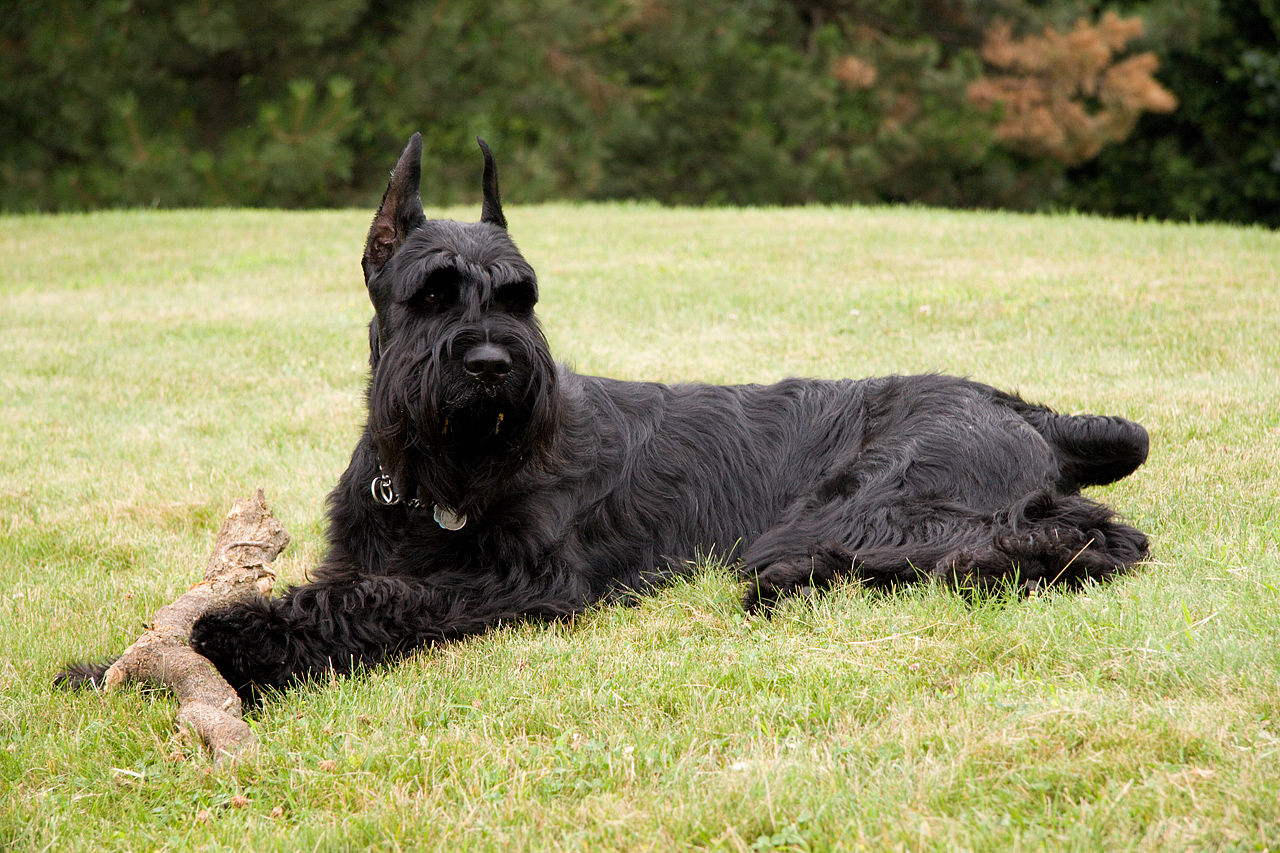
Powerful German working dog developed for driving cattle and guarding property.
| Size | Weight | Height | Lifespan |
|---|---|---|---|
| Giant | 55 - 95 lbs | 23 - 27 inches | 10 - 13 years |
| (These are estimates and may vary.) | |||
Origin: Germany
Own a Giant Schnauzer? Share what activities they enjoy to help other dog owners.
Select up to 5 Activities
Know a Giant Schnauzer? Share their personality traits to help other dog owners.
Select up to 5 traits
May be a good fit if you:
- Want a dog that is generally responsive to consistent, positive training.
- Are a first-time dog owner looking for a relatively approachable breed.
Things to consider:
- This breed may be less suited to smaller living spaces.
- This breed tends to need plenty of regular physical activity.
The Giant Schnauzer originated in southern Germany, particularly Bavaria and Württemberg, where farmers and livestock dealers needed large, rugged working dogs. It was developed from local farm and cattle dogs related to the Standard Schnauzer, with other working breeds contributing as breeders selected for greater size and strength. These dogs drove cattle to market, guarded farms and breweries, and protected carts and property. Their harsh coats offered useful protection in poor weather, while their intelligence and imposing appearance suited guarding work. As railways reduced the need for dogs to move livestock over long distances, the Giant Schnauzer found a new career. German police and military organizations recognized its trainability and guarding ability, and by the early 20th century it was increasingly used as a service dog. Formal breed development and showing also expanded during this period. The Giant eventually spread beyond Germany, although it has never become as common as the Miniature Schnauzer. Modern Giants continue to appear in obedience, protection sports, police work, and other demanding activities. Despite sharing the Schnauzer name and characteristic beard with its smaller relatives, this is a substantial working breed developed for jobs requiring considerably more physical power.