Irish Wolfhound
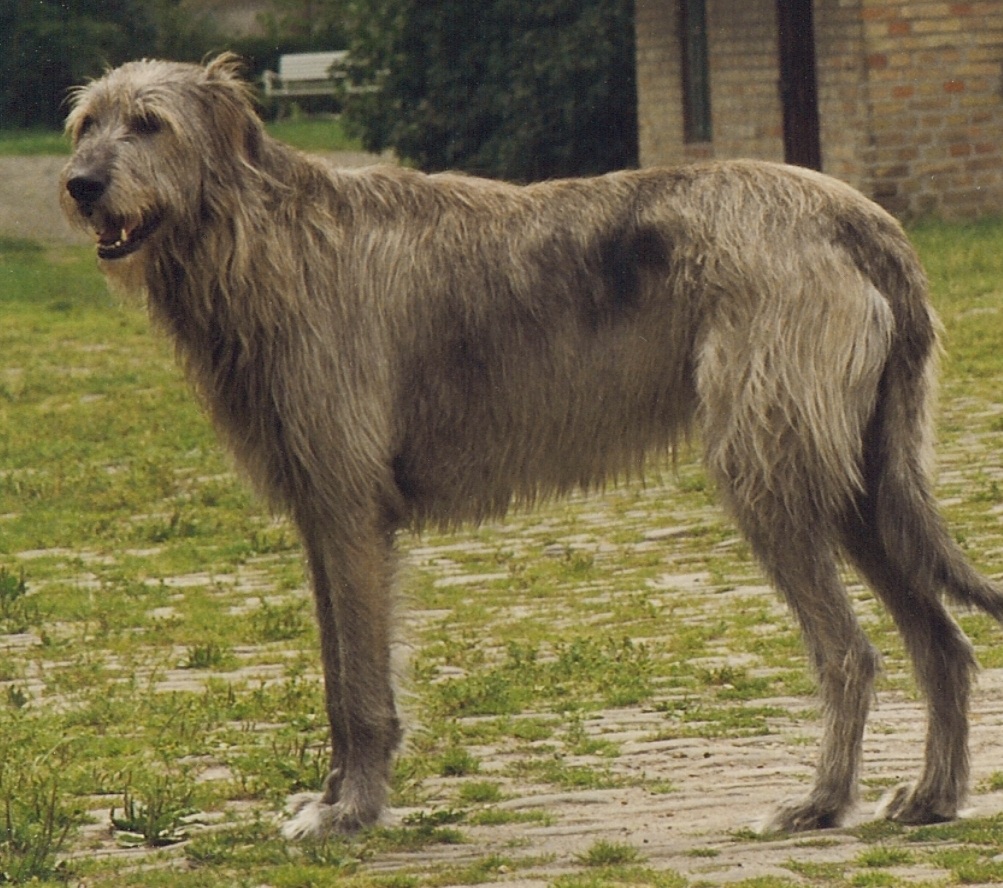
Towering Irish sighthound developed to pursue wolves and other large game.
| Size | Weight | Height | Lifespan |
|---|---|---|---|
| Giant | 105 - 120 lbs | Over 30 inches | 6 - 8 years |
| (These are estimates and may vary.) | |||
Origin: Ireland
Own a Irish Wolfhound? Share what activities they enjoy to help other dog owners.
Select up to 5 Activities
Know a Irish Wolfhound? Share their personality traits to help other dog owners.
Select up to 5 traits
May be a good fit if you:
- Are looking for a breed that generally does well with children.
- Want a dog that generally gets along well with other dogs.
- Are a first-time dog owner looking for a relatively approachable breed.
Things to consider:
- This breed may be less suited to smaller living spaces.
Large hunting hounds have been associated with Ireland for many centuries, where powerful dogs were used to pursue wolves and large game. Irish hounds were sufficiently valued that they were sometimes presented as prestigious gifts to rulers and nobles elsewhere in Europe. As wolves disappeared from Ireland, however, the practical need for enormous wolf-hunting dogs faded. By the 19th century, the old Irish wolfhound type had become extremely rare and may effectively have disappeared in its original form. Captain George Augustus Graham became central to the breed's revival beginning in the 1860s. He gathered surviving dogs believed to carry relevant ancestry and crossed them with breeds including the Scottish Deerhound and Great Dane to recreate a large hound resembling historical descriptions. Graham and other enthusiasts founded the Irish Wolfhound Club in 1885 and established a breed standard. The modern Irish Wolfhound therefore represents a deliberate reconstruction based on Ireland's old hunting-hound tradition rather than an unchanged bloodline stretching directly from antiquity. Today it is famous for extraordinary height and a calm temperament, but its long legs, deep chest, rough coat, and sighthound outline still reflect the demanding pursuit work its historical predecessors performed.