Borzoi
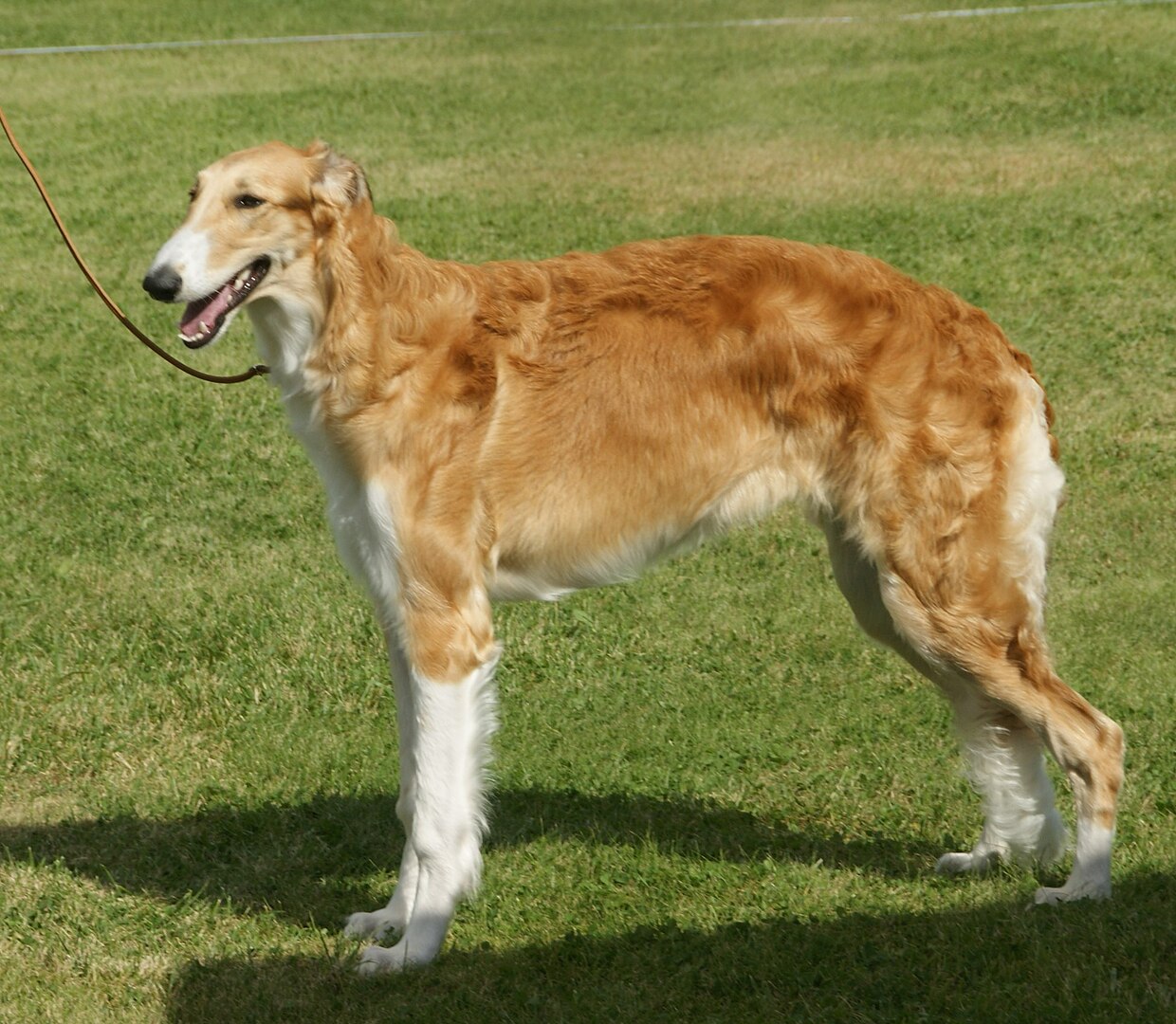
Elegant Russian sighthound bred for speed and hunting across vast open country.
| Size | Weight | Height | Lifespan |
|---|---|---|---|
| Giant | 60 - 105 lbs | Over 26 inches | 9 - 14 years |
| (These are estimates and may vary.) | |||
Origin: Russia
Own a Borzoi? Share what activities they enjoy to help other dog owners.
Select up to 5 Activities
Know a Borzoi? Share their personality traits to help other dog owners.
Select up to 5 traits
May be a good fit if you:
- Want a dog that is generally responsive to consistent, positive training.
- Are a first-time dog owner looking for a relatively approachable breed.
Things to consider:
- Regular shedding means you may need to be comfortable with loose hair around the home.
- Coat maintenance may require significant regular grooming.
The Borzoi was developed in Russia as a fast sighthound capable of pursuing wolves, foxes, and hares across large estates. Russian nobles maintained elaborate kennels and organized hunts involving packs of hounds. Scent hounds would locate and drive the quarry into open country, where Borzoi could use their remarkable speed to give chase. Hunting wolves required dogs that combined speed with enough size and courage to hold an animal until hunters arrived. For centuries, breeding was concentrated on aristocratic estates, and individual kennels developed their own strains. One of the most influential was the Perchino kennel of Grand Duke Nicholas Nikolaevich during the late 19th century. The breed was originally known in English-speaking countries as the Russian Wolfhound. The Russian Revolution was disastrous for Borzoi in their homeland because the dogs were strongly associated with the aristocracy, and many were killed. Fortunately, dogs had already been exported throughout Europe and North America, allowing the breed to survive internationally. The name Borzoi, derived from a Russian term associated with swiftness, was formally adopted in the United States in 1936. Its elegant appearance still conceals the build of a serious hunting athlete.