Bloodhound
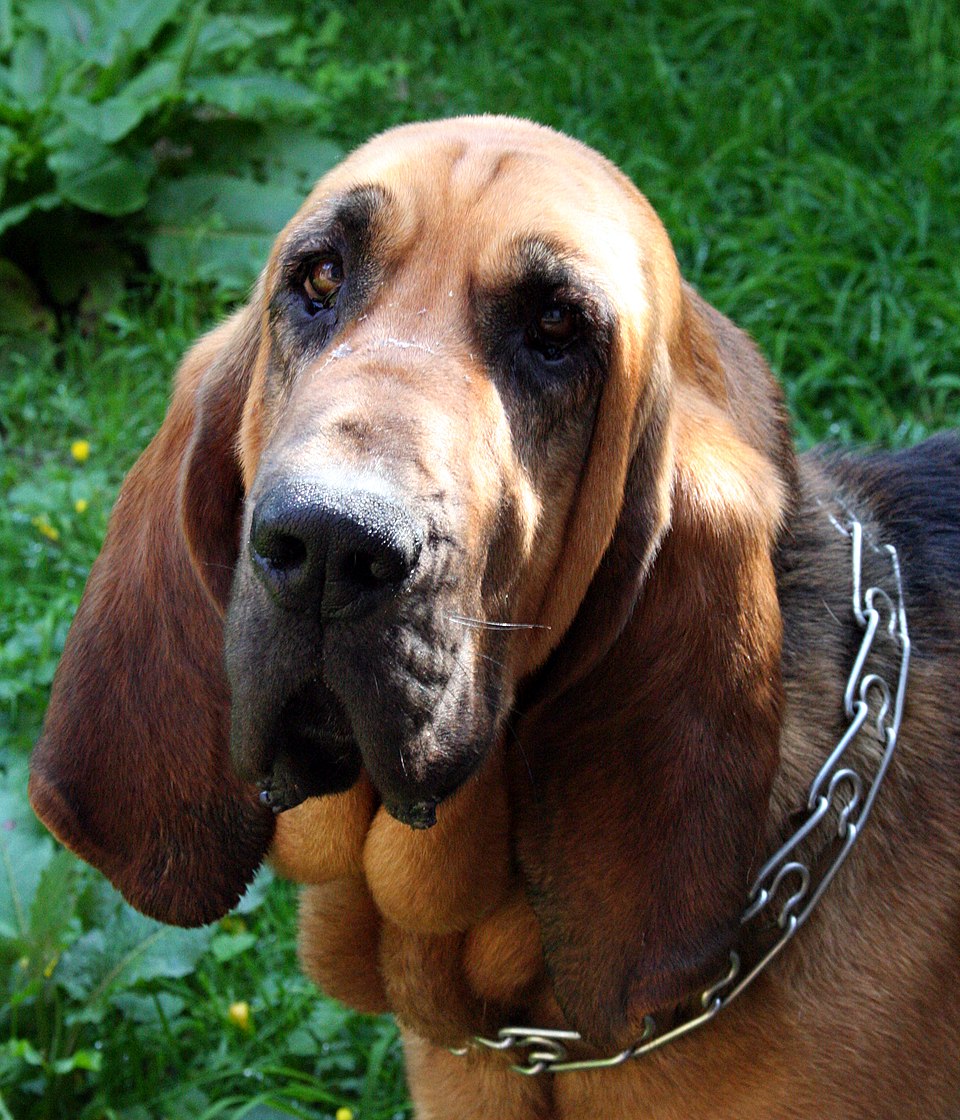
Large scent hound famous for its extraordinary nose and determined tracking ability.
| Size | Weight | Height | Lifespan |
|---|---|---|---|
| Giant | 80 - 110 lbs | 23 - 27 inches | 10 - 12 years |
| (These are estimates and may vary.) | |||
Origin: Belgium
Own a Bloodhound? Share what activities they enjoy to help other dog owners.
Select up to 5 Activities
Know a Bloodhound? Share their personality traits to help other dog owners.
Select up to 5 traits
May be a good fit if you:
- Want a dog that is generally responsive to consistent, positive training.
- Are looking for a breed that generally does well with children.
- Want a dog that generally gets along well with other dogs.
Things to consider:
- This breed may not do well when left alone for long periods.
- This breed may be less suited to smaller living spaces.
The Bloodhound has a long European history as a specialist scent hound. Its ancestry is traditionally associated with large hunting hounds maintained by medieval monasteries and noble households, including dogs connected with the Abbey of Saint-Hubert in what is now Belgium. The exact path from those early hounds to the modern Bloodhound is difficult to reconstruct, but large scenting dogs were well established in Britain by the Middle Ages. The word "bloodhound" did not originally mean a dog that followed the scent of blood; it is generally understood to have referred to carefully bred or "blooded" hounds. While Bloodhounds could be used in hunting, their extraordinary ability to follow human scent made them valuable for tracking people as well. Their reputation became especially strong in Britain and later North America. Bloodhounds were used to locate missing people, fugitives, and lost children, and their tracking work contributed to the development of modern search practices. The breed's loose facial skin and long ears are traditionally thought to help keep scent near the nose as the dog works with its head down. Modern technology has not made the Bloodhound's nose obsolete: trained dogs are still used in search-and-rescue and law-enforcement tracking.