Labmaraner
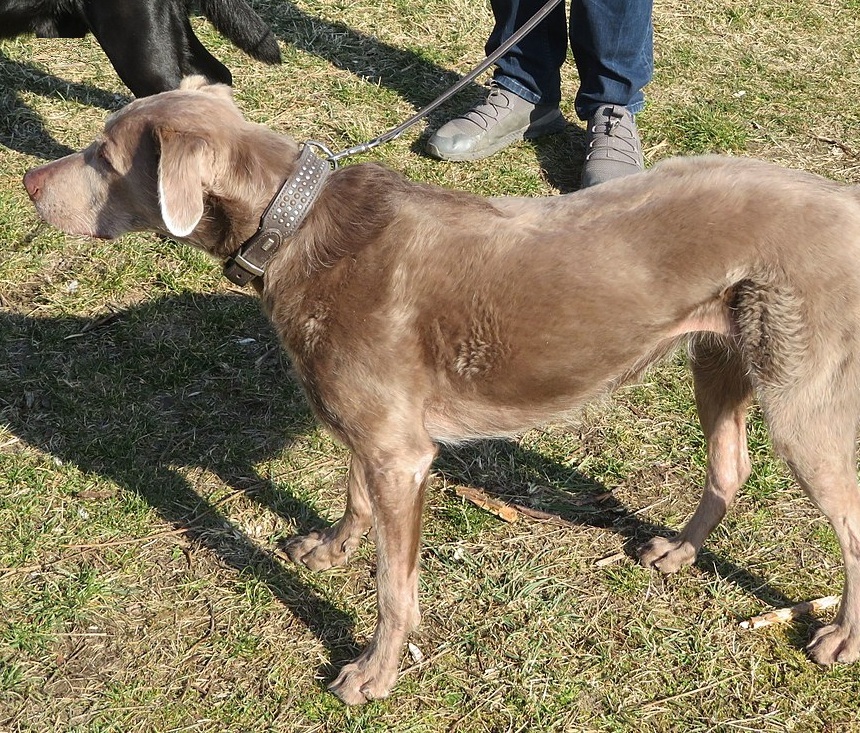
Labrador-Weimaraner cross known for its athleticism, intelligence, and friendly nature.
| Size | Weight | Height | Lifespan |
|---|---|---|---|
| Large | 60 - 100 lbs | 21 - 24 inches | 10 - 12 years |
| (These are estimates and may vary.) | |||
Origin: United States
Own a Labmaraner? Share what activities they enjoy to help other dog owners.
Select up to 5 Activities
Know a Labmaraner? Share their personality traits to help other dog owners.
Select up to 5 traits
May be a good fit if you:
- Want a dog that is generally responsive to consistent, positive training.
- Are looking for a breed that generally does well with children.
- Want a dog that generally gets along well with other dogs.
Things to consider:
- This breed may not do well when left alone for long periods.
- This breed may be less suited to smaller living spaces.
The Labmaraner is a modern cross between the Labrador Retriever and Weimaraner. There is no documented founder or universally accepted date for the cross, and Labrador-Weimaraner mixes likely existed before the Labmaraner name became commonly used. Both parent breeds have strong sporting backgrounds, making this cross somewhat different from mixes created primarily around appearance. Labradors developed from water dogs associated with Newfoundland before becoming highly successful British retrievers, while Weimaraners were developed in Germany as versatile hunting dogs. Both were selected to work closely with people and perform demanding physical activity. A Labmaraner can therefore inherit considerable stamina, retrieving instinct, intelligence, and enthusiasm for outdoor activity. Appearance varies because there is no breed standard. Some dogs inherit the Weimaraner's sleek grey colouring, while others more strongly resemble a Labrador. Body shape, ear length, coat colour, and adult size depend on the particular parents and traits inherited. Both parent breeds are relatively large and athletic, so Labmaraners are generally substantial dogs rather than small companion crosses. Major traditional kennel clubs do not recognize the Labmaraner as a distinct breed. Its identity comes from combining two established sporting breeds whose histories were built around active cooperation with hunters.