Lakeland Terrier
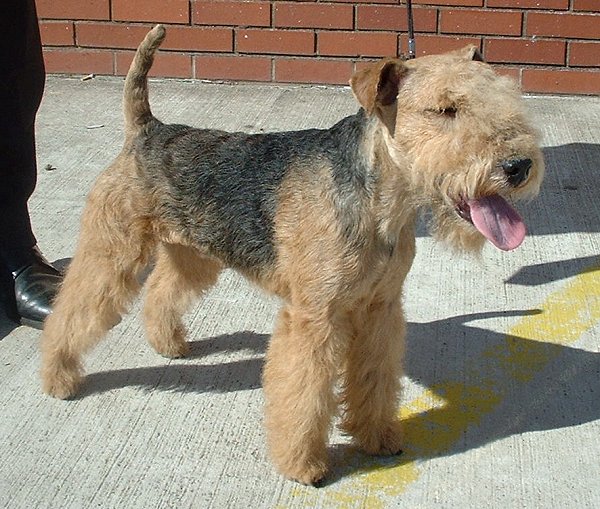
Bold English terrier developed to pursue foxes across rugged Lake District terrain.
| Size | Weight | Height | Lifespan |
|---|---|---|---|
| Small | 15 - 20 lbs | 13 - 15 inches | 12 - 15 years |
| (These are estimates and may vary.) | |||
Origin: United Kingdom
Own a Lakeland Terrier? Share what activities they enjoy to help other dog owners.
Select up to 5 Activities
Know a Lakeland Terrier? Share their personality traits to help other dog owners.
Select up to 5 traits
May be a good fit if you:
- Are looking for a breed that generally does well with children.
- Are a first-time dog owner looking for a relatively approachable breed.
- Want a breed that tends to adapt well to apartment living.
Things to consider:
- This breed may not do well when left alone for long periods.
- Coat maintenance may require significant regular grooming.
The Lakeland Terrier developed in the Lake District of northern England, where sheep farmers needed tough dogs capable of dealing with foxes in exceptionally rugged country. Foxes could threaten lambs, and the rocky hills contained narrow crevices where quarry could escape larger hunting dogs. Local terriers therefore had to be agile enough to cross steep terrain and small enough to follow a fox into rocky hiding places while still possessing considerable courage. Different valleys maintained their own strains, and dogs that contributed to the modern Lakeland were known by regional names including Patterdale, Fell, and Cumberland terriers. These working populations were selected primarily for ability rather than uniform appearance. During the early 20th century, enthusiasts began bringing the strains together into a standardized breed. A breed association was established in the 1920s, and Britain's Kennel Club recognized the Lakeland Terrier in 1928. The breed later became highly successful in dog shows while remaining much less common than some other terriers. Its narrow build, long legs, harsh coat, and flexible body all have practical roots. Unlike a decorative show outline, these features helped a working Lakeland travel over rough fells and squeeze into places where a fox might seek shelter.