Norwegian Lundehund
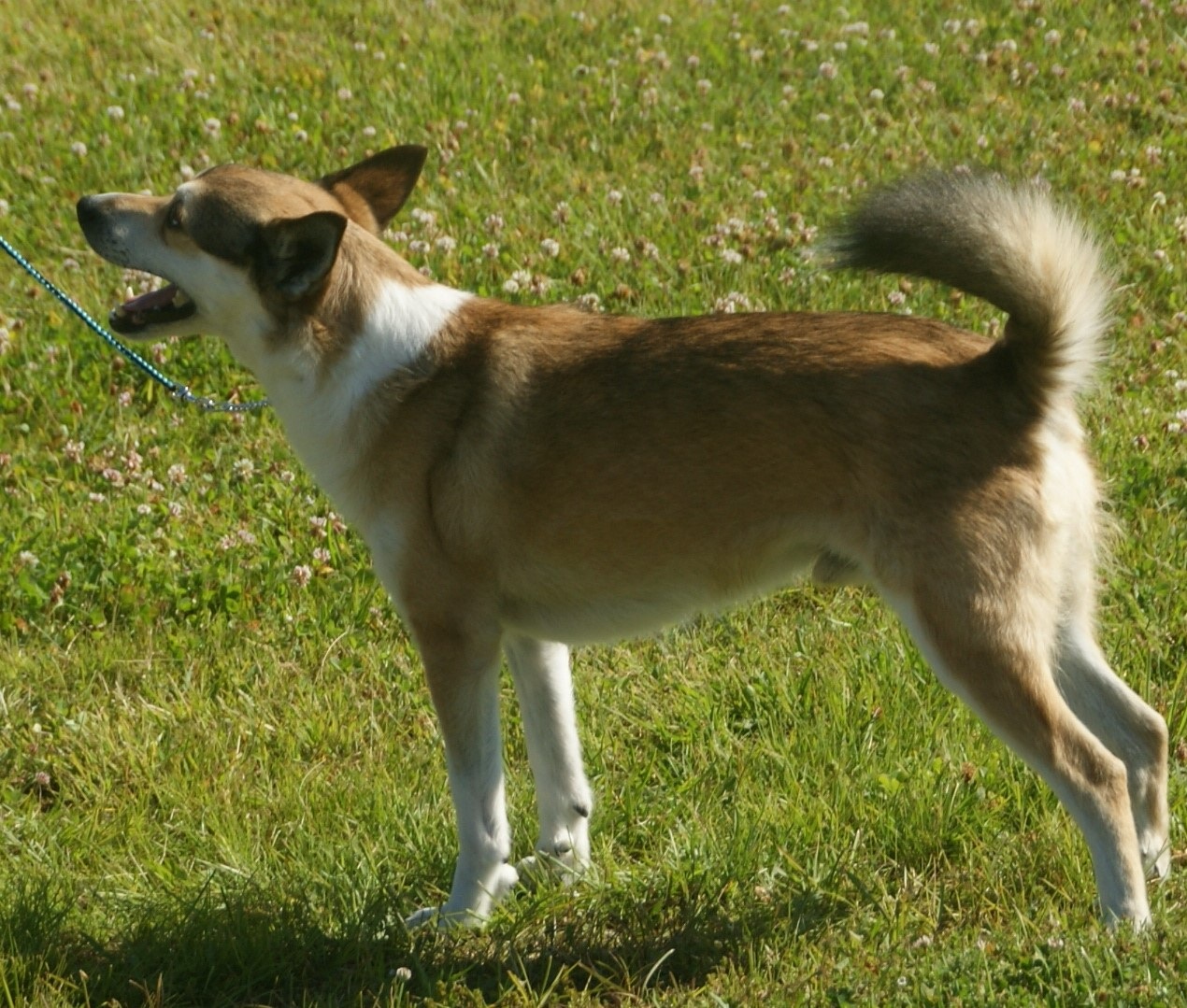
Unusual Norwegian hunting dog developed to climb cliffs in pursuit of puffins.
| Size | Weight | Height | Lifespan |
|---|---|---|---|
| Small | 12 - 18 lbs | 12 - 15 inches | 12 - 15 years |
| (These are estimates and may vary.) | |||
Origin: Norway
Own a Norwegian Lundehund? Share what activities they enjoy to help other dog owners.
Select up to 5 Activities
Know a Norwegian Lundehund? Share their personality traits to help other dog owners.
Select up to 5 traits
May be a good fit if you:
- Are looking for a breed that generally does well with children.
- Are a first-time dog owner looking for a relatively approachable breed.
Things to consider:
- This breed may not do well when left alone for long periods.
- This breed may be less suited to smaller living spaces.
The Norwegian Lundehund developed on remote islands along Norway's northern coast for one extraordinary job: hunting Atlantic puffins nesting on steep sea cliffs. Hunters needed a small dog capable of climbing rocky slopes, squeezing into narrow nesting crevices, and returning with birds. Generations of selection produced several unusual anatomical traits. Lundehunds normally have at least six toes on each foot, providing additional grip, and their exceptionally flexible joints allow them to spread their legs widely and maneuver through confined spaces. They can also fold their ears closed to help protect the ear canals from debris. When puffin hunting declined and eventually became protected, the breed lost its traditional purpose and nearly disappeared. A small surviving population on the island of Værøy became critical to its preservation. Norwegian breeder Eleanor Christie began working with island dogs during the 20th century, but canine distemper later devastated much of the population, requiring another rebuilding effort from surviving Værøy dogs. As a result, modern Lundehunds descend from a very small genetic foundation. The breed remains rare and faces inherited health challenges associated with this narrow gene pool. Its remarkable anatomy is a living record of one of the most specialized jobs ever performed by a domestic dog.