Schipperke
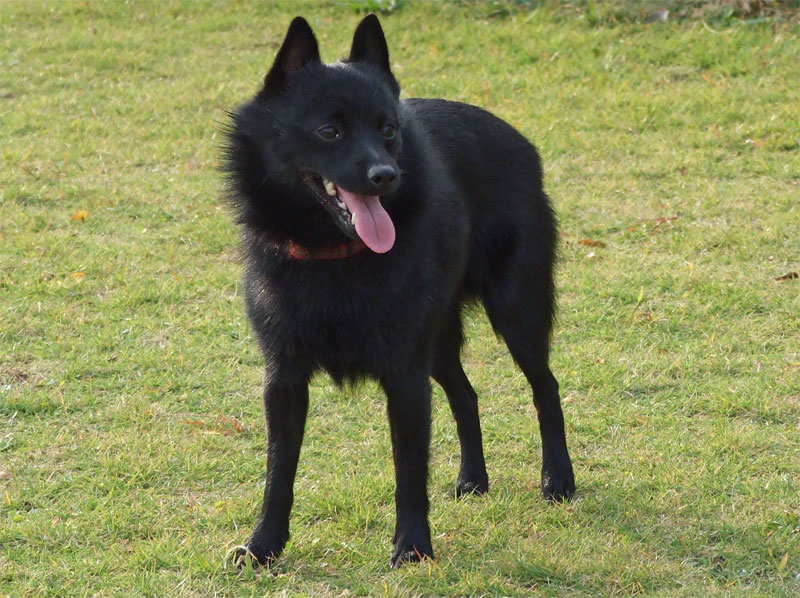
Small Belgian watchdog known for its curiosity, confidence, and fox-like appearance.
| Size | Weight | Height | Lifespan |
|---|---|---|---|
| Small | 10 - 16 lbs | 10 - 13 inches | 12 - 16 years |
| (These are estimates and may vary.) | |||
Origin: Belgium
Own a Schipperke? Share what activities they enjoy to help other dog owners.
Select up to 5 Activities
Know a Schipperke? Share their personality traits to help other dog owners.
Select up to 5 traits
May be a good fit if you:
- Are looking for a breed that generally does well with children.
- Are a first-time dog owner looking for a relatively approachable breed.
Things to consider:
- This breed may be less suited to smaller living spaces.
- This breed tends to need plenty of regular physical activity.
The Schipperke originated in Belgium and is closely related to an old black sheepdog known as the Leuvenaar. While the modern Schipperke is small, its ancestors belonged to a working tradition that included both herding and watchdog duties. Small black dogs became especially common among tradespeople in Brussels and Antwerp, where they guarded shops, controlled rats, and served as alert companions. The breed also became strongly associated with barges and canal boats, leading to the familiar translation of Schipperke as "little skipper." However, Belgian breed historians have argued that its name is more accurately connected with the Flemish word for a little shepherd, reflecting its sheepdog ancestry. During the late 17th century, Brussels shoemakers reportedly held competitions displaying their dogs and decorative collars, giving the Schipperke an unusually early connection with organized canine exhibitions. The breed became formally standardized during the 19th century and attracted royal attention when Queen Marie Henriette of Belgium acquired one in the 1880s. Interest soon spread to Britain and other countries. Its compact size, intense curiosity, alert barking, and tendency to investigate everything around it make sense for a dog historically expected to watch shops, boats, and homes while also keeping vermin under control.