Norwich Terrier
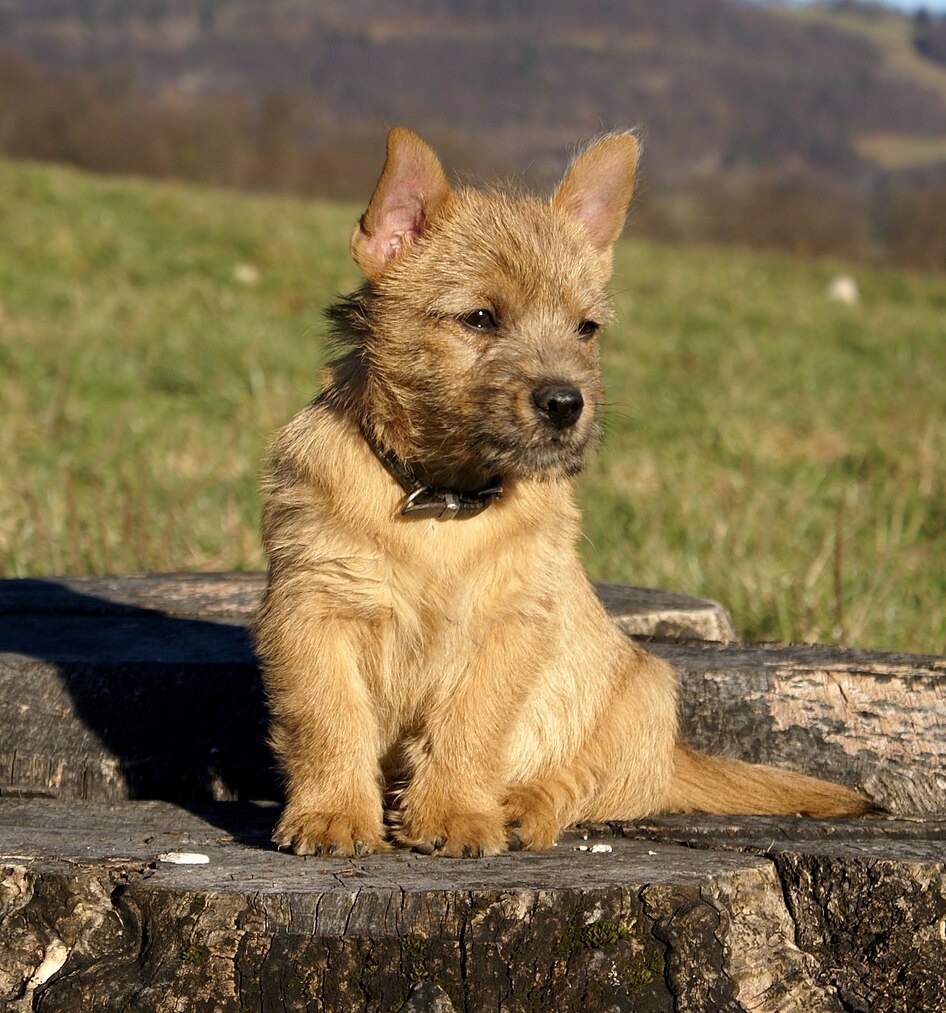
Small, sturdy English terrier developed for ratting and hunting in packs.
| Size | Weight | Height | Lifespan |
|---|---|---|---|
| Toy | Under 12 lbs | Under 10 inches | 12 - 15 years |
| (These are estimates and may vary.) | |||
Origin: United Kingdom
Own a Norwich Terrier? Share what activities they enjoy to help other dog owners.
Select up to 5 Activities
Know a Norwich Terrier? Share their personality traits to help other dog owners.
Select up to 5 traits
May be a good fit if you:
- Want a dog that is generally responsive to consistent, positive training.
- Are looking for a breed that generally does well with children.
- Want a dog that generally gets along well with other dogs.
Things to consider:
- This breed tends to need plenty of regular physical activity.
The Norwich Terrier developed in eastern England during the late 19th century from small working terriers valued for controlling rats and pursuing foxes. In and around East Anglia, breeders crossed various little terrier types to produce compact dogs with courage, sociability, and enough stamina to work alongside hunters. Small ratting terriers became particularly fashionable among students at Cambridge University during the 1880s, helping give the developing dogs an early following. A breeder and horseman named Frank "Roughrider" Jones later played an important role in establishing the type, and dogs exported to the United States were sometimes called Jones Terriers. Early Norwich Terriers could have either upright or folded ears, and both types were originally treated as one breed. Britain's Kennel Club recognized the Norwich Terrier in 1932. Breeders eventually decided that the ear types had become distinct enough to separate. In 1964, the Kennel Club classified the drop-eared dogs as Norfolk Terriers, leaving the prick-eared dogs with the Norwich name. Although small enough to be an easy household companion, the Norwich was built as a genuine working terrier, explaining its sturdy body, energetic personality, prey drive, and unusually bold attitude for its size.