Papillon
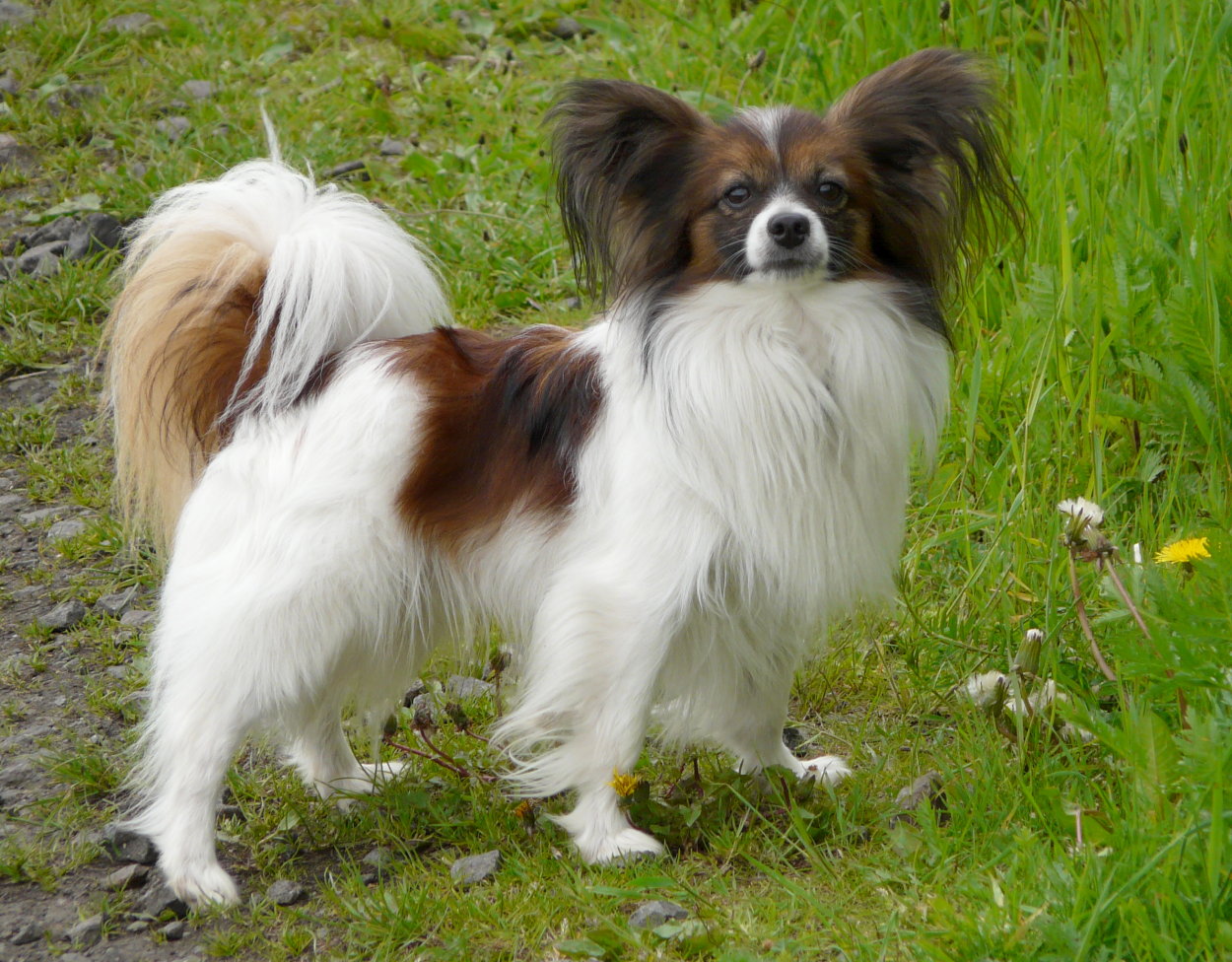
Tiny, athletic companion known for its butterfly-like ears and lively intelligence.
| Size | Weight | Height | Lifespan |
|---|---|---|---|
| Toy | 5 - 10 lbs | 8 - 11 inches | 14 - 16 years |
| (These are estimates and may vary.) | |||
Origin: France
Own a Papillon? Share what activities they enjoy to help other dog owners.
Select up to 5 Activities
Know a Papillon? Share their personality traits to help other dog owners.
Select up to 5 traits
May be a good fit if you:
- Want a dog that is generally responsive to consistent, positive training.
- Are looking for a breed that generally does well with children.
- Are a first-time dog owner looking for a relatively approachable breed.
Things to consider:
- This breed may not do well when left alone for long periods.
- This breed tends to need plenty of regular physical activity.
The Papillon descends from small toy spaniels that were fashionable among European nobility for centuries. Dogs with the breed's fine-boned body and silky coat appear in paintings by major European artists as far back as the Renaissance, often sitting beside wealthy women and royal families. The earliest dogs did not necessarily have the upright ears now associated with the Papillon. Many had dropped ears, a variety that still exists today and is known as the Phalène, meaning moth. Through selective breeding, the erect-eared form became increasingly popular. Its large, fringed ears reminded people of a butterfly, giving the breed its French name Papillon. Continental Europe, particularly France and Belgium, played an important role in refining the modern dog. Unlike many toy breeds reduced from substantially larger working dogs, the Papillon has a long history as a small companion. Its decorative appearance can obscure how athletic and trainable it is, however. Papillons have retained the alertness and intelligence of the old toy spaniels and regularly compete in obedience and agility today. The breed therefore combines a centuries-old history in European drawing rooms with abilities that extend well beyond simply being a lapdog.