Affenpinscher
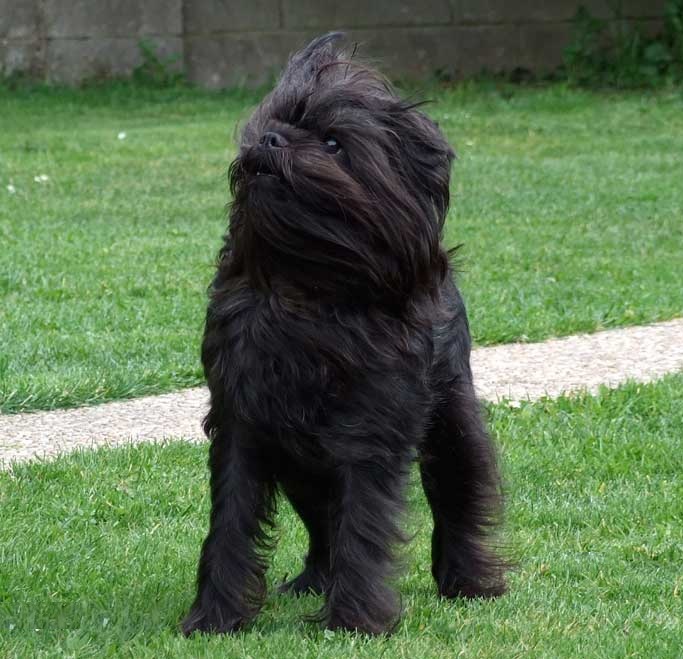
Small German companion with terrier-like confidence and a distinctive monkey-like face.
| Size | Weight | Height | Lifespan |
|---|---|---|---|
| Toy | 7 - 10 lbs | 9 - 12 inches | 12 - 15 years |
| (These are estimates and may vary.) | |||
Origin: Germany
Own a Affenpinscher? Share what activities they enjoy to help other dog owners.
Select up to 5 Activities
Know a Affenpinscher? Share their personality traits to help other dog owners.
Select up to 5 traits
May be a good fit if you:
- Are a first-time dog owner looking for a relatively approachable breed.
- Want a breed that tends to adapt well to apartment living.
Things to consider:
- This breed may not do well when left alone for long periods.
- Coat maintenance may require significant regular grooming.
The Affenpinscher developed in German-speaking Europe from small rough-coated dogs used to control rats and mice. Its name comes from the German word "Affe," meaning monkey, a reference to the breed's distinctive facial expression. Early Affenpinscher-type dogs were often larger than the modern breed and worked around stables, shops, kitchens, and farms where rodents were a constant problem. Over time, breeders selected smaller dogs that increasingly moved from practical ratting work into the household as companions. The breed shares historical connections with other German pinscher and schnauzer-type dogs, although its exact early ancestry is not fully documented. Affenpinschers were depicted in European art before modern kennel clubs established formal pedigrees, but not every similar-looking historical dog can be confidently identified as the modern breed. Organized breeding became more established in Germany during the late 19th and early 20th centuries. The American Kennel Club recognized the Affenpinscher in 1936. The Second World War disrupted European breeding and reduced numbers, but the breed survived and was rebuilt afterward. Today it is primarily a companion, yet its alertness, confidence, curiosity, and willingness to chase small animals are reminders that the little "monkey dog" began as a practical rodent hunter.