Brussels Griffon
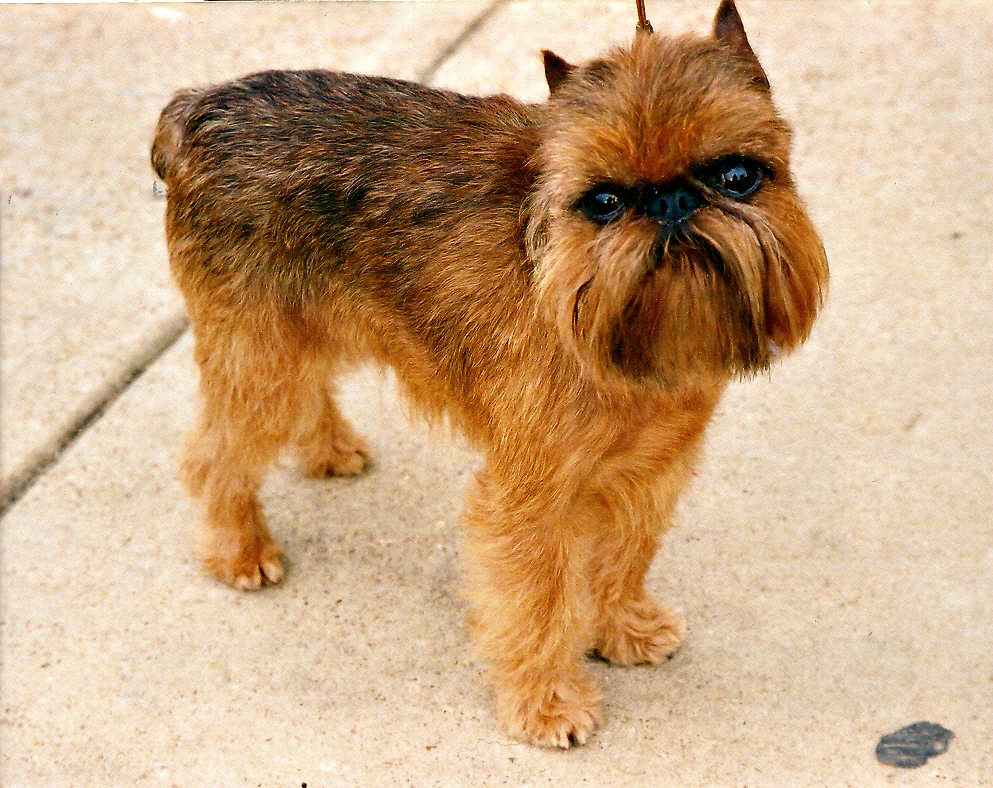
Expressive Belgian companion descended from small working dogs once used as ratters.
| Size | Weight | Height | Lifespan |
|---|---|---|---|
| Toy | 8 - 10 lbs | 7 - 10 inches | 12 - 15 years |
| (These are estimates and may vary.) | |||
Origin: Belgium
Own a Brussels Griffon? Share what activities they enjoy to help other dog owners.
Select up to 5 Activities
Know a Brussels Griffon? Share their personality traits to help other dog owners.
Select up to 5 traits
May be a good fit if you:
- Want a breed that tends to adapt well to apartment living.
Things to consider:
- This breed may not do well when left alone for long periods.
- Coat maintenance may require significant regular grooming.
The Brussels Griffon began with small rough-coated dogs kept around stables in Brussels, Belgium. These dogs, known as Griffons d'Ecurie or stable griffons, earned their keep by hunting rats and other vermin around horses and carriage houses. During the 19th century, breeders crossed them with several small companion breeds to create a more distinctive dog. Pugs contributed to the shortened face and also helped produce a smooth-coated variety, while toy spaniels influenced the breed's head and expression. The developing Griffons became increasingly popular beyond the stable yard, particularly among Belgian coachmen and fashionable households. Queen Marie Henriette of Belgium took an interest in the breed, helping raise its social status during the late 1800s. Three closely related varieties developed: the rough red Brussels Griffon, the differently coloured Belgian Griffon, and the smooth-coated Petit Brabançon. Kennel clubs classify these varieties differently depending on the country; the American Kennel Club treats them together as the Brussels Griffon. The breed's enormous eyes and almost human-looking expression now define its appearance, making it easy to forget that its ancestors were practical little ratters working around the horse stables of Brussels.