Japanese Chin
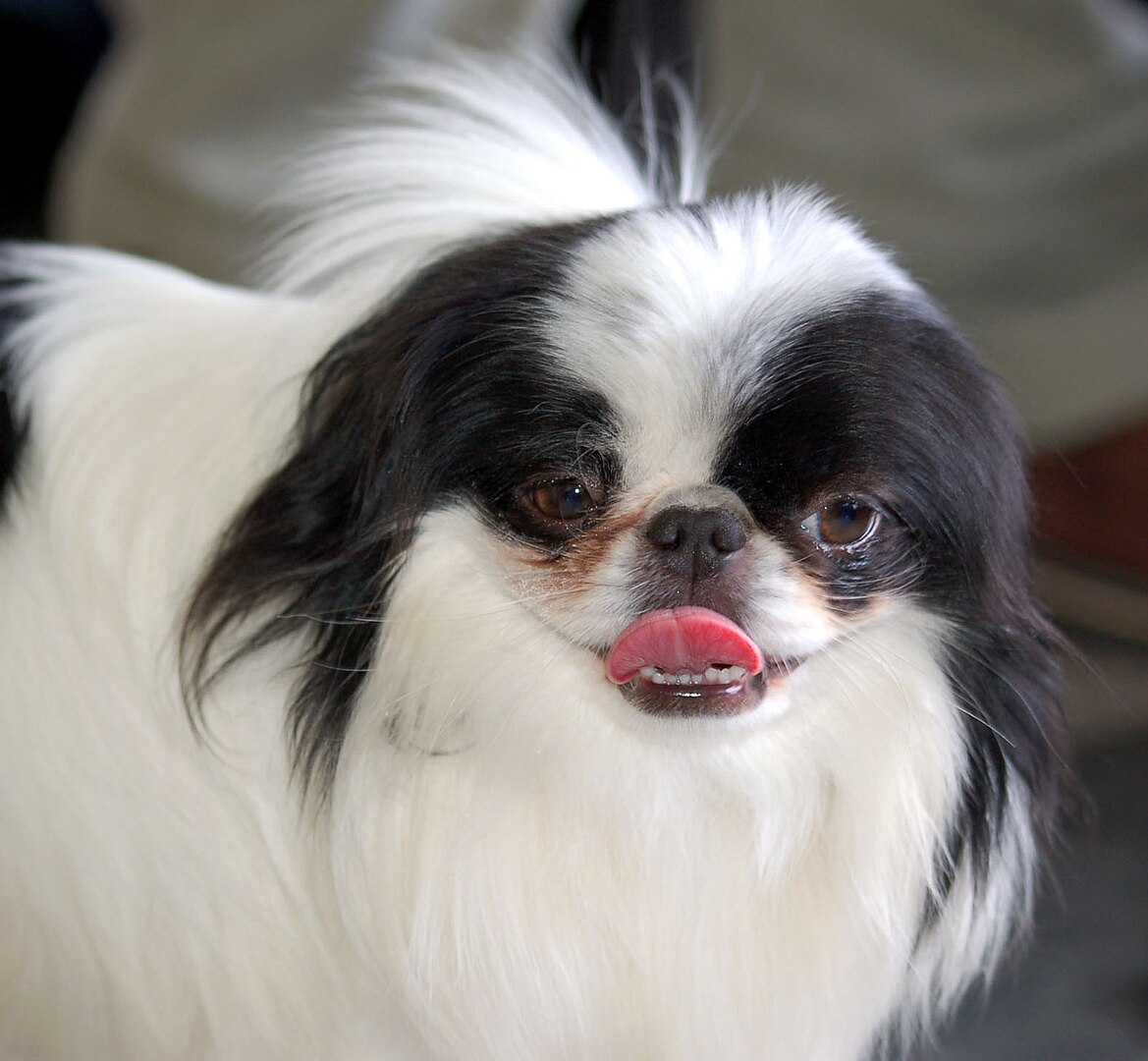
Elegant Asian companion known for its expressive face and distinctly catlike nature.
| Size | Weight | Height | Lifespan |
|---|---|---|---|
| Toy | 7 - 11 lbs | 8 - 11 inches | 10 - 12 years |
| (These are estimates and may vary.) | |||
Origin: Japan
Own a Japanese Chin? Share what activities they enjoy to help other dog owners.
Select up to 5 Activities
Know a Japanese Chin? Share their personality traits to help other dog owners.
Select up to 5 traits
May be a good fit if you:
- Are a first-time dog owner looking for a relatively approachable breed.
- Want a breed that tends to adapt well to apartment living.
Things to consider:
- This breed may not do well when left alone for long periods.
Despite its modern name, the Japanese Chin probably has deeper ancestral connections to small companion dogs from China and the Korean Peninsula. Toy dogs moved between East Asian royal courts as valuable gifts for centuries, and dogs that reached Japan were selectively developed into the distinctive companion known today. Unlike many Japanese breeds created for hunting or practical work, the Chin was associated closely with aristocratic households and was bred primarily for companionship. Japanese breeders favoured a small dog with a broad face, large dark eyes, silky coat, and distinctive high-stepping movement. Westerners encountered the breed in greater numbers after Japan reopened to international trade during the mid-19th century. Dogs were presented or exported to Europe and the United States, where they were initially often called Japanese Spaniels. Queen Alexandra of Britain became a notable enthusiast and helped make the breed fashionable in Europe. The American Kennel Club recognized the Japanese Spaniel in 1888, and its official name was changed to Japanese Chin in 1977. Its famously catlike habits, including climbing onto high surfaces and using its paws to clean its face, fit a breed developed for generations as an indoor companion rather than a conventional working dog.