Pekingese
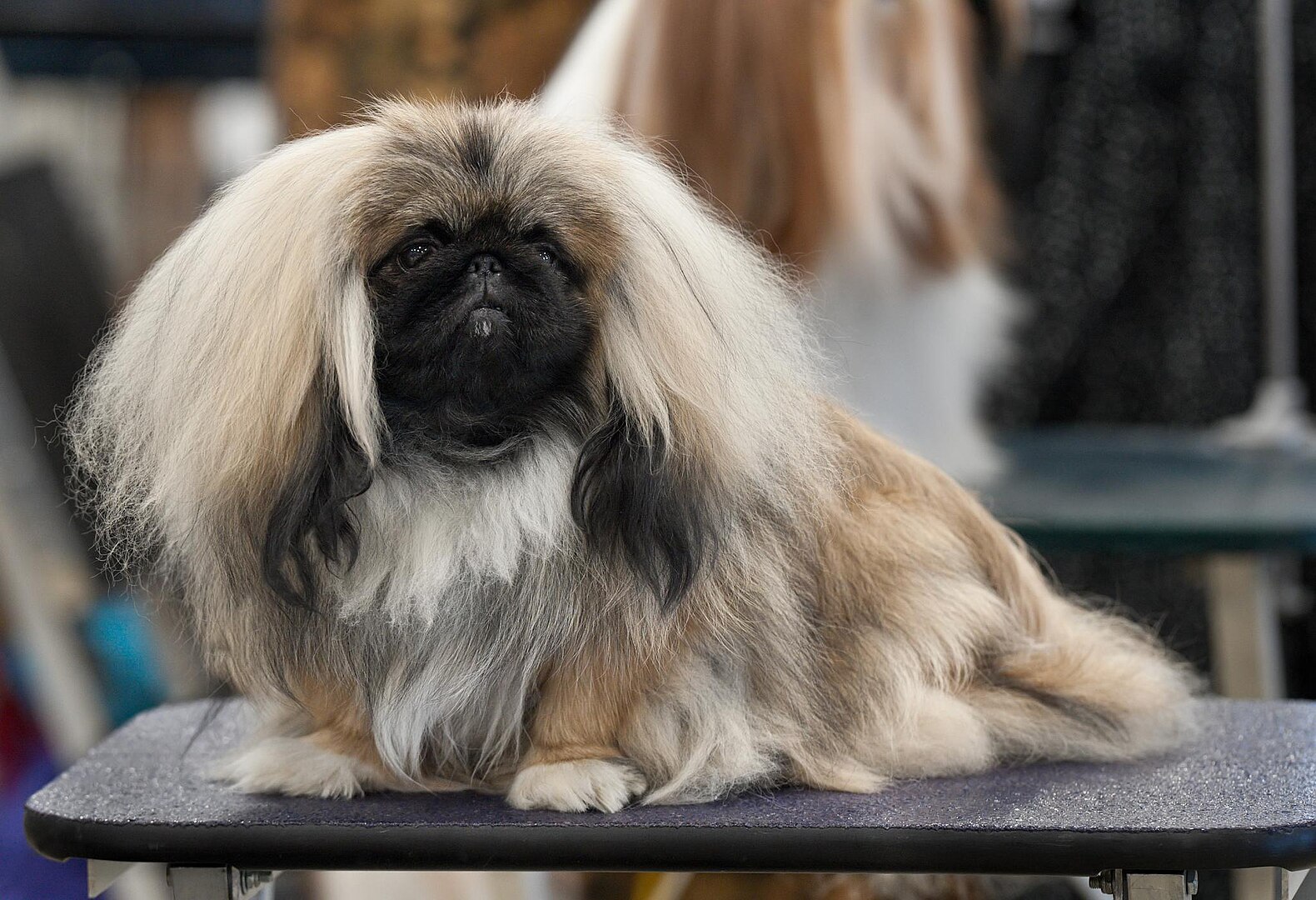
Ancient Chinese palace companion known for its confidence and distinctive lion-like coat.
| Size | Weight | Height | Lifespan |
|---|---|---|---|
| Toy | Under 14 lbs | 6 - 9 inches | 12 - 14 years |
| (These are estimates and may vary.) | |||
Origin: China
Own a Pekingese? Share what activities they enjoy to help other dog owners.
Select up to 5 Activities
Know a Pekingese? Share their personality traits to help other dog owners.
Select up to 5 traits
May be a good fit if you:
- Want a dog that is generally responsive to consistent, positive training.
- Are a first-time dog owner looking for a relatively approachable breed.
- Want a breed that tends to adapt well to apartment living.
Things to consider:
- Coat maintenance may require significant regular grooming.
The Pekingese was developed in imperial China as a companion dog associated closely with the royal court. Small, flat-faced dogs with lion-like appearances were prized for centuries, reflecting the cultural importance of lions in Buddhist symbolism despite real lions not being native to China. Palace breeding produced compact dogs with heavy coats, broad heads, and confident personalities. For much of their history, these dogs were largely inaccessible to outsiders. A major turning point came in 1860 during the Second Opium War, when British and French forces entered Beijing and occupied the Old Summer Palace. British troops found several small palace dogs, and surviving examples were taken back to Britain. One was presented to Queen Victoria and was reportedly named Looty, a blunt reminder of how the dog had reached Britain. Additional imports followed in later decades, allowing the breed to become established outside China. Pekingese quickly attracted enthusiasts and became prominent in early dog shows. The breed's palace background helps explain why it was developed almost entirely as a companion rather than for physical work. Its deliberate, self-assured personality and dramatic coat are the legacy of generations spent as a prized dog of the Chinese imperial household.