Miniature Pinscher
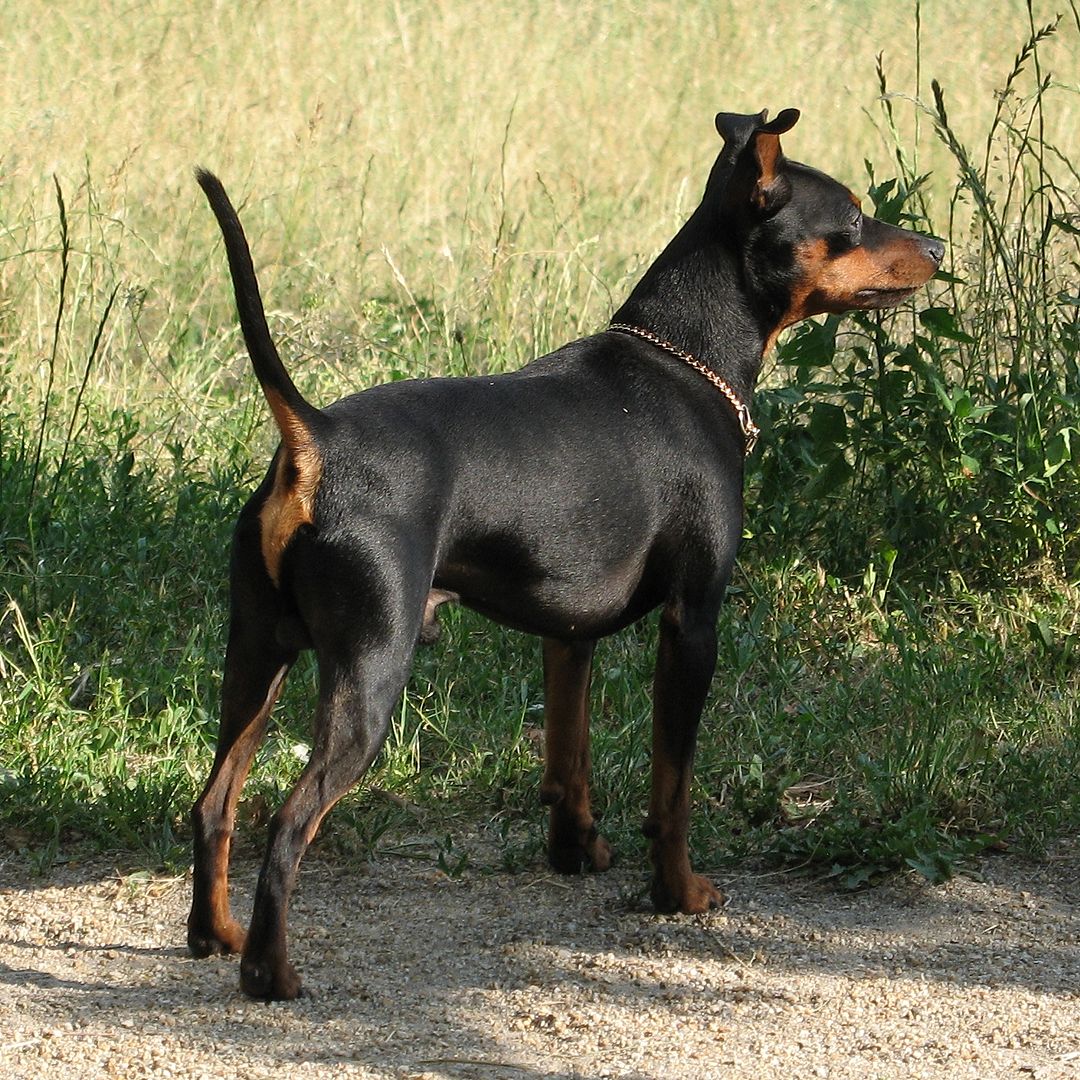
Small, spirited German breed known for its confidence and distinctive high-stepping gait.
| Size | Weight | Height | Lifespan |
|---|---|---|---|
| Toy | 8 - 10 lbs | 10 - 12 inches | 12 - 16 years |
| (These are estimates and may vary.) | |||
Origin: Germany
Own a Miniature Pinscher? Share what activities they enjoy to help other dog owners.
Select up to 5 Activities
Know a Miniature Pinscher? Share their personality traits to help other dog owners.
Select up to 5 traits
May be a good fit if you:
- Are looking for a breed that generally does well with children.
- Are a first-time dog owner looking for a relatively approachable breed.
- Want a breed that tends to adapt well to apartment living.
Things to consider:
- This breed may not do well when left alone for long periods.
Despite its resemblance to a tiny Doberman, the Miniature Pinscher is not a miniature version of that breed. It is actually the older type, developed in Germany from small working dogs used to control rats around farms, stables, and homes. Its precise ancestry is not fully documented, but the German Pinscher and small smooth-coated dogs of central Europe played important roles, with Dachshund and Italian Greyhound influence commonly associated with the breed's development. Historical artwork suggests dogs resembling the Miniature Pinscher existed well before the Doberman was created in the late 19th century. German breeders began standardizing the Miniature Pinscher around the turn of the 20th century, and it became increasingly popular as both a companion and show dog. The breed reached the United States in the early 1900s and was recognized by the American Kennel Club in 1925. One of its most recognizable traits is the high-stepping "hackney-like" gait called for in the American breed standard. Although classified as a toy breed in North America, its background is that of a practical little vermin hunter. That helps explain the confidence, alertness, curiosity, and willingness to chase that can seem surprisingly large for such a small dog.