Saint Bernard
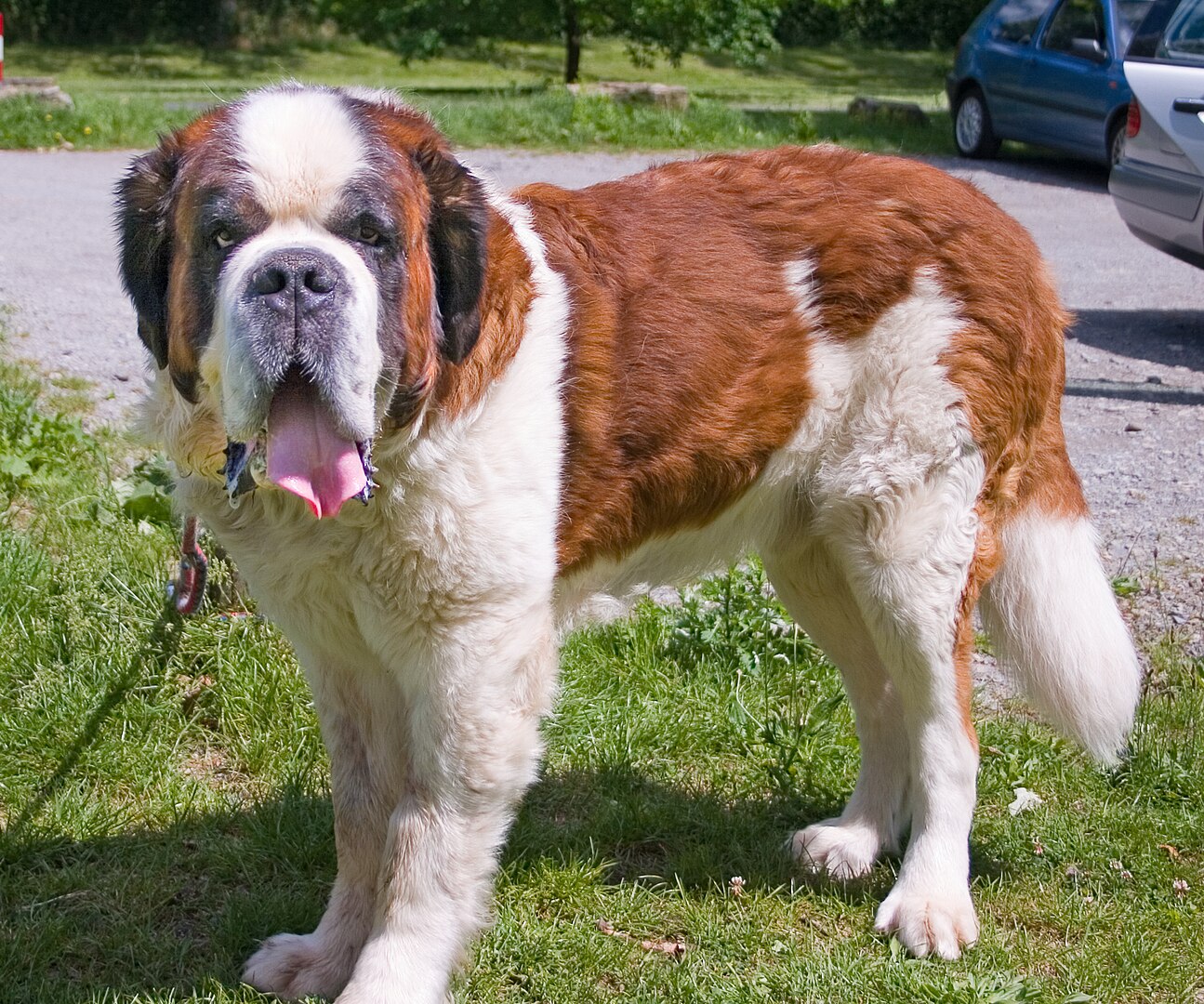
Massive Alpine working dog famous for rescue work and its calm, gentle nature.
| Size | Weight | Height | Lifespan |
|---|---|---|---|
| Giant | 120 - 180 lbs | 26 - 30 inches | 8 - 10 years |
| (These are estimates and may vary.) | |||
Origin: Switzerland
Own a Saint Bernard? Share what activities they enjoy to help other dog owners.
Select up to 5 Activities
Know a Saint Bernard? Share their personality traits to help other dog owners.
Select up to 5 traits
May be a good fit if you:
- Are looking for a breed that generally does well with children.
- Want a dog that generally gets along well with other dogs.
Things to consider:
- This breed may not do well when left alone for long periods.
- Regular shedding means you may need to be comfortable with loose hair around the home.
The Saint Bernard became famous through the Great St Bernard Pass in the Alps, where a hospice founded centuries ago offered shelter to travellers crossing between Switzerland and Italy. Large farm and guard dogs were kept at the hospice by monks by the 17th century. Over time, the dogs proved useful in deep snow and became associated with finding travellers who had become lost or buried during severe weather. The most celebrated hospice dog was Barry, who lived in the early 1800s and was credited with saving numerous lives. His preserved body remains associated with the Natural History Museum in Bern. The romantic image of a Saint Bernard carrying a small barrel of brandy around its neck, however, comes from later artwork rather than actual rescue practice. Severe winters and avalanches periodically killed hospice dogs, and outside breeding contributed to the population. During the 19th century, breeders standardized the Saint Bernard and both short- and long-coated varieties became established. Modern rescue technology eventually replaced dogs in their traditional Alpine role, but their history remains inseparable from the pass. Today's enormous Saint Bernard is primarily a companion, descended from dogs whose reputation was built in one of Europe's most difficult mountain crossings.