Schnoodle
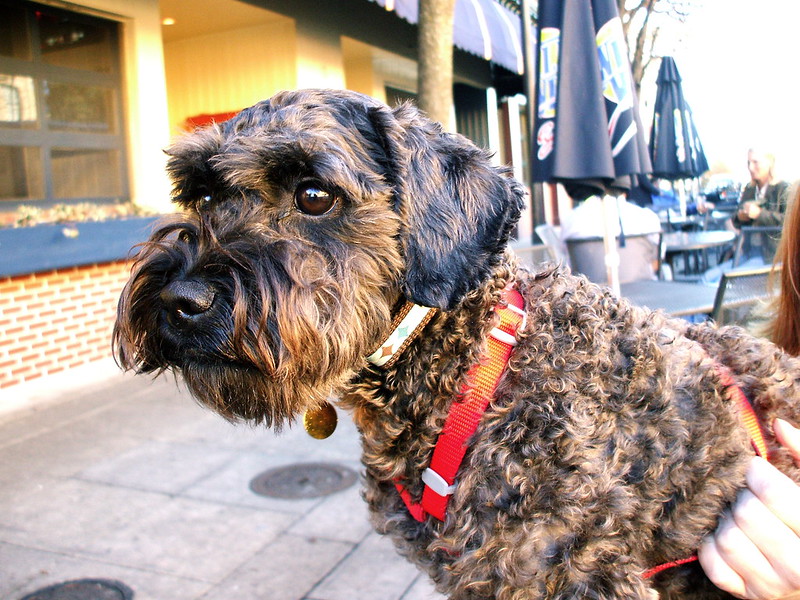
Schnauzer-Poodle cross known for its intelligence and wide range of possible sizes.
| Size | Weight | Height | Lifespan |
|---|---|---|---|
| Toy | 6 - 12 lbs | 10 - 12 inches | 12 - 15 years |
| Miniature | 13 - 20 lbs | 12 - 16 inches | 12 - 15 years |
| Standard | 20 - 45 lbs | 16 - 20 inches | 12 - 15 years |
| Large | 50 - 70 lbs | 20 - 26 inches | 12 - 15 years |
| (These are estimates and may vary.) | |||
Origin: United States
Own a Schnoodle? Share what activities they enjoy to help other dog owners.
Select up to 5 Activities
Know a Schnoodle? Share their personality traits to help other dog owners.
Select up to 5 traits
May be a good fit if you:
- Are looking for a breed that generally does well with children.
- Are a first-time dog owner looking for a relatively approachable breed.
Things to consider:
- This breed may not do well when left alone for long periods.
- This breed tends to need plenty of regular physical activity.
The Schnoodle is a cross between a Schnauzer and Poodle that became increasingly popular as an intentionally bred companion during the late 20th century. There is no single accepted founder or precise date for the cross. One unusual feature of the Schnoodle is the enormous potential range in size. Schnauzers exist in Miniature, Standard, and Giant varieties, while Poodles also occur in multiple sizes. Depending on the parents used, a Schnoodle can therefore range from a relatively small companion to a large, powerful dog. Both parent families have substantial working histories. Schnauzers developed in Germany as farm dogs, ratters, cattle dogs, and guardians depending on variety, while Poodles descend from highly intelligent water retrievers. As a result, Schnoodles are often active and trainable, but temperament varies according to ancestry and individual inheritance. Their coats can be wiry, wavy, or curly, and lower shedding is possible but not guaranteed. Because Schnoodles are not a standardized breed, there is no universally accepted appearance, size, or generational breeding system. Major traditional kennel clubs do not recognize them as a distinct breed. The name instead describes a broad family of Schnauzer-Poodle crosses created primarily for companionship.