Huskydoodle
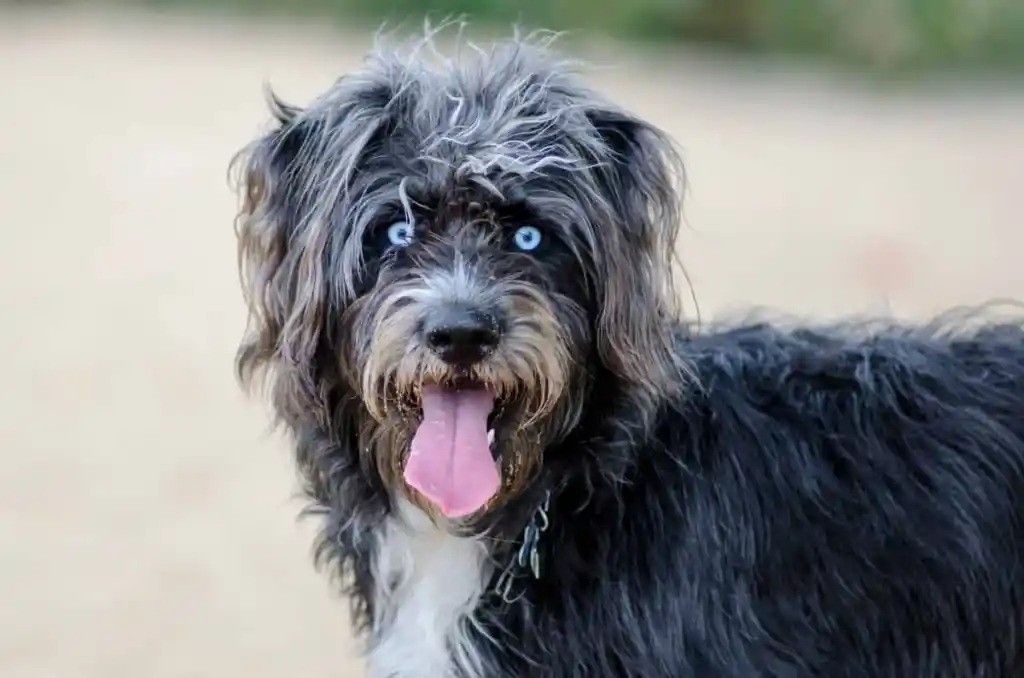
Siberian Husky-Poodle cross known for its energy, intelligence, and varied coat.
| Size | Weight | Height | Lifespan |
|---|---|---|---|
| Large | 40 - 60 lbs | 20 - 23 inches | 10 - 15 years |
| (These are estimates and may vary.) | |||
Origin: United States
Own a Huskydoodle? Share what activities they enjoy to help other dog owners.
Select up to 5 Activities
Know a Huskydoodle? Share their personality traits to help other dog owners.
Select up to 5 traits
May be a good fit if you:
- Are looking for a breed that generally does well with children.
- Want a dog that generally gets along well with other dogs.
Things to consider:
- This breed may not do well when left alone for long periods.
- Coat maintenance may require significant regular grooming.
The Huskydoodle is a modern cross between the Siberian Husky and Poodle and may also be called a Huskypoo or Siberpoo. There is no clearly documented founder or exact point at which the cross began, and intentional breeding appears to have grown alongside the wider popularity of Poodle mixes in recent decades. The two parent breeds come from very different working traditions. Siberian Huskies were developed by the Chukchi people of northeastern Siberia as endurance sled dogs, while Poodles originated as European water retrievers. Both are intelligent and athletic, so their offspring can require considerably more exercise and mental stimulation than the friendly "-doodle" name might suggest. Standard Poodles are commonly used because their size is more compatible with the Siberian Husky, although resulting adult size can still vary. Coat type is especially unpredictable. Some Huskydoodles inherit a dense double coat with significant seasonal shedding, while others develop a wavier or curlier coat influenced by the Poodle. Husky markings and blue eyes are possible but never guaranteed. Major traditional kennel clubs do not recognize the Huskydoodle as a distinct breed. It is best understood as a recent companion cross whose individual characteristics depend heavily on the traits inherited from two energetic working breeds.