Samusky
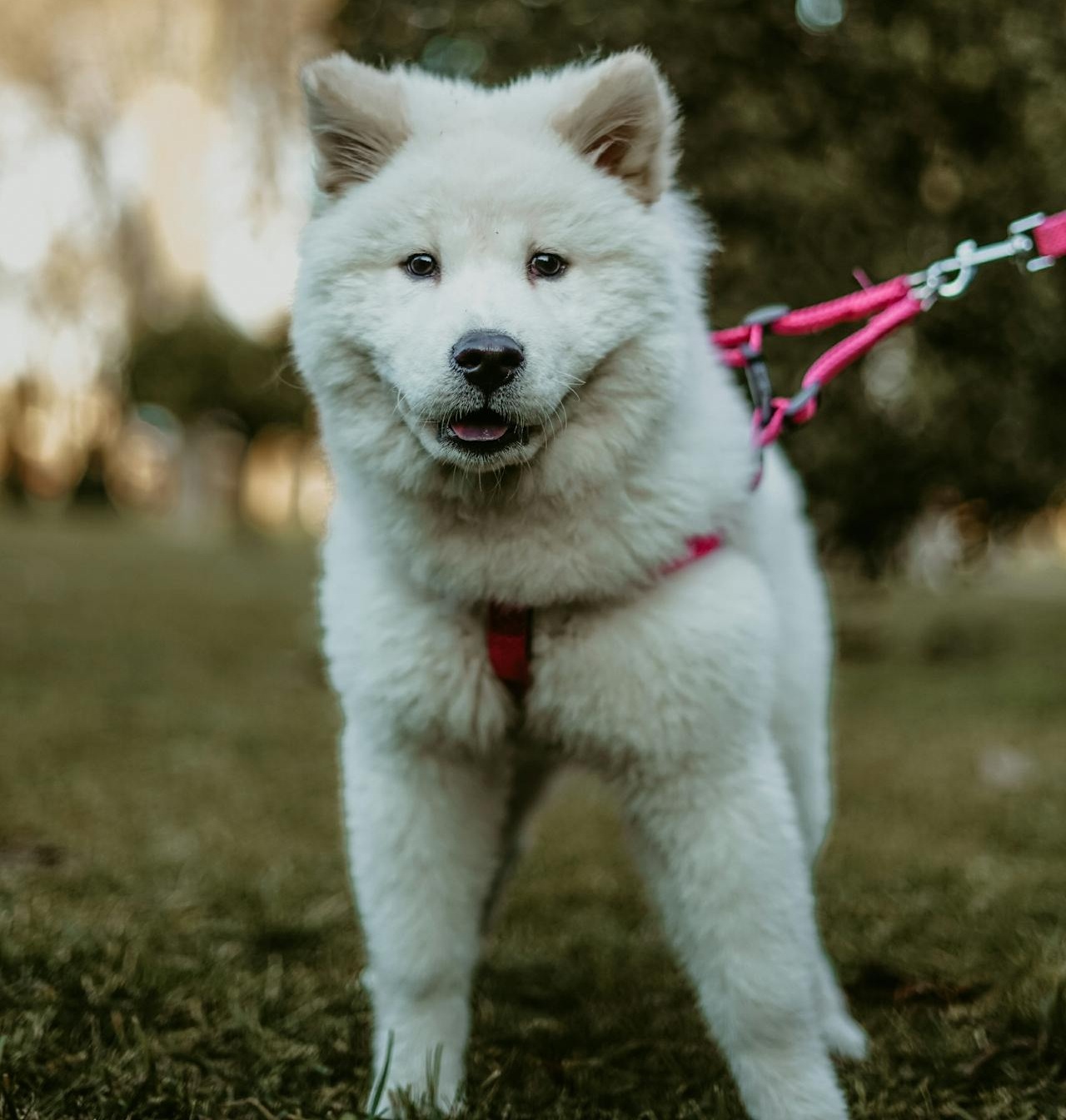
Samoyed-Husky cross known for its thick coat, athleticism, and social personality.
| Size | Weight | Height | Lifespan |
|---|---|---|---|
| Large | 45 - 60 lbs | 20 - 24 inches | 12 - 15 years |
| (These are estimates and may vary.) | |||
Origin: United States
Own a Samusky? Share what activities they enjoy to help other dog owners.
Select up to 5 Activities
Know a Samusky? Share their personality traits to help other dog owners.
Select up to 5 traits
May be a good fit if you:
- Are looking for a breed that generally does well with children.
- Want a dog that generally gets along well with other dogs.
- Are a first-time dog owner looking for a relatively approachable breed.
Things to consider:
- This breed may not do well when left alone for long periods.
- Regular shedding means you may need to be comfortable with loose hair around the home.
The Samusky is a modern cross between the Samoyed and Siberian Husky, two northern spitz breeds with histories rooted in demanding Arctic and sub-Arctic work. There is no established founding breeder or exact date for the Samusky, and the name describes a relatively recent companion cross rather than a standardized breed. The parent breeds developed among different northern peoples. Samoyed-type dogs were associated with communities of northern Eurasia and performed jobs including reindeer herding and sled work, while Siberian Huskies were developed by the Chukchi people of northeastern Siberia for efficient long-distance sled travel. Crossing them can produce dogs with substantial endurance, intelligence, independence, and desire for activity. Both parents have dense double coats designed for cold conditions, so Samuskies commonly inherit heavy coats and significant seasonal shedding. White colouring is possible but not guaranteed, and puppies may show the broader range of colours and markings found in Siberian Huskies. Adult size and temperament also vary because there is no fixed standard. Major traditional kennel clubs do not recognize the Samusky as a distinct breed. Its appeal comes largely from combining two visually striking northern dogs, but its ancestry can also produce a demanding athletic companion requiring considerably more activity than appearance alone might suggest.