Corgi Husky (Horgi)
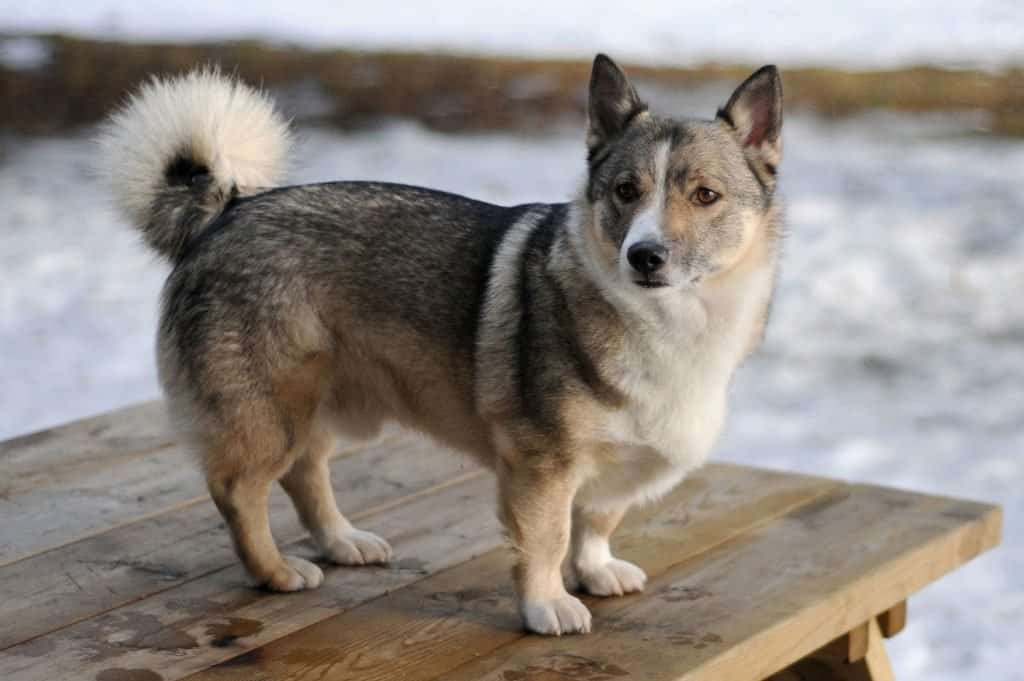
Corgi-Husky cross known for its lively personality and distinctive spitz-like looks.
| Size | Weight | Height | Lifespan |
|---|---|---|---|
| Medium | 20 - 50 lbs | 12 - 15 inches | 12 - 15 years |
| (These are estimates and may vary.) | |||
Origin: United States
Own a Corgi Husky (Horgi)? Share what activities they enjoy to help other dog owners.
Select up to 5 Activities
Know a Corgi Husky (Horgi)? Share their personality traits to help other dog owners.
Select up to 5 traits
May be a good fit if you:
- Want a dog that is generally responsive to consistent, positive training.
- Are looking for a breed that generally does well with children.
- Want a dog that generally gets along well with other dogs.
Things to consider:
- This breed may not do well when left alone for long periods.
- Regular shedding means you may need to be comfortable with loose hair around the home.
The Corgi Husky, often called a Horgi or Siborgi, is a modern cross between a Welsh Corgi and Siberian Husky. There is no documented founding breeder or precise date for its creation, and similar crosses may have occurred independently before the names became popular online. Intentional breeding grew alongside wider interest in named crossbreeds during the late 20th and early 21st centuries. Most Horgis involve the Pembroke Welsh Corgi, although Cardigan ancestry is also possible. The two parent breeds come from very different working backgrounds. Corgis were developed as low-set livestock herders, while Siberian Huskies were bred for efficient endurance sled work in northeastern Siberia. Their offspring can consequently inherit considerable energy and working drive despite their often compact appearance. Physical traits are unpredictable. Some Horgis inherit noticeably short Corgi legs and a long body combined with Husky markings, while others stand taller. Both parent breeds possess dense double coats and shed substantially, so this cross is generally not a low-shedding option. Major traditional kennel clubs do not recognize the Horgi as a distinct breed, and there is no universal standard governing its appearance, size, or temperament.