Vizsla
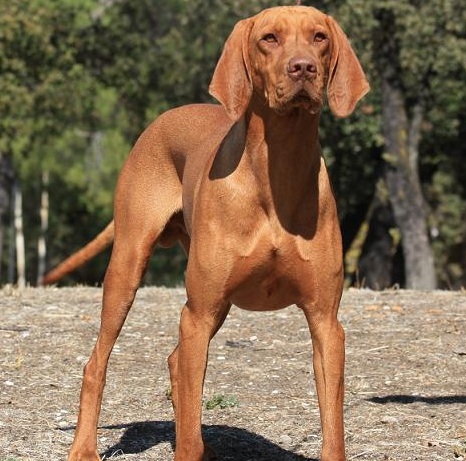
Athletic Hungarian hunting dog known for its speed and close bond with people.
| Size | Weight | Height | Lifespan |
|---|---|---|---|
| Large | 45 - 60 lbs | 21 - 24 inches | 12 - 14 years |
| (These are estimates and may vary.) | |||
Origin: Hungary
Own a Vizsla? Share what activities they enjoy to help other dog owners.
Select up to 5 Activities
Know a Vizsla? Share their personality traits to help other dog owners.
Select up to 5 traits
May be a good fit if you:
- Want a dog that is generally responsive to consistent, positive training.
- Are looking for a breed that generally does well with children.
- Are a first-time dog owner looking for a relatively approachable breed.
Things to consider:
- This breed may not do well when left alone for long periods.
- This breed may be less suited to smaller living spaces.
The Vizsla developed in Hungary as a versatile hunting dog closely associated with the country's sporting traditions. Its deeper ancestry is difficult to document precisely, but dogs resembling the Vizsla appear in Hungarian art and written references dating back centuries. Hungarian nobles maintained agile hunting dogs capable of locating game and working closely with hunters across open country. Over time the Vizsla became known as both a pointer and retriever, combining speed, scenting ability, and an unusually close working relationship with its handler. The breed faced repeated threats to its survival as Hungary endured political upheaval and war. The aftermath of the First World War and the division of Hungarian territory reduced its population, while the Second World War created another severe crisis. As Soviet forces entered Hungary near the end of the war, some fleeing Hungarians took Vizslas with them, helping establish breeding populations elsewhere in Europe and eventually North America. The breed reached the United States around 1950 and gained American Kennel Club recognition in 1960. Its famous tendency to stay physically close to its people fits a hunting dog deliberately bred to maintain close contact with its human partner.