German Shorthaired Pointer
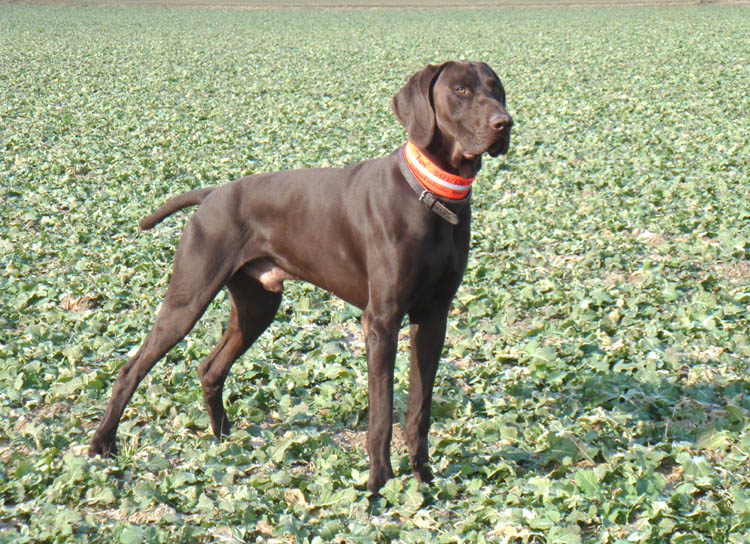
Versatile hunting dog built for long days of running, pointing, and retrieving.
| Size | Weight | Height | Lifespan |
|---|---|---|---|
| Large | 45 - 70 lbs | 21 - 23 inches | 10 - 12 years |
| (These are estimates and may vary.) | |||
Origin: Germany
Own a German Shorthaired Pointer? Share what activities they enjoy to help other dog owners.
Select up to 5 Activities
Know a German Shorthaired Pointer? Share their personality traits to help other dog owners.
Select up to 5 traits
May be a good fit if you:
- Want a dog that is generally responsive to consistent, positive training.
- Are looking for a breed that generally does well with children.
- Want a dog that generally gets along well with other dogs.
Things to consider:
- This breed may be less suited to smaller living spaces.
- This breed tends to need plenty of regular physical activity.
The German Shorthaired Pointer was developed in Germany as a versatile hunting dog rather than a specialist built for only one task. European hunters had used pointing dogs for centuries, but changing hunting practices during the 18th and 19th centuries created demand for dogs that could locate game, point it, track wounded animals, and retrieve on both land and water. German breeders combined existing continental hunting dogs and later incorporated other pointing bloodlines while selecting heavily for practical field ability. The result gradually became the German Shorthaired Pointer, a dog capable of working different kinds of game over varied terrain. An early studbook for German Shorthaired Pointers was established in the late 19th century, helping breeders organize and standardize the emerging type. The breed later spread beyond Germany, including to North America, where it became popular with hunters who valued a single dog capable of performing several jobs in the field. The Second World War disrupted German breeding programs, but the breed survived and continued expanding internationally. Modern GSPs still reflect that practical background: their speed, stamina, retrieving instinct, strong nose, and enthusiasm for work were all deliberately selected for generations.