Weimaraner
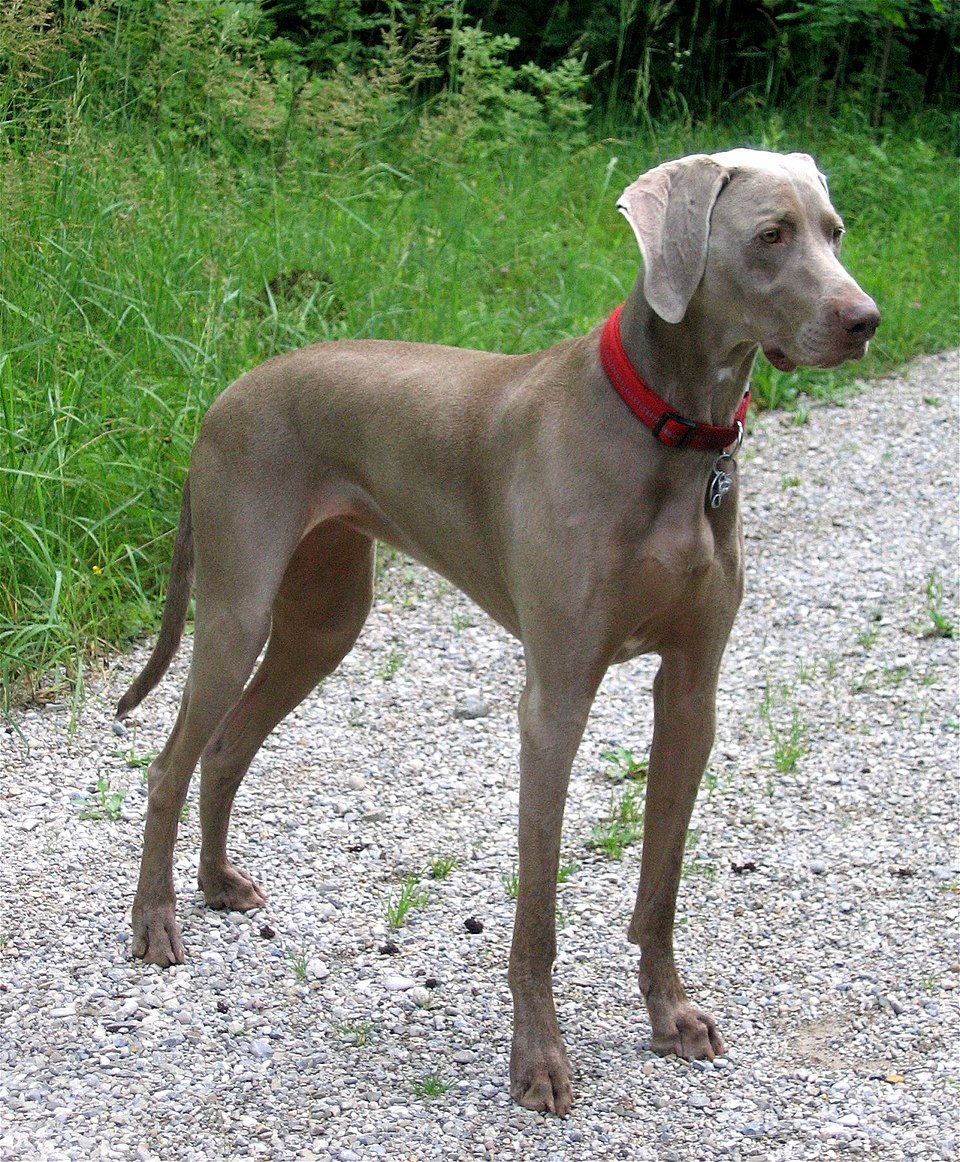
Athletic German hunting dog known for its silver-gray coat and boundless energy.
| Size | Weight | Height | Lifespan |
|---|---|---|---|
| Large | 55 - 90 lbs | 23 - 27 inches | 10 - 13 years |
| (These are estimates and may vary.) | |||
Origin: Germany
Own a Weimaraner? Share what activities they enjoy to help other dog owners.
Select up to 5 Activities
Know a Weimaraner? Share their personality traits to help other dog owners.
Select up to 5 traits
May be a good fit if you:
- Want a dog that is generally responsive to consistent, positive training.
- Want a dog that generally gets along well with other dogs.
- Are a first-time dog owner looking for a relatively approachable breed.
Things to consider:
- This breed may not do well when left alone for long periods.
- This breed may be less suited to smaller living spaces.
The Weimaraner was developed in Germany as a hunting dog for aristocratic sportsmen. Its name is associated with Weimar and the court of the Grand Duke of Saxe-Weimar-Eisenach, although some details of the breed's earliest development remain uncertain. During the 19th century, German hunters wanted versatile dogs capable of tracking and confronting large game such as boar and deer. As large-game hunting changed, the dogs were increasingly used to point and retrieve birds and hunt smaller game as well. Breeders guarded the Weimaraner closely, and ownership was controlled through a German breed club established near the end of the 19th century. Prospective owners generally had to become members before obtaining a dog, helping keep the breed relatively uncommon outside Germany. American sportsman Howard Knight became important to the breed's introduction to the United States after becoming interested in Weimaraners during the 1920s. The Weimaraner Club of America was established in 1942, and American Kennel Club recognition followed the next year. The breed later gained wider fame partly through photographer William Wegman's memorable portraits of his Weimaraners. Its speed, stamina, close-working nature, and famous silver-gray coat remain its defining traits.