Labrador Retriever
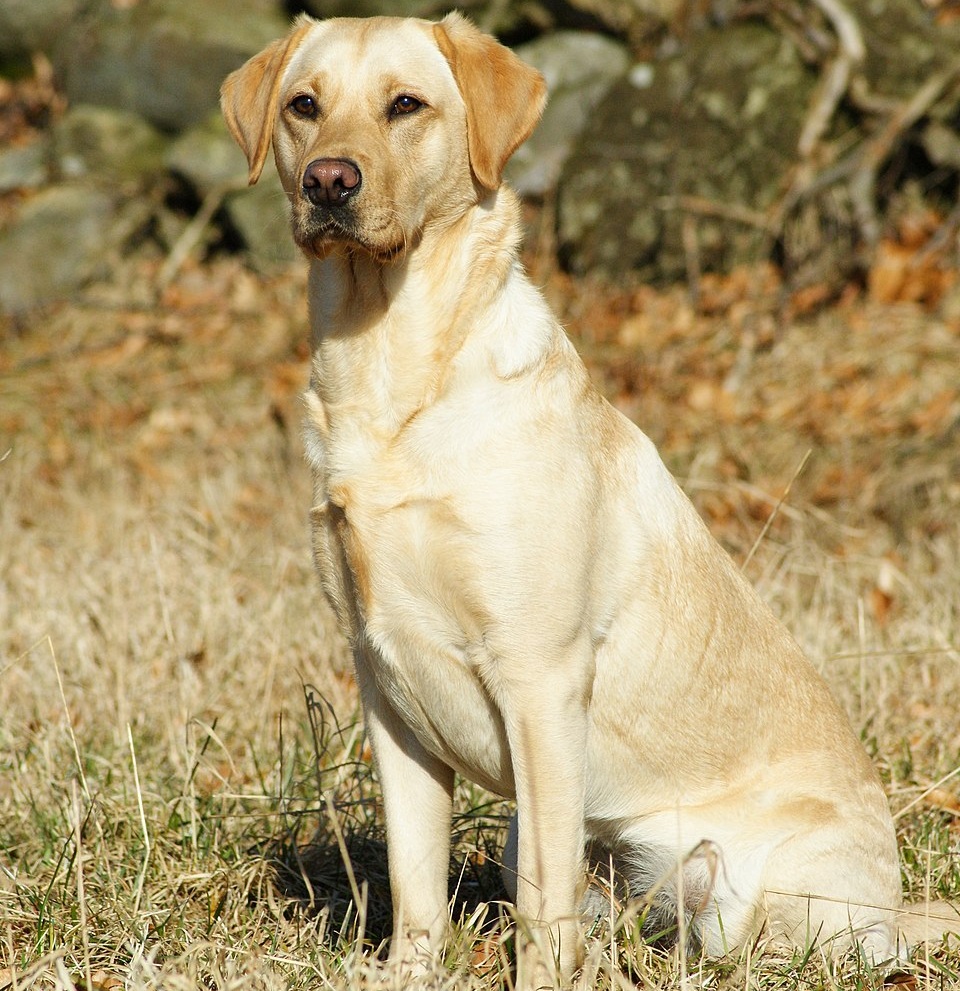
Friendly, outgoing retriever known for its versatility and love of water.
| Size | Weight | Height | Lifespan |
|---|---|---|---|
| Large | 55 - 80 lbs | 21 - 24 inches | 11 - 13 years |
| (These are estimates and may vary.) | |||
Origin: Canada
Own a Labrador Retriever? Share what activities they enjoy to help other dog owners.
Select up to 5 Activities
Know a Labrador Retriever? Share their personality traits to help other dog owners.
Select up to 5 traits
May be a good fit if you:
- Want a dog that is generally responsive to consistent, positive training.
- Are looking for a breed that generally does well with children.
- Want a dog that generally gets along well with other dogs.
Things to consider:
- This breed may not do well when left alone for long periods.
- Regular shedding means you may need to be comfortable with loose hair around the home.
Despite the name, the Labrador Retriever traces its early development to Newfoundland rather than Labrador. Its ancestors included the St. John's water dog, a working dog used by fishermen around Newfoundland. These dogs became known for their ability in the water: they retrieved fish and gear, hauled lines and nets, and were even reported to dive after objects. Their short, water-resistant coats were particularly useful in the cold North Atlantic environment. During the 1800s, dogs from Newfoundland were brought to Britain, where sporting enthusiasts developed them into specialized gun dogs for retrieving shot game. British breeders refined the type and established the Labrador Retriever as a distinct breed. The Kennel Club in Britain recognized the Labrador in 1903. The same qualities that made the breed useful to fishermen and hunters — trainability, a strong retrieving instinct, willingness to work with people, and adaptability — later made Labradors well suited to guide work, detection, search and rescue, and other service roles.