Pointer
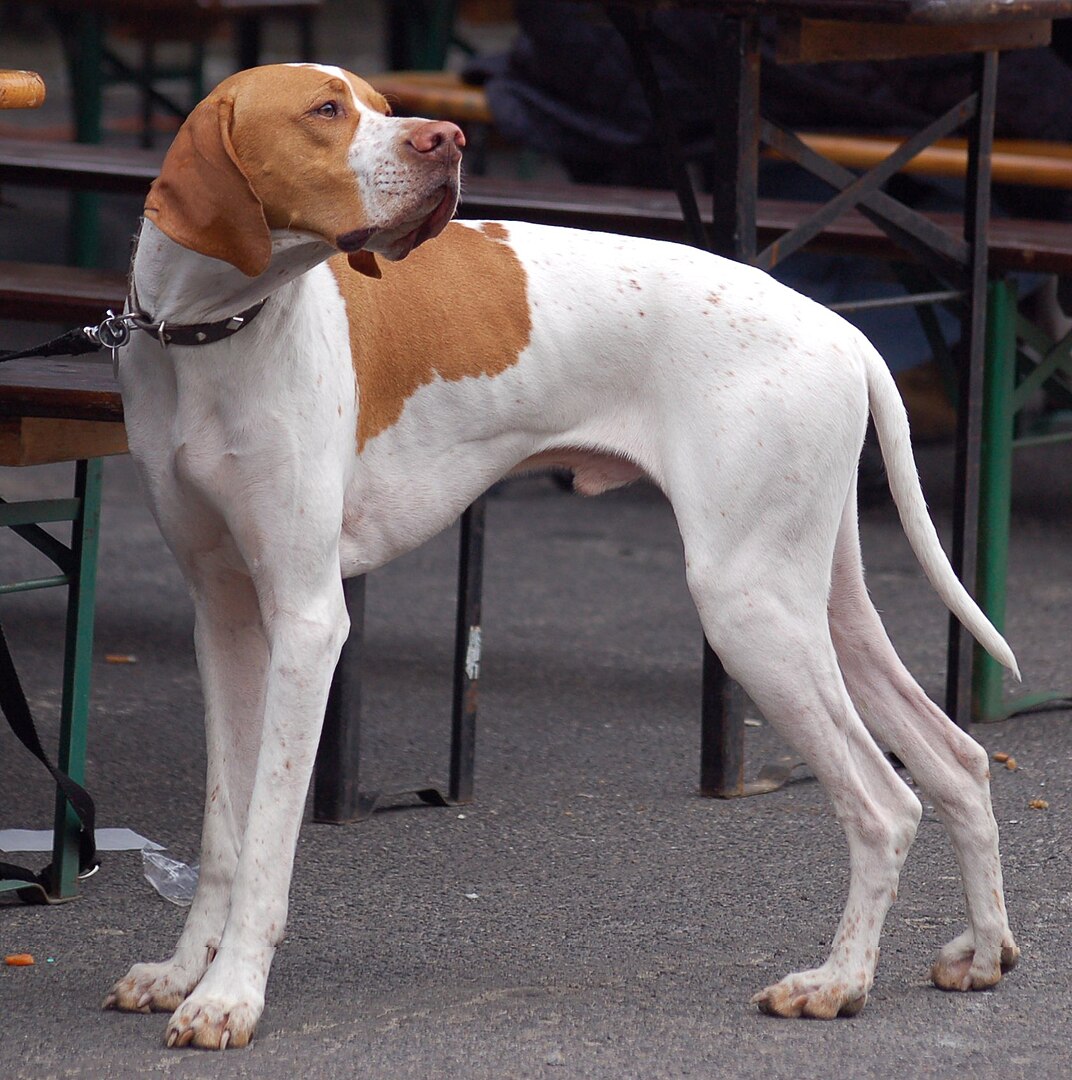
Athletic British bird dog famous for locating game and holding a steady point.
| Size | Weight | Height | Lifespan |
|---|---|---|---|
| Large | 45 - 75 lbs | 23 - 28 inches | 12 - 15 years |
| (These are estimates and may vary.) | |||
Origin: United Kingdom
Own a Pointer? Share what activities they enjoy to help other dog owners.
Select up to 5 Activities
Know a Pointer? Share their personality traits to help other dog owners.
Select up to 5 traits
May be a good fit if you:
- Want a dog that is generally responsive to consistent, positive training.
- Are looking for a breed that generally does well with children.
- Want a dog that generally gets along well with other dogs.
Things to consider:
- This breed may be less suited to smaller living spaces.
- This breed tends to need plenty of regular physical activity.
The Pointer, often called the English Pointer outside Britain, was developed as a specialist bird dog whose job was to locate game and indicate its position by freezing into a distinctive stance. Pointing dogs existed in continental Europe before the modern British breed emerged, and Spanish Pointers imported into England during the early 18th century are generally considered important ancestors. British breeders subsequently refined their dogs using other hunting breeds, likely including hounds and additional pointing stock, to produce a faster and more athletic dog suited to local sporting conditions. Before shotguns became efficient enough for hunting birds on the wing, Pointers sometimes worked alongside Greyhounds: the Pointer located and indicated game, while the hounds pursued it once flushed. Improvements in firearms transformed bird hunting and made a fast, wide-ranging pointing dog particularly valuable. During the 19th century, competitive field trials further encouraged breeding for speed, nose, stamina, and a stylish point. Pointers were exported widely and became influential sporting dogs in North America as well. Their modern appearance remains closely tied to function, from the long legs and athletic body to the characteristic motionless stance that gave the breed its straightforward name.