Gordon Setter
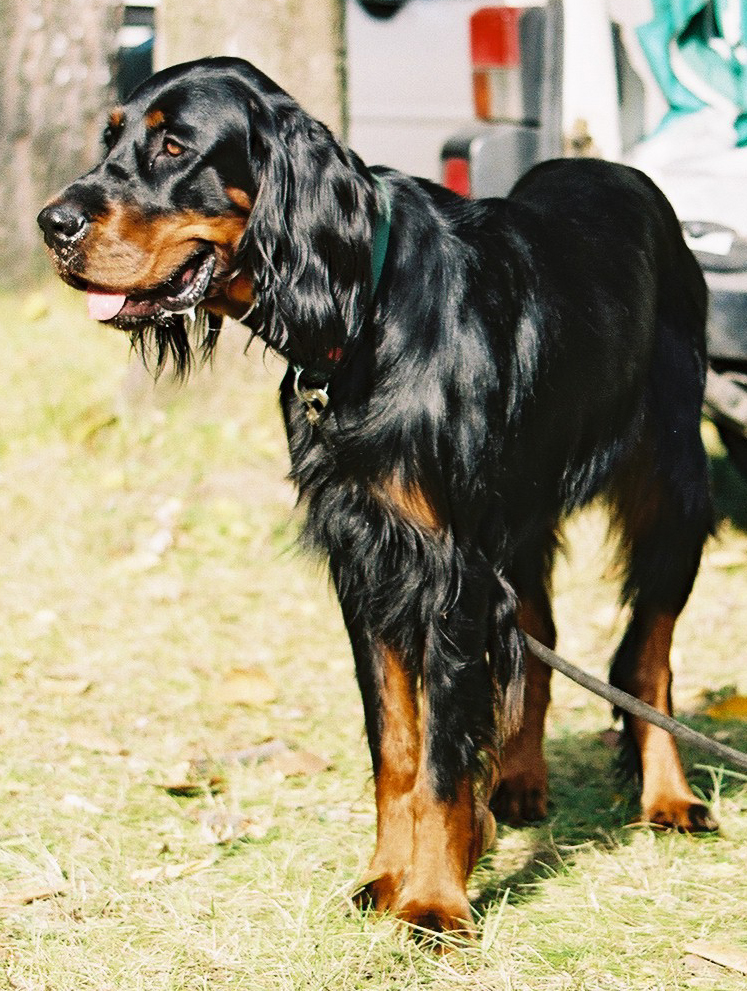
Powerful Scottish bird dog known for its black-and-tan coat and steady hunting style.
| Size | Weight | Height | Lifespan |
|---|---|---|---|
| Large | 45 - 80 lbs | 23 - 27 inches | 12 - 13 years |
| (These are estimates and may vary.) | |||
Origin: United Kingdom
Own a Gordon Setter? Share what activities they enjoy to help other dog owners.
Select up to 5 Activities
Know a Gordon Setter? Share their personality traits to help other dog owners.
Select up to 5 traits
May be a good fit if you:
- Want a dog that is generally responsive to consistent, positive training.
- Are looking for a breed that generally does well with children.
- Are a first-time dog owner looking for a relatively approachable breed.
Things to consider:
- Coat maintenance may require significant regular grooming.
- This breed may be less suited to smaller living spaces.
The Gordon Setter is a Scottish bird dog developed from the setter tradition that produced dogs able to search for game and indicate its location to hunters. Black-and-tan setters existed in Scotland before the modern breed was standardized, but the dogs kept at Gordon Castle became especially influential. Alexander Gordon, the fourth Duke of Gordon, maintained a notable kennel of setters during the late 18th and early 19th centuries. These dogs became associated so strongly with the estate that the developing breed eventually took the Gordon name. Compared with some other setters, Gordons were bred as substantial, methodical hunting dogs capable of working through difficult Scottish terrain. Their job was to locate game birds by scent and "set" or point their position, allowing hunters to approach. Early dogs were not completely uniform in colour, but black with rich tan markings eventually became the breed's defining appearance. Organized shows and breeding during the 19th century further standardized the Gordon Setter, and dogs were exported to North America relatively early. The breed remains the heaviest of the recognized setters, combining the elegant appearance of the setter family with the strength and endurance needed for long days of field work.